
Warren Garage Door Pros
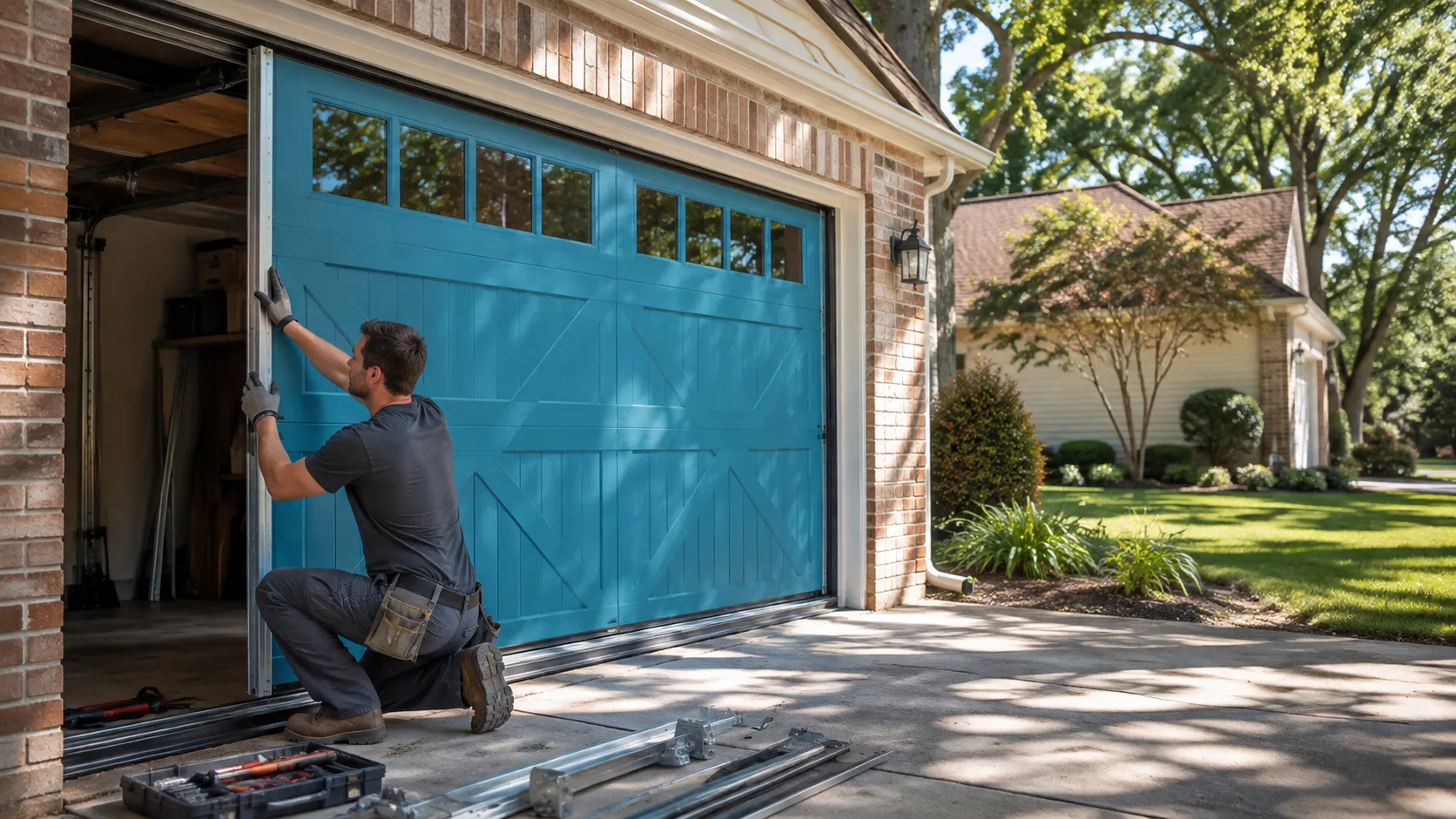
Garage Door Repair Built Around Warren's Older Housing Stock
Local garage door repair for Warren, MI, where most houses date to the 1938-1957 build wave. Torsion springs, panels, openers, and honest advice on when to stop fixing.
- Licensed & Insured
- Same-Area Service Calls
- Upfront Pricing
Why Warren Calls Us
Local facts, not a franchise script.
Pricing, and What Drives It
We don't quote a number until we've seen the door, because what drives the cost here isn't the visit, it's the hardware. A lot of Warren houses went up between 1938 and 1957, and the doors on them are often original one-piece slabs on side-mounted torsion springs - different weight, different spring wind, different cost than the sectional doors on newer builds. A double door on a house built in the 1990s takes a different spring than a single-car door from the 1940s, and the two aren't interchangeable jobs even though they look similar from the curb.
What also drives it: how long the part's been failing before you call. A spring that snapped clean costs less to deal with than an opener that's been grinding gears for a month and finally stripped the drive gear along with it.
Cold matters too - this area sits in a severe cold climate band, and steel cable and lubricant behave differently at 10 degrees than they do in August, which shows up in wear patterns more than in what we charge for the visit. We'll tell you what we find before we touch anything, and if a repair doesn't make sense against a replacement, we say so.
What We Fix Most Here
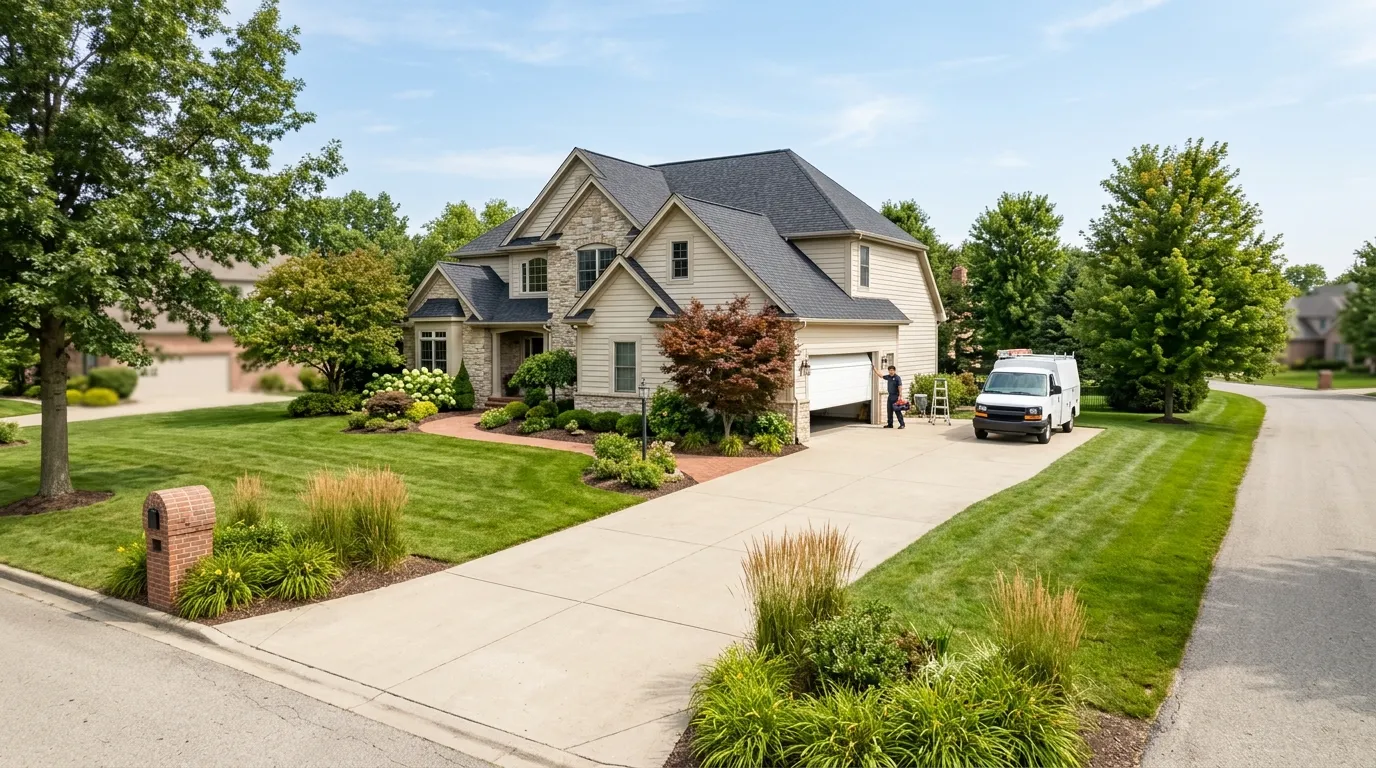
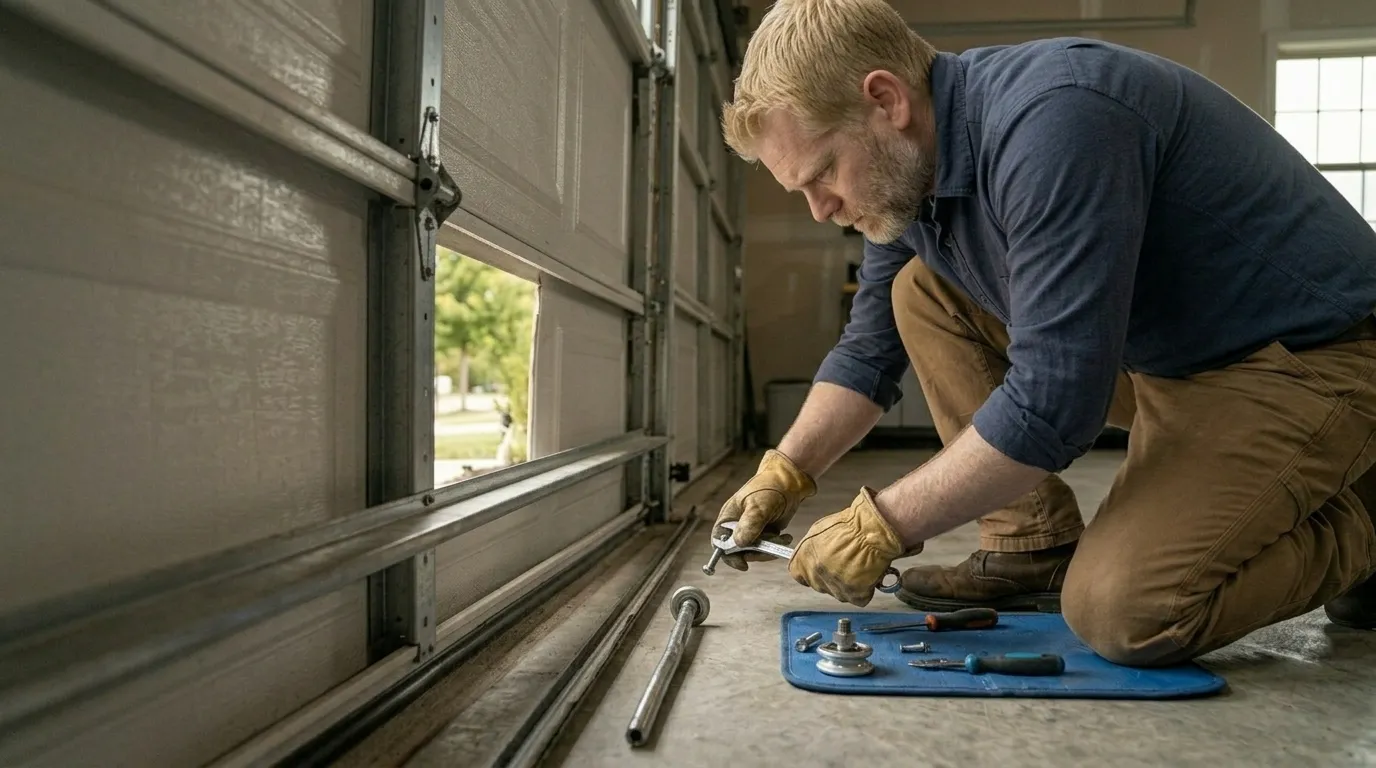
Torsion springs, first and by a wide margin. With housing stock running mostly pre-1960 across the area, we see a steady stream of original one-piece doors where the spring has simply worn out from decades of cycles, or where a homeowner's tried to force a door that's off-track rather than call. Those older doors also carry hardware that newer big-box replacement parts don't always fit cleanly, so matching the right spring wire size and drum to a fifty- or sixty-year-old door is its own skill.
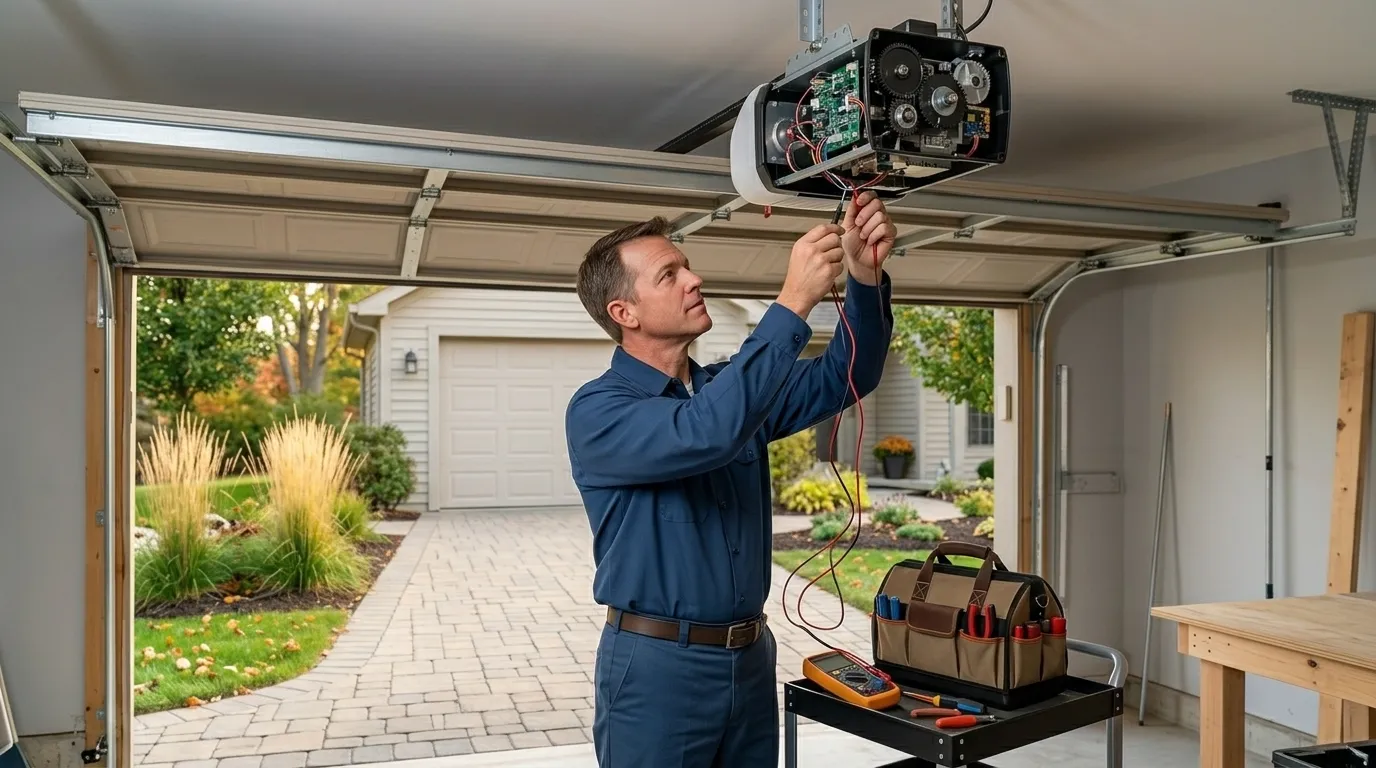
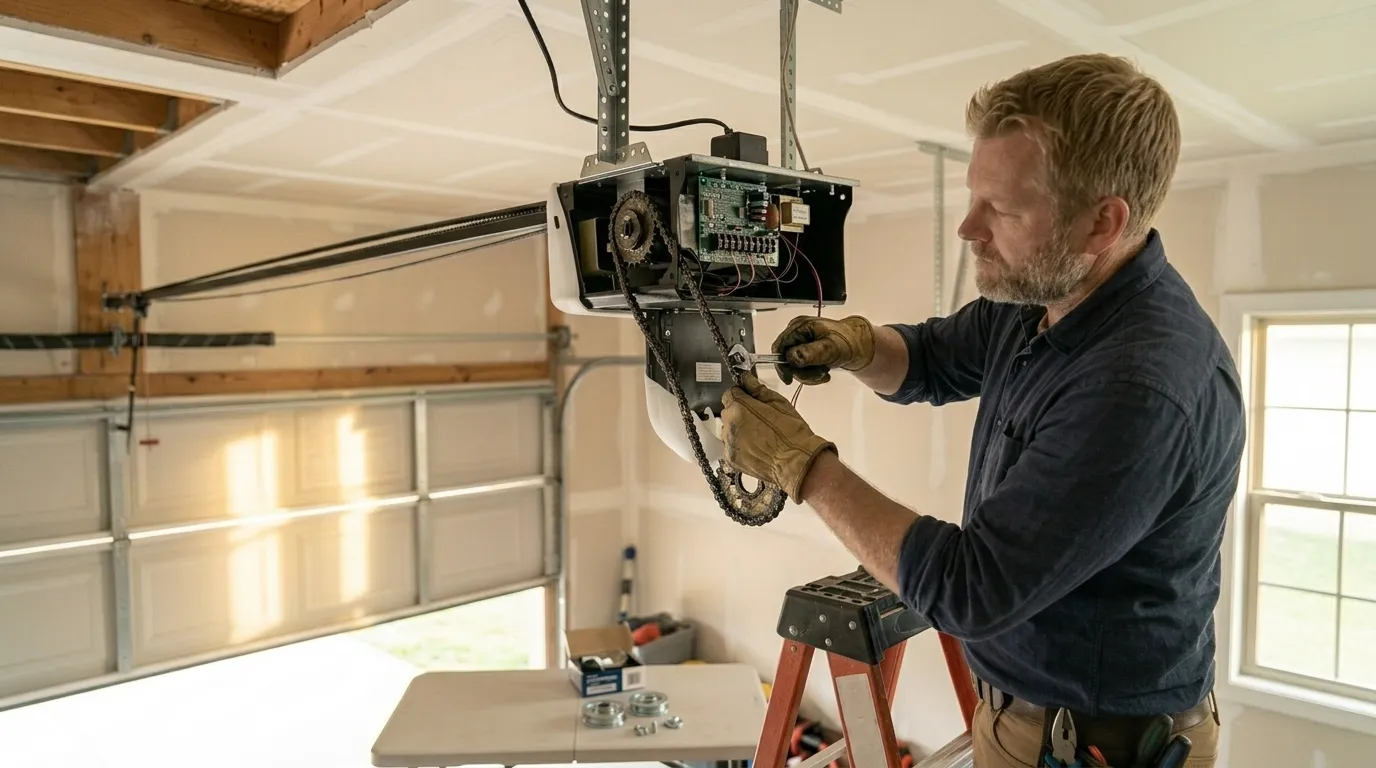
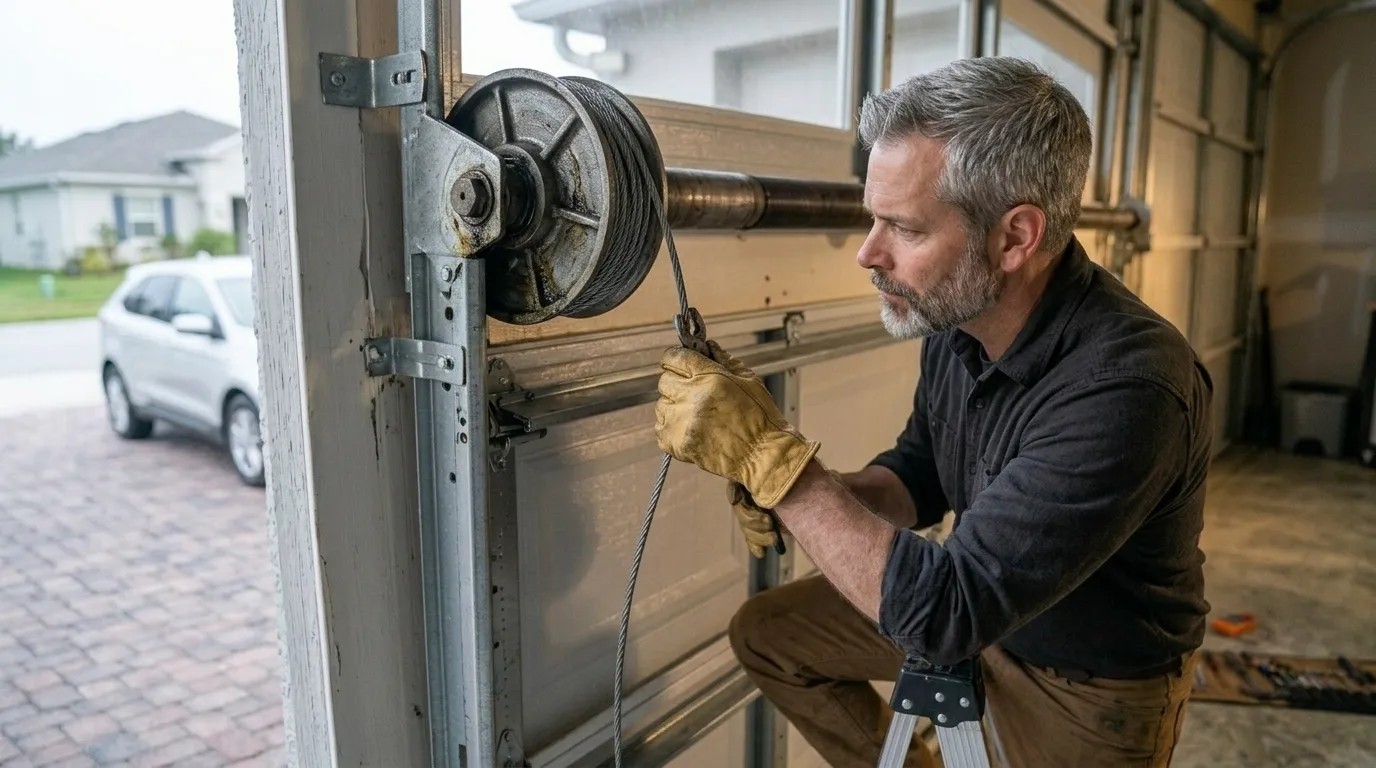
On newer sectional doors - the ones from builds later in that 1938-2000 range - the common calls are worn rollers, broken cables, and openers with failing logic boards or stripped gears. Cold-severe winters here are hard on nylon rollers and on the grease inside older opener units; both dry out and crack faster than they would in a milder climate.
We also get a fair number of panel replacements from door dings - a car bumper, a basketball, a mower - where one section needs swapping rather than the whole door. That's usually a straightforward job as long as the door's not old enough that the panel's no longer made, which does happen with the oldest doors in the area.
How the Visit Works
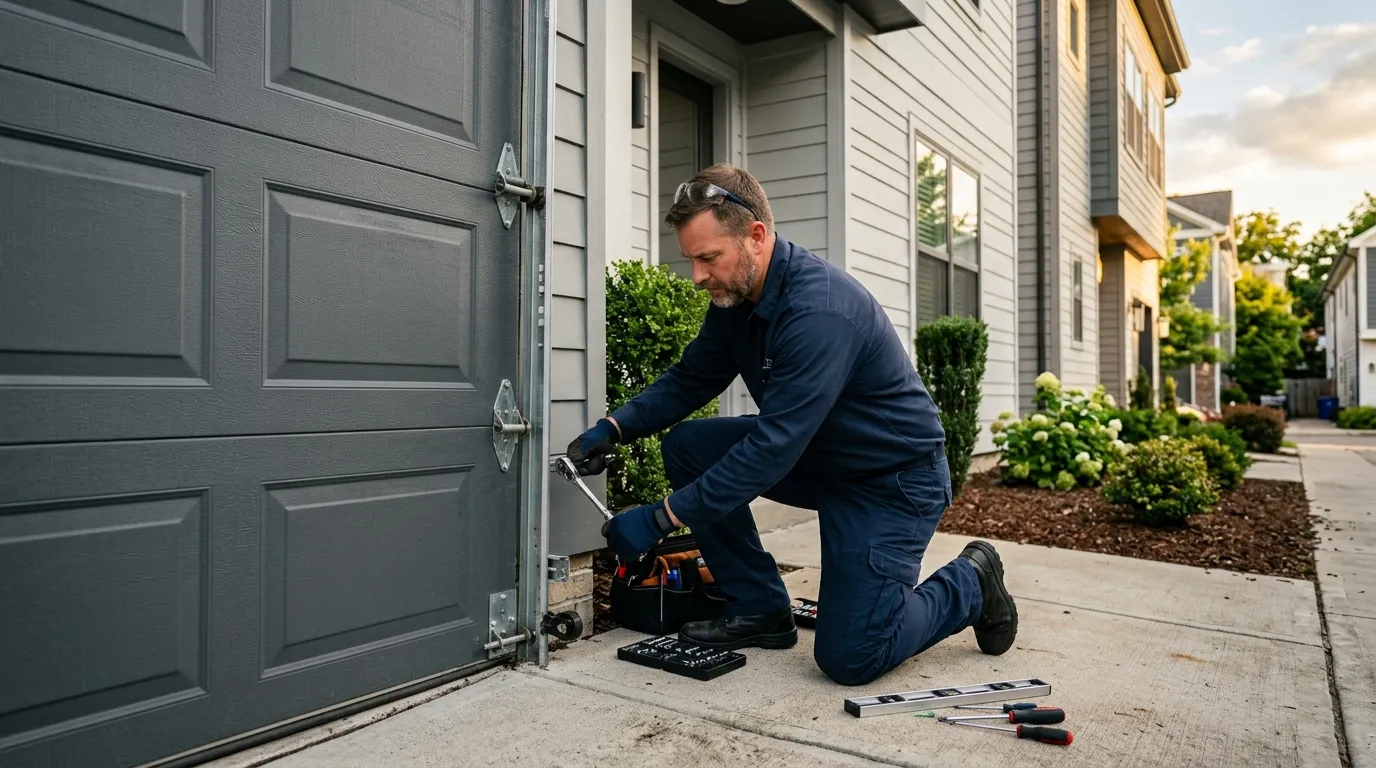
We ask what the door's doing - won't open, opens crooked, makes noise, opener runs but door doesn't move - because that narrows down what we bring off the truck before we're at your driveway. On arrival we check the obvious things first: track alignment, spring tension, cable wear, roller condition, and whether the opener's force settings have drifted, which happens more than people expect on doors that get used several times a day.
We'll show you what's actually wrong before we start work, not after. If it's a spring, we replace both on a torsion pair even if only one broke, because the other one is the same age and close to the same failure point - that's a standard call, not an upsell, and we'll explain why if you ask. If it's something smaller, like a roller or a sensor out of alignment, we fix it on the spot and you're done.
We test the door under full load before we leave - full open, full close, auto-reverse if there's an opener involved - because a door that looks fine standing still can still bind or drop under its own weight.
When to Stop Fixing It
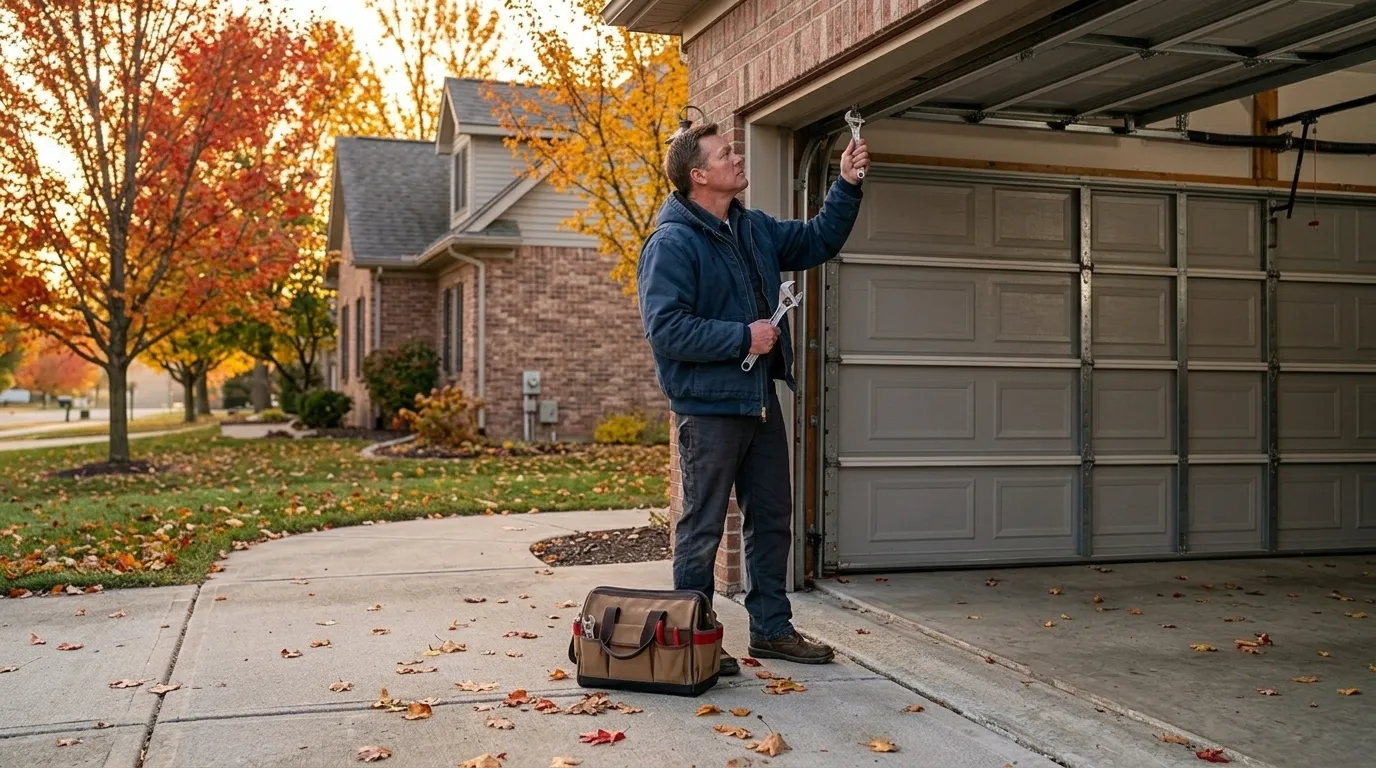
Some doors aren't worth fixing again. If a door is old enough that we can't get a matching panel or the track profile isn't made anymore, patching it a third time is throwing money at something that's going to fail again in a different spot next winter. That's most common on the oldest one-piece doors from the earlier part of the 1938-2000 build range, where the steel gauge and track hardware just aren't produced the way they used to be.
Same goes for openers. A motor from a couple decades ago that's already had a gear kit and a logic board replaced is close to the point where a new opener costs about the same as the next repair and comes with a warranty the old unit never will again.
We'll tell you straight when we think replacement beats another repair, and we'll also tell you when it doesn't - plenty of older doors are structurally sound and just need springs, rollers, or a cable, and there's no reason to replace a door that's got years left in it. One thing we won't do is push a full replacement on a door that just needs an adjustment.
What Gets Built Around Here
This area's housing mostly went up between 1938 and 2000, with the median build year around 1957, and that shows in the garage doors more than almost anything else about a house. Across the 41 named communities we work in, the stock skews pre-1960, which means original hardware, narrower door openings by today's standard, and torsion setups that don't always match what's sold off the shelf now.
We cover close in - Center Line is a mile out, Warren Woods and Osborn are both inside four miles - and out to places like Madison Heights, Hazel Park, and Eastpointe in the four-mile range, with Roseville and Fraser a bit further at five. Across the wider service area there are 338,897 households and 197,913 owner-occupied houses, with a median household income of $72,693 - a mix that includes a lot of long-owned homes where the garage door has never been replaced, just patched.
That combination - older doors, cold-severe winters, and owners who tend to stay put - is why so many of our calls are for hardware that's original to the house rather than something installed in the last ten years.
How We Can Help
Garage Door Repair
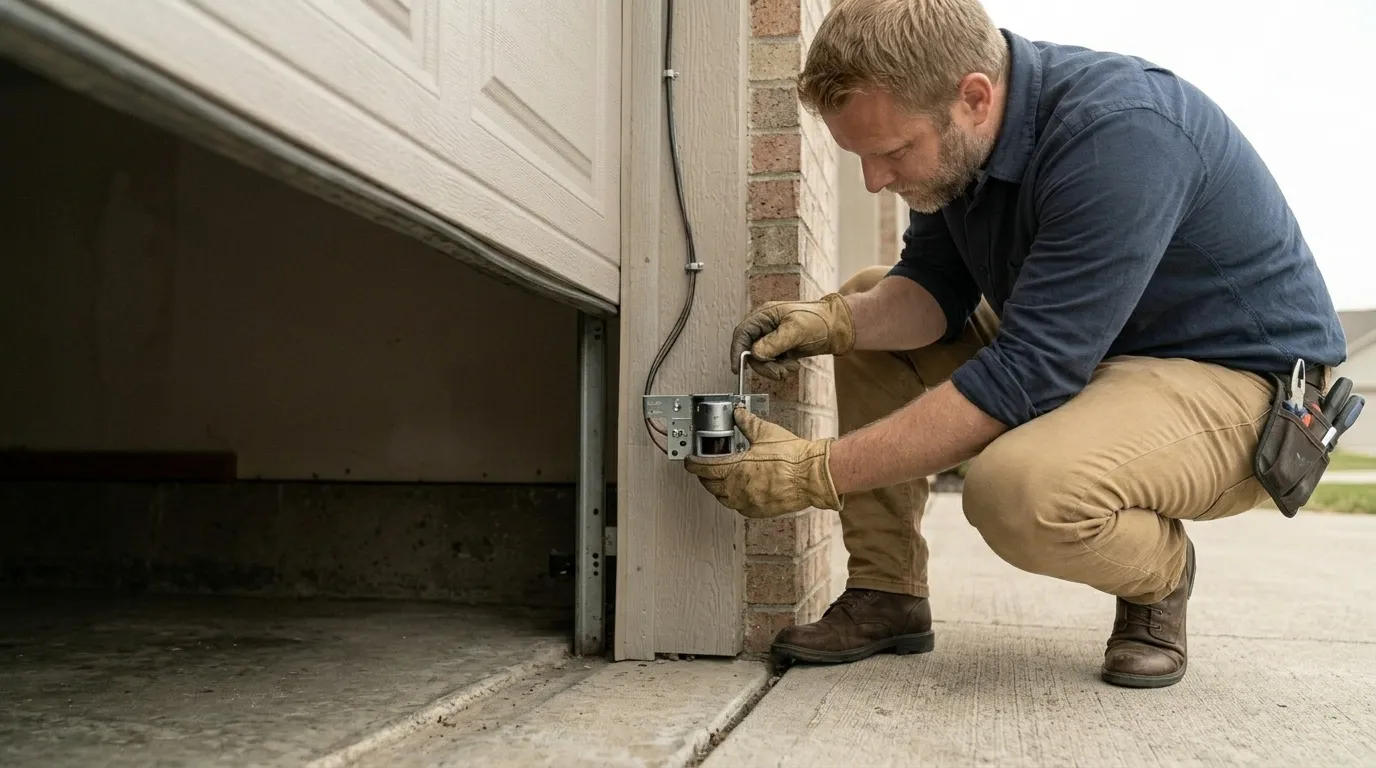
Springs, cables, tracks, rollers, and openers fixed by a tech who explains the problem before touching anything.
Learn more →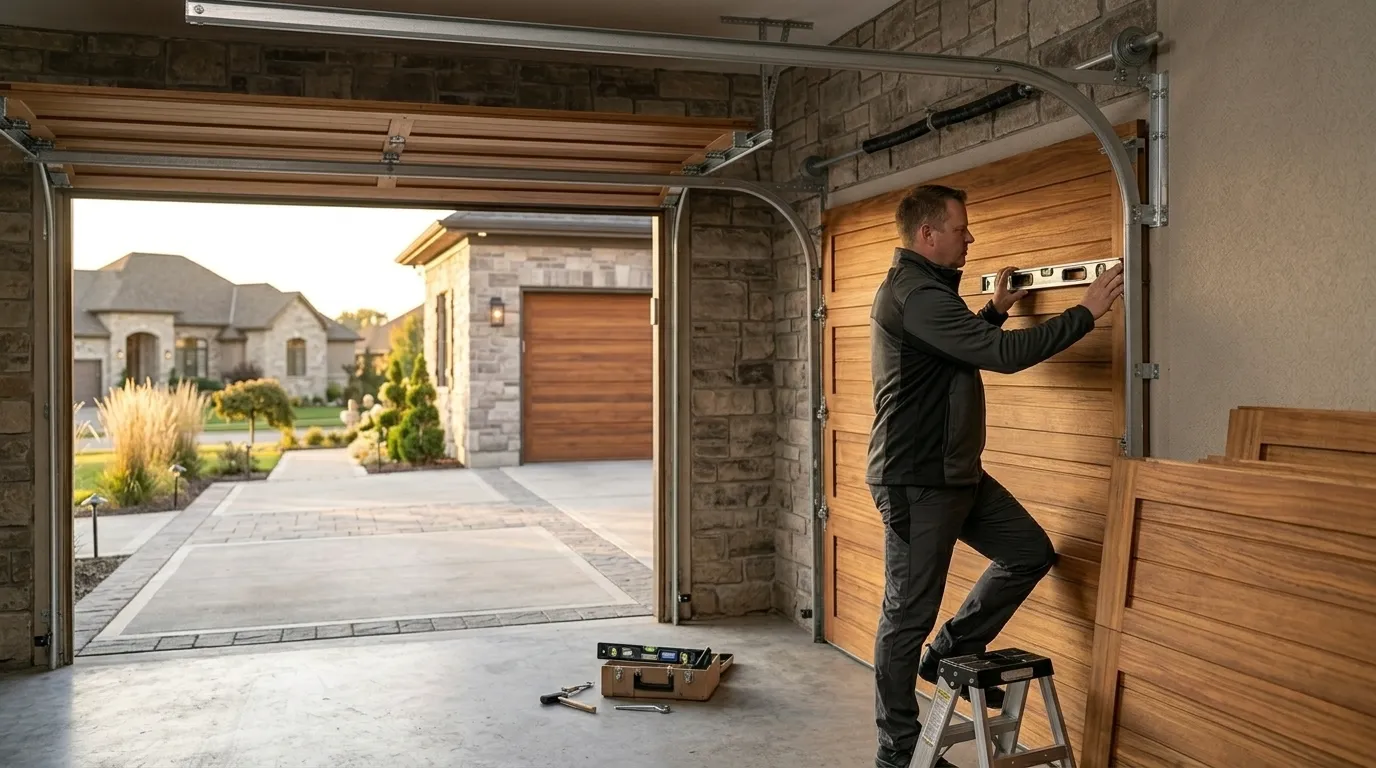
Garage Door Installation
New sectional doors sized and installed for the housing stock actually built in this area.
Learn more →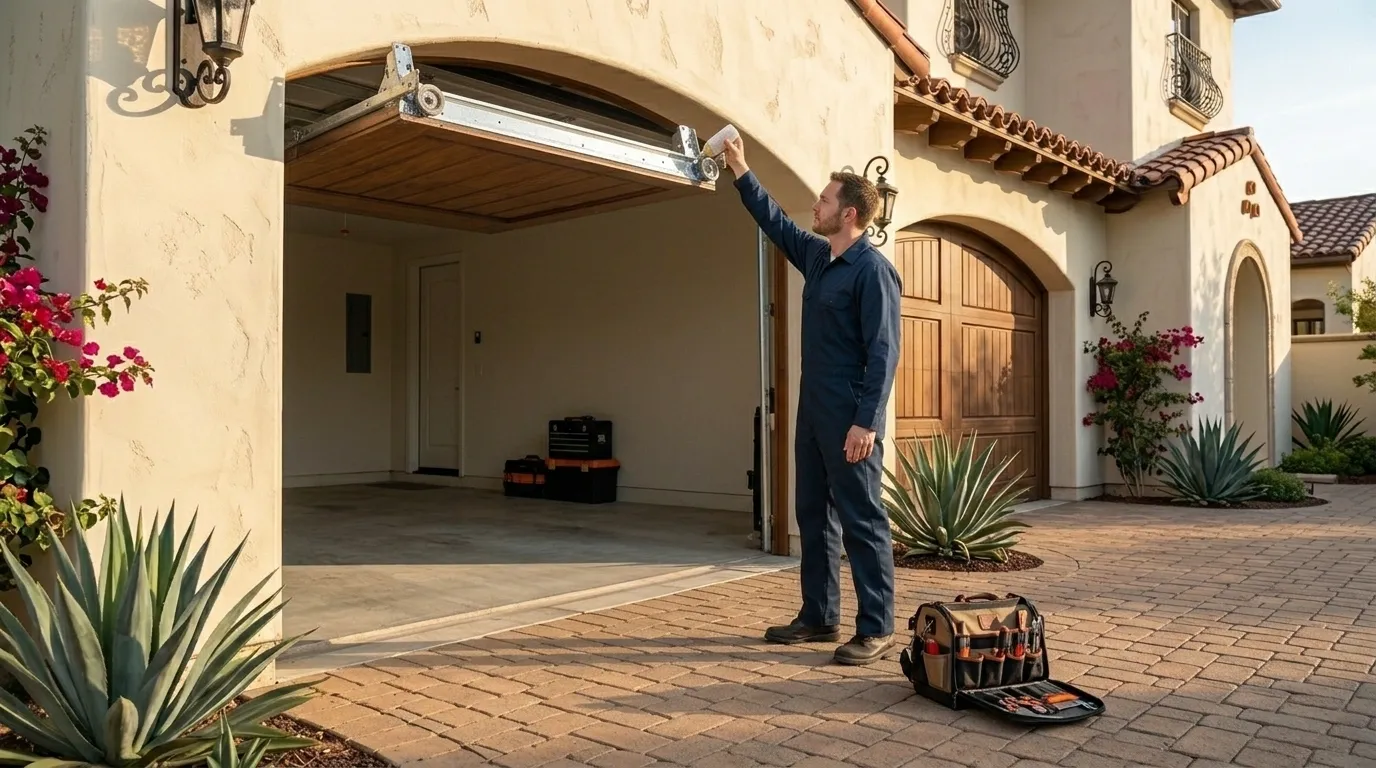
Garage Door Service
Tune-ups, lubrication, and safety checks that catch a small problem before it becomes a service call.
Learn more →What Happens When You Call
Call or Request a Quote
Tell us what the door is doing and roughly how old the house is - that alone points us toward the likely part before a truck leaves.
On-Site Diagnosis
A tech checks the spring, cables, tracks, and opener in person and tells you plainly what is actually wrong.
Straight Price, No Surprises
You get a number before any work starts. It covers parts and labor, nothing added after the fact.
Fixed the Same Visit
Most repairs are done in one trip. If a part needs sourcing, we tell you that upfront instead of guessing.
Recent Work
Recent Work Around Warren
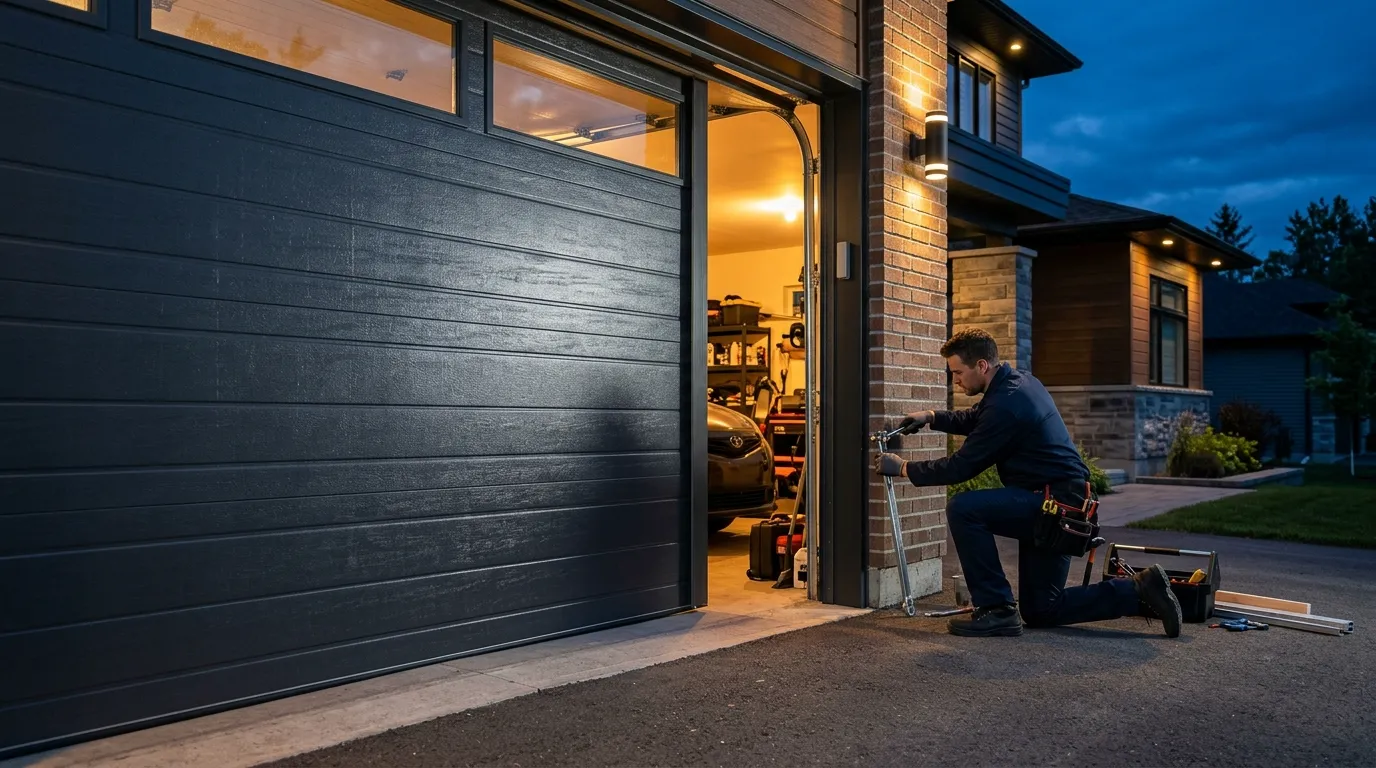
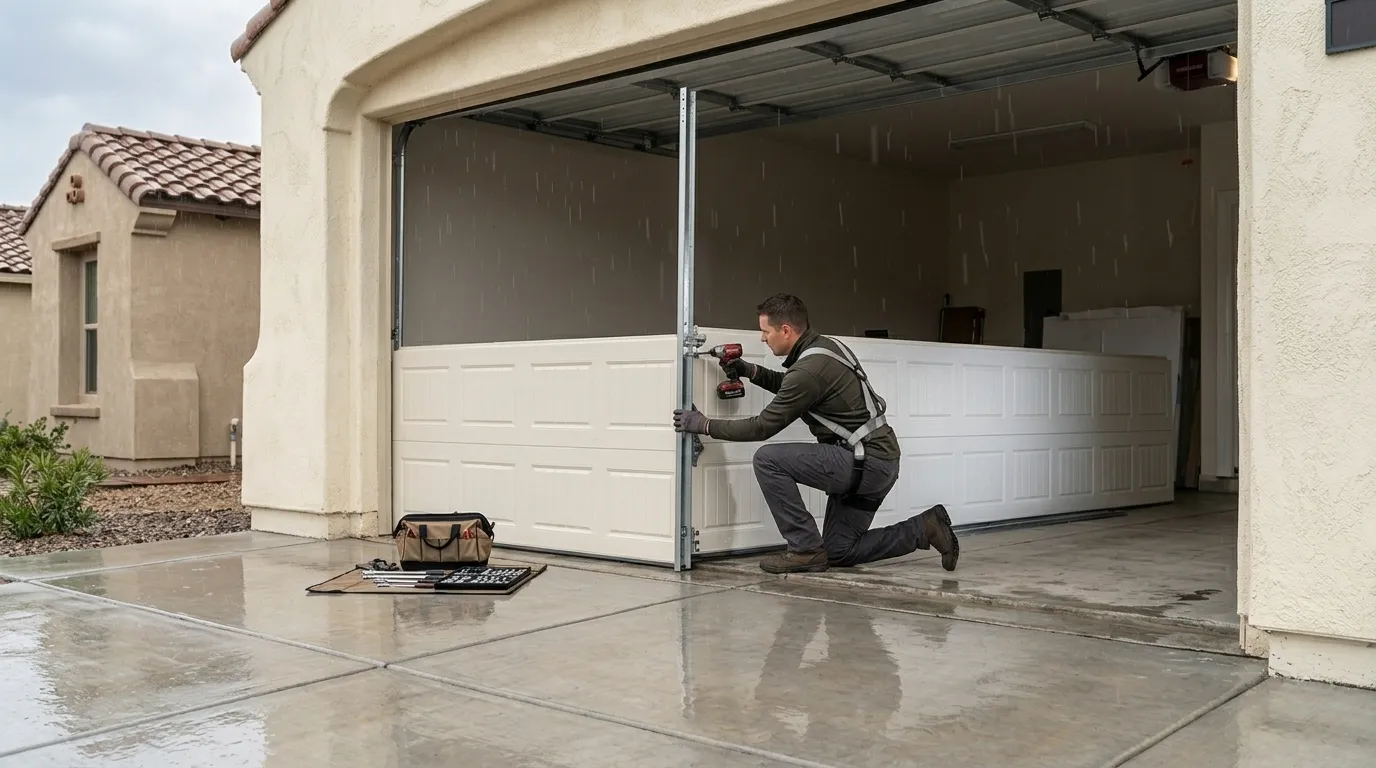
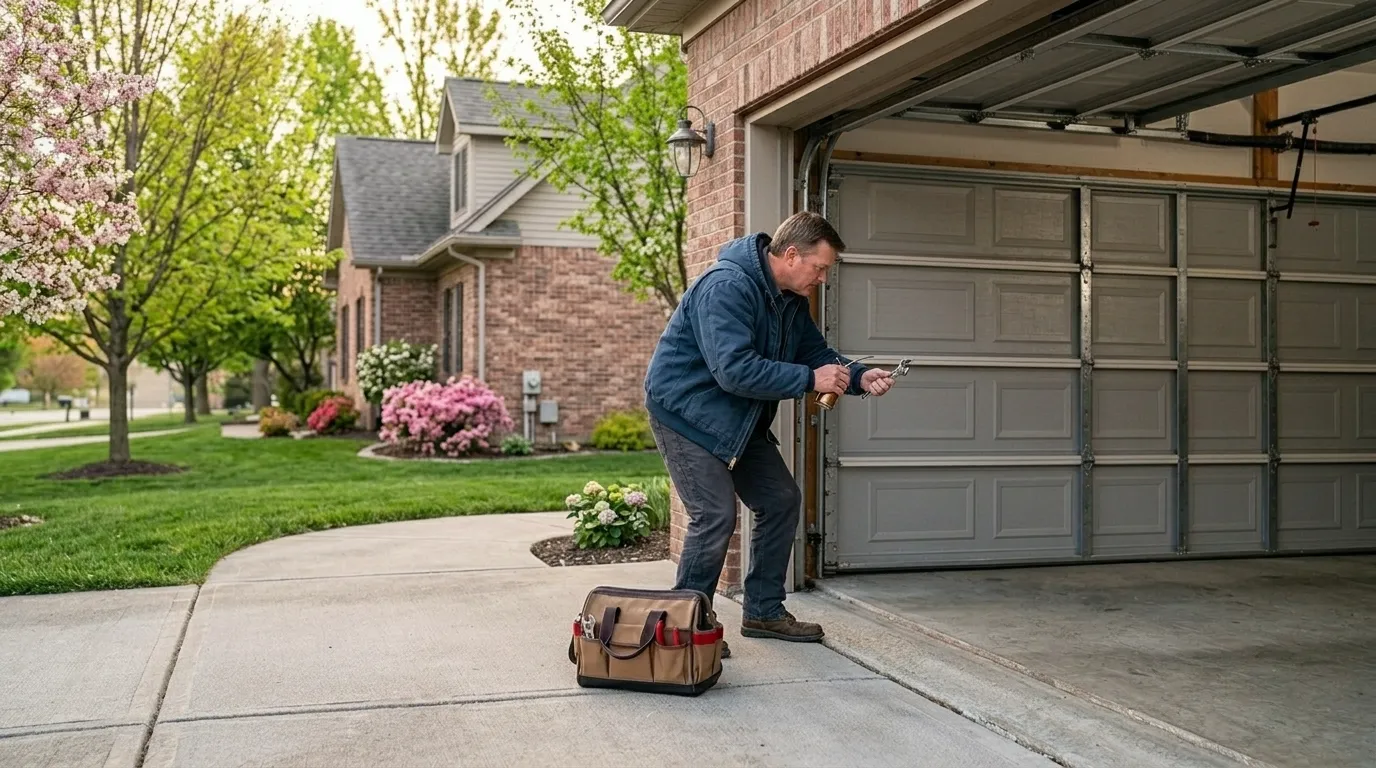
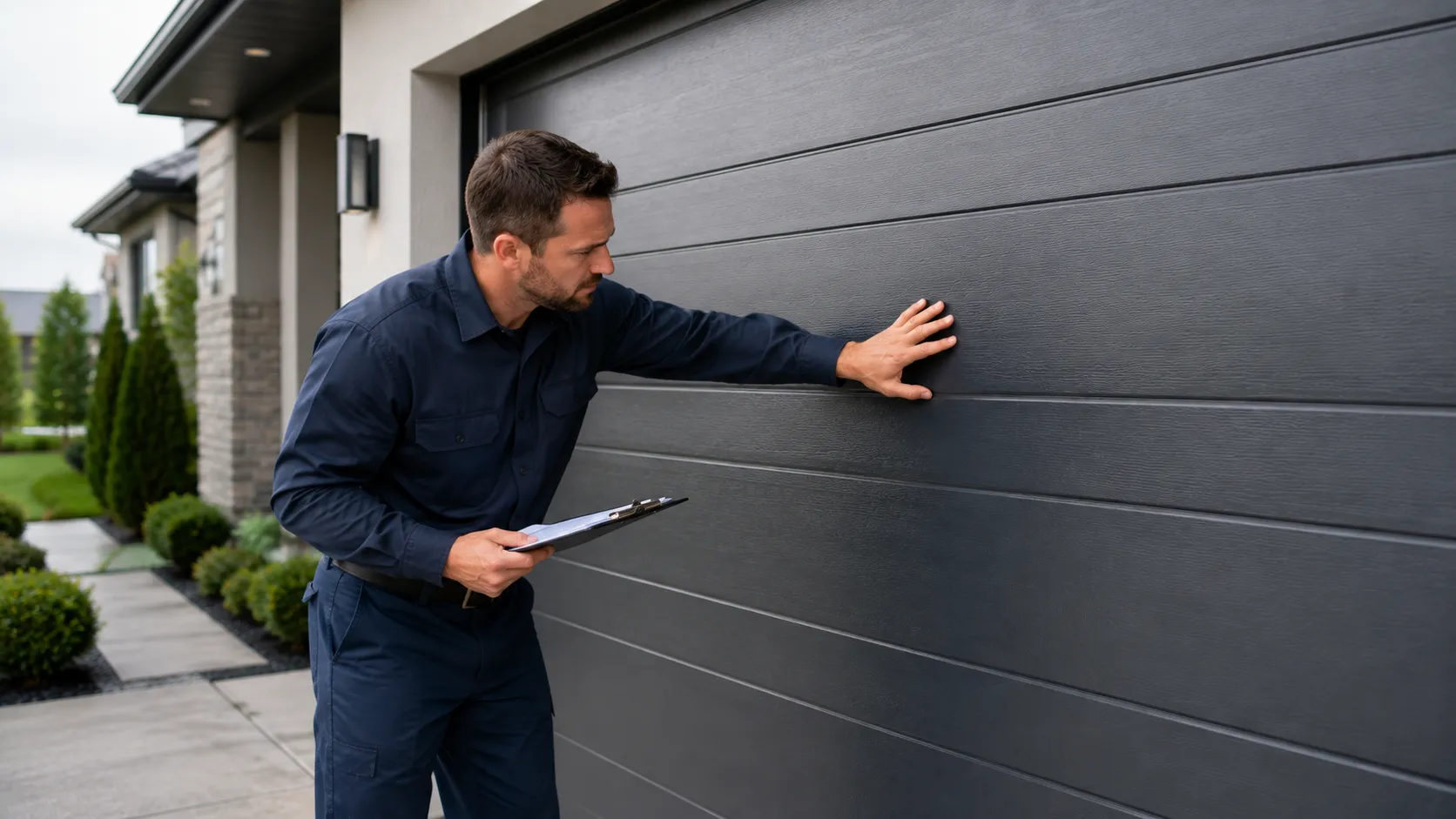
A look at the doors, springs, and openers our crew has been on lately.
Frequently Asked Questions
Why do you replace both springs when only one broke?
Torsion springs are installed and age in pairs. If one snapped, the other has gone through the same number of open-close cycles and is close behind it. Replacing just one means a mismatched pair and a second service call within months. It's standard practice, not an upsell, and we'll walk you through the wear on the old one if you want to see it.
My house is from the 1950s - can you still get parts for the original door?
Often yes for springs, cables, and rollers, since those are sized to standard specs even on older doors. Panels and full track assemblies are harder - some of the oldest one-piece doors in this area use profiles that aren't made anymore, and in those cases we'll tell you if a repair isn't realistic.
Why does my door get noisy every winter?
This area sits in a severe cold climate band, and lubricant and nylon rollers both stiffen and dry out faster in that kind of cold. It's one of the most common seasonal calls we get - usually a roller and lubrication service fixes it, not a full part replacement.
Do you work outside Warren itself?
Yes, we cover the surrounding area including places like Center Line, Madison Heights, Hazel Park, Eastpointe, and Roseville, among others within roughly a fifteen-mile radius.
Get Started
Ready to Get Your Door Fixed Right?
Call now or request a quote online, and we will tell you straight what your door needs.