
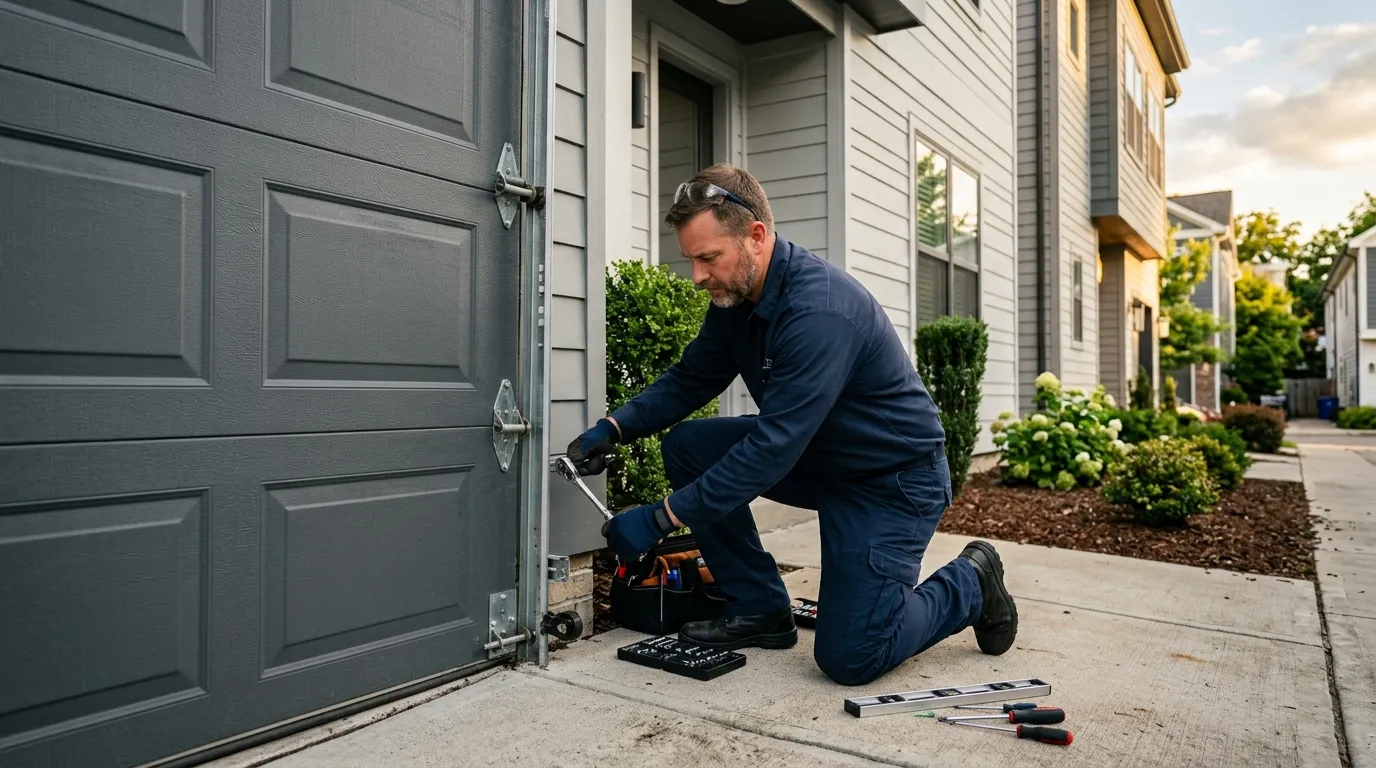
Emergency Garage Door in Center Line
Emergency Garage Door Repair, Center Line
Center Line homes date mostly to 1959, meaning older torsion hardware and steel doors from another era. We travel 1 mile from Warren for emergency repair calls.
What Happens When You Call
-
1
Call or Request a Quote
Tell us what the door is doing and roughly how old the house is - that alone points us toward the likely part before a truck leaves.
-
2
On-Site Diagnosis
A tech checks the spring, cables, tracks, and opener in person and tells you plainly what is actually wrong.
-
3
Straight Price, No Surprises
You get a number before any work starts. It covers parts and labor, nothing added after the fact.
-
4
Fixed the Same Visit
Most repairs are done in one trip. If a part needs sourcing, we tell you that upfront instead of guessing.
Doing It Yourself
If your door in Center Line won't budge, the first thing to check before you call anyone is whether the springs are intact. With a median build year of 1959, a lot of these houses still carry torsion springs that have been wound and unwound for decades longer than the springs going into new construction elsewhere.
If you see a gap in the coil or the door feels dead-weight heavy when you lift it by hand with the opener disconnected, stop. That's a broken spring, and those store a huge amount of tension - not a DIY fix, full stop.
What you can safely check yourself: the track for visible bends, the photo-eye sensors near the floor for dust or misalignment, and whether the wall button and remote both fail the same way (points to opener power, not the door itself). Clear ice or debris from the bottom seal in winter - with a cold, severe climate here, a frozen seal can make a fine door act broken.
We won't talk you through spring replacement over the phone and we won't tell you to try. It's genuinely dangerous work, and on a door this age, the drum and cable are usually just as worn as the spring, so a rushed fix often means a second call within the month.
How It Shows Up
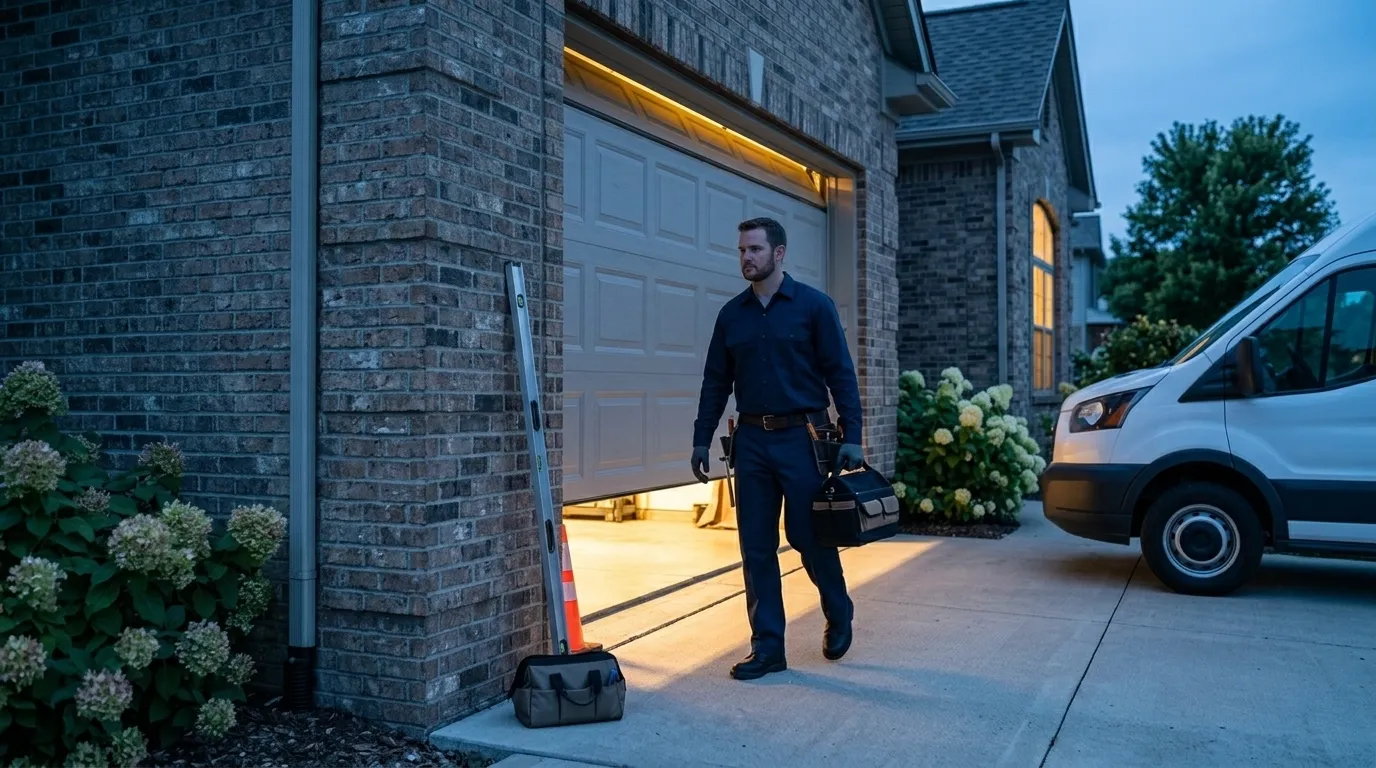
On a door installed anywhere near 1959, the failure pattern is pretty consistent: the opener strains and reverses partway up, or the door drops the last foot instead of settling. That's usually the torsion spring giving out gradually rather than snapping clean, which means you get weeks of a door that's 'a little off' before it quits entirely.
On the newer end of this area's housing - anything built after the 1970s remodel wave - we see cable fray at the bottom bracket more than spring failure, because those doors got upgraded hardware at some point but the same cable gauge. Either way, a door that reverses, hesitates, or slams the last few inches is telling you something is under uneven tension, and it gets worse, not better, on its own.
Why It Happens Here
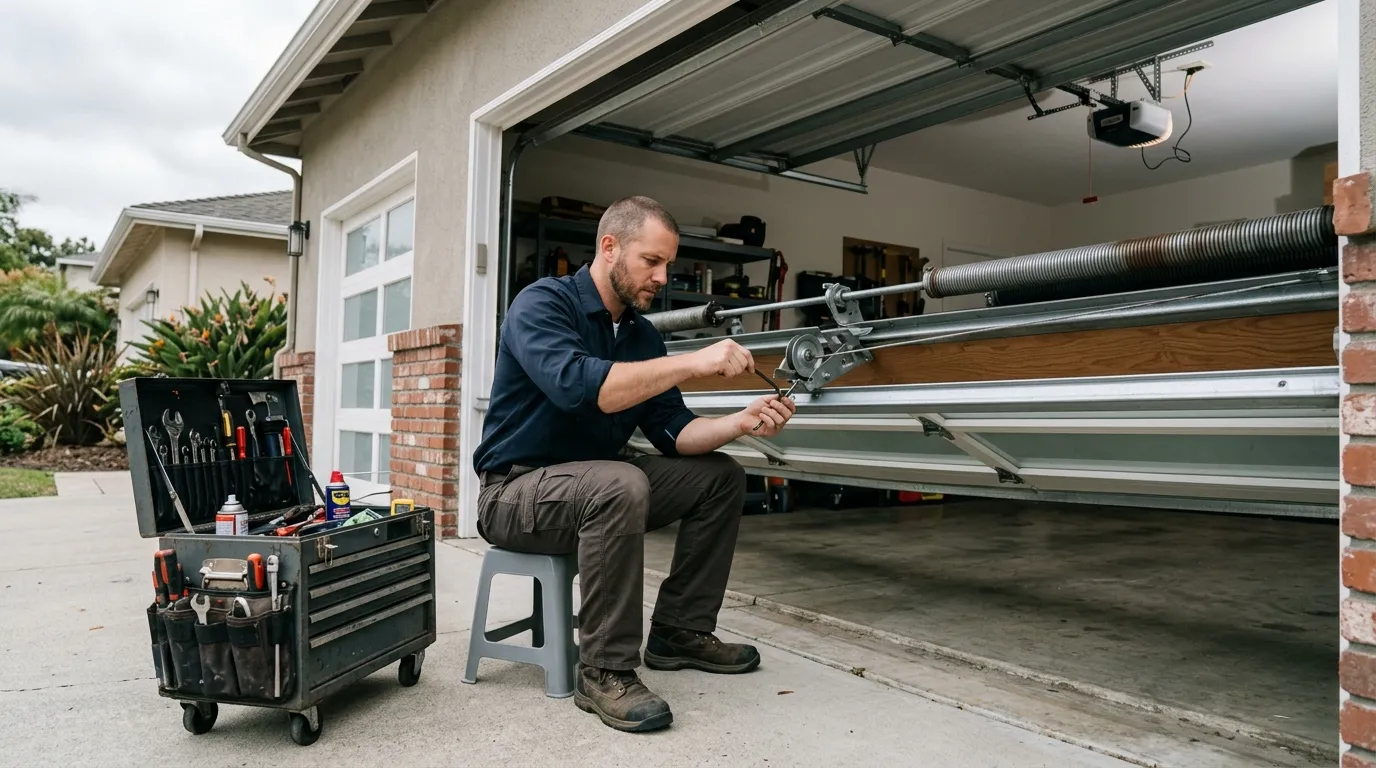
Center Line's housing stock centers on 1959, which puts most garages here squarely in the era of single-layer steel doors on side-mounted torsion springs - hardware that was standard then and is basically obsolete now. Nobody stocks those drums and end bearings on a truck the way they stock current parts, so repairs on an original setup sometimes mean sourcing an odd-size part rather than grabbing one off the shelf.
The cold climate here matters more than people think. Steel contracts in the cold, and on a door that's already 60-plus years newer than its springs were rated for, that seasonal contraction is often what finally snaps a spring that had been barely hanging on through the fall. We see the calls spike with the first hard freeze, not because the door failed randomly, but because the cold found the weak point that summer heat had been masking.
The Complications
The complication specific to a 1959-era door is matching hardware. If the spring, drum, or track on your door is original or close to it, we may need to special-order a part that isn't a stock size, and that adds a day or two we can't shortcut. We'll tell you upfront if that's the situation rather than promise a same-visit fix we can't deliver.
A second complication: a lot of these garages were sized for the cars of their era, meaning single doors narrower than what's common in newer subdivisions. If a full door swap ever becomes the answer instead of a repair, off-the-shelf widths don't always fit that opening without trim work.
We're covering Center Line from Warren, about a mile out, so we're not carrying a full stock of legacy parts on every run. If your job needs an obsolete part, we'll say so and give you a straight answer on timing rather than string you along.
The Cost of This Job
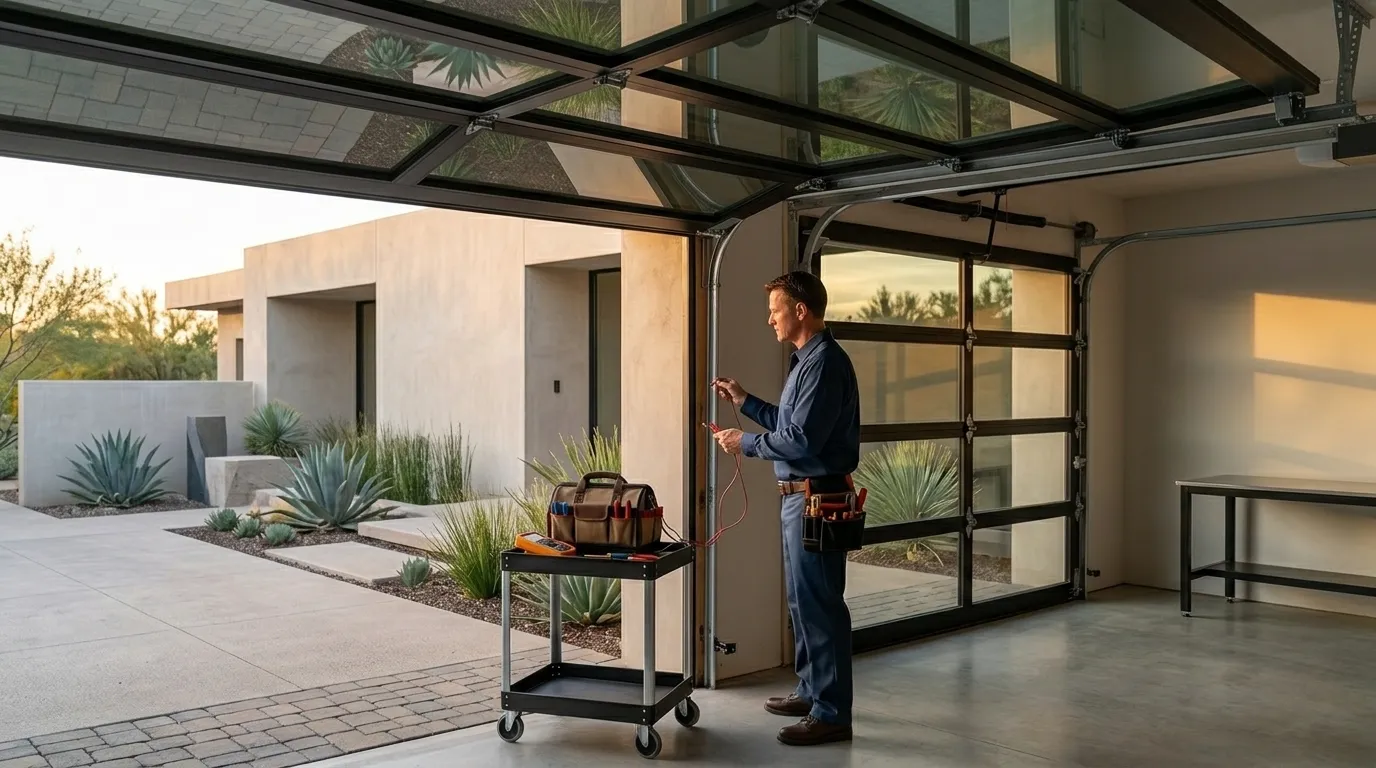
We don't have a posted price list for this area, and we're not going to invent one. What we can tell you honestly: repair cost on a door this age depends heavily on whether the hardware is original. A straightforward spring swap on standard-size parts is a different job, and a different bill, than one where we're sourcing a legacy drum or bracket for a door installed around 1959.
Center Line's median household income runs lower than some of the towns nearby, and we mention that only because it's fair context for why a repair - fixing the spring, cable, or drum rather than replacing the whole door - is usually the right call here before jumping to full replacement. A working repair on solid panel steel often outlasts a cheap new door, and we'll tell you when a full swap actually makes more sense instead of upselling one.
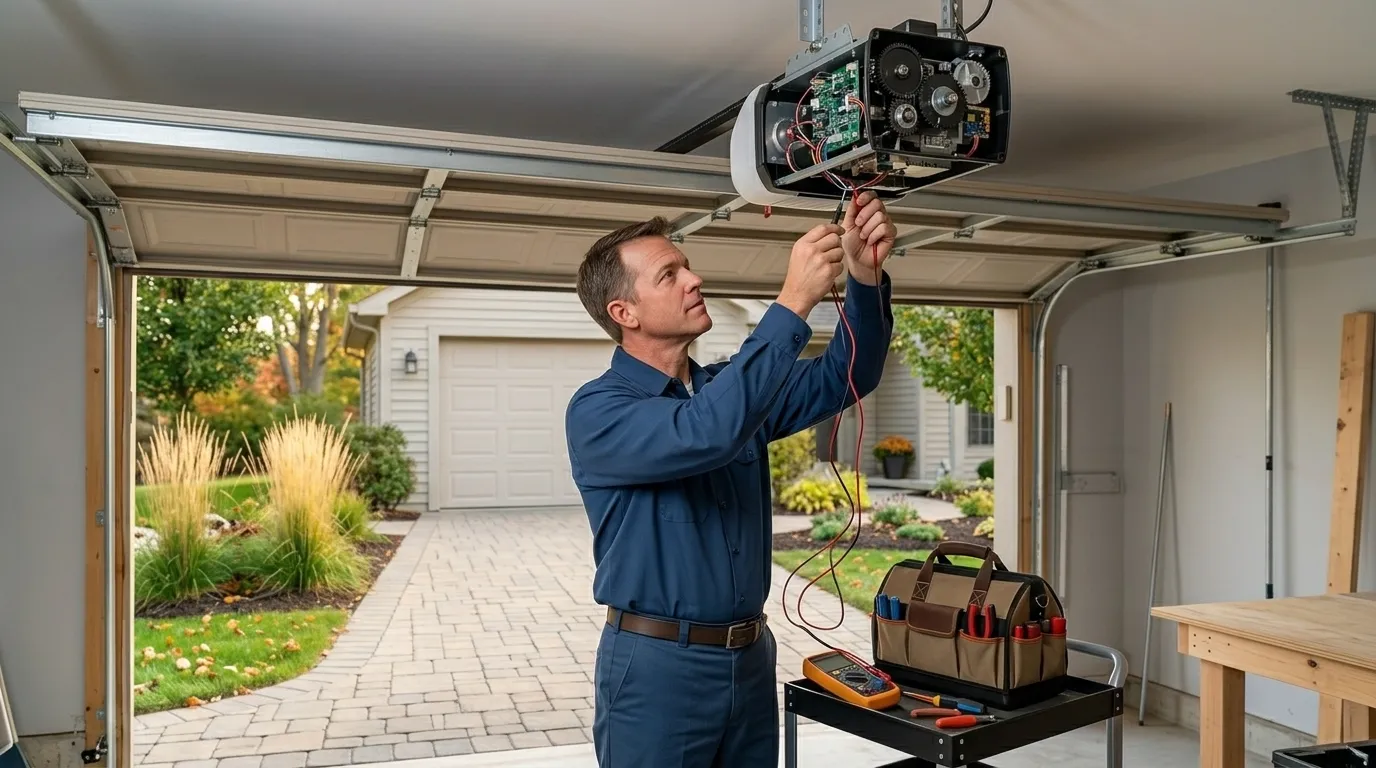
Why Center Line Calls Us
Other Garage Door Services in Center Line
Talk to a Center Line Technician First
Describe what the door is doing and get a straight answer on what it likely needs.
Recent Work in Center Line
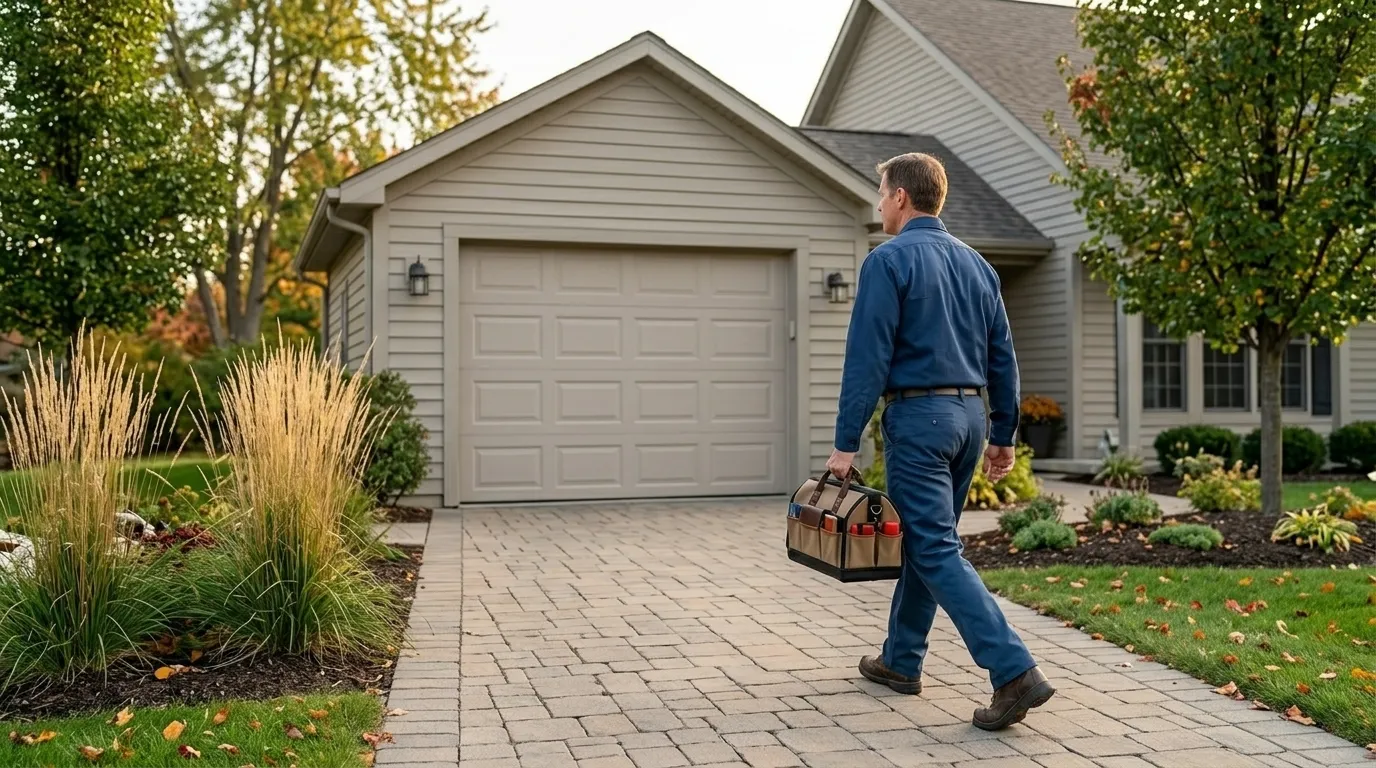
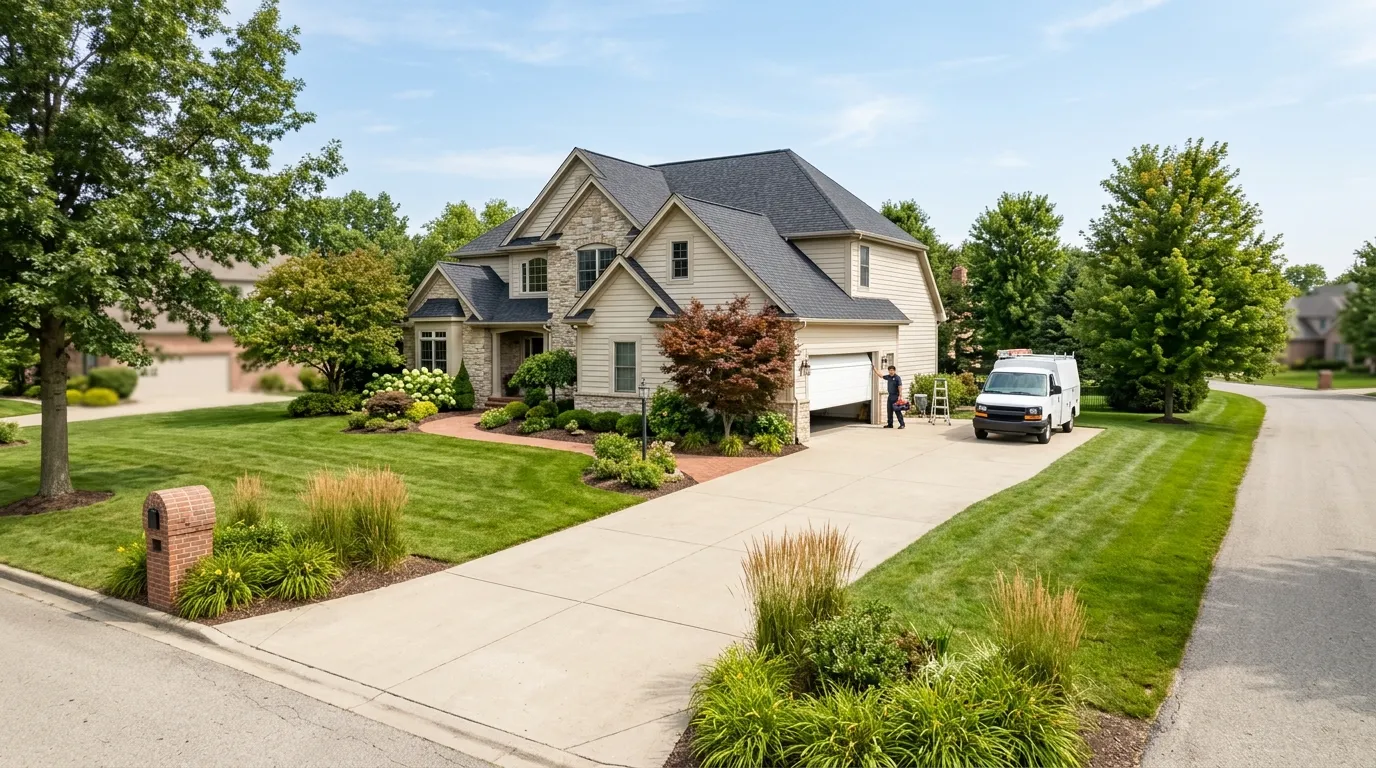
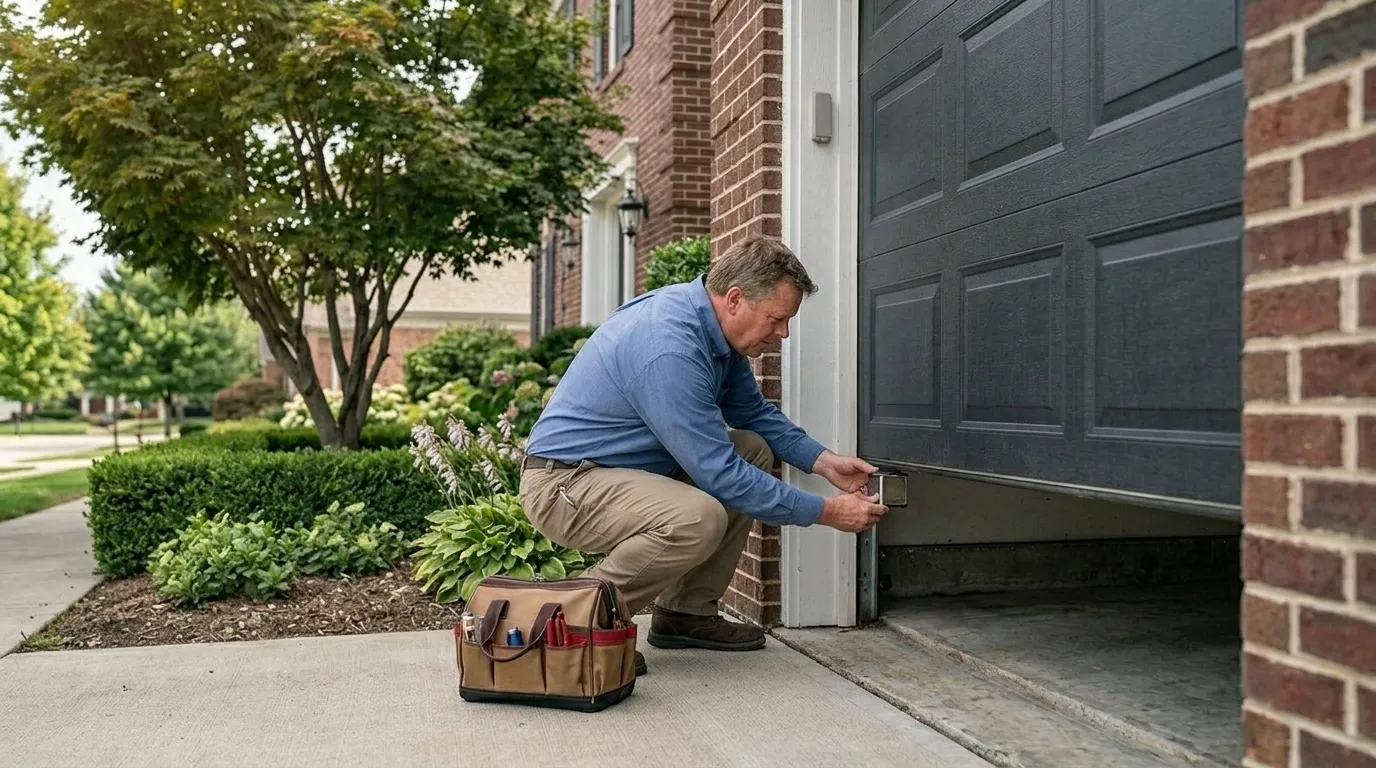
A look at jobs our crew has been on nearby.
Frequently Asked Questions
How far out is Center Line from your Warren location?
About a mile. We don't keep a branch in Center Line - every call here is run from Warren - but it's close enough that distance isn't the thing that decides how fast we can look at your door.
Why does my Center Line garage door use parts nobody seems to carry?
Most houses in Center Line went up around 1959, when torsion springs and drums came in sizes that aren't standard stock anymore. If your door is original, we may need to order a specific part rather than pull one off the truck.
Is it the cold making my door worse in winter?
Often, yes. Steel contracts in cold weather, and on an older spring that's already worn thin, that extra contraction is frequently what causes it to finally break. We see more calls right after the first hard freeze than any other time of year.
Should I repair or replace an old door like this?
Depends on the hardware and the panel condition, not just the age. A worn spring or frayed cable on solid steel panels is usually worth repairing. We'll tell you plainly if your door has crossed into replace territory instead of pushing a repair that won't hold.
Need Emergency Garage Door in Center Line?
Call now for straight answers on cost and timing.