
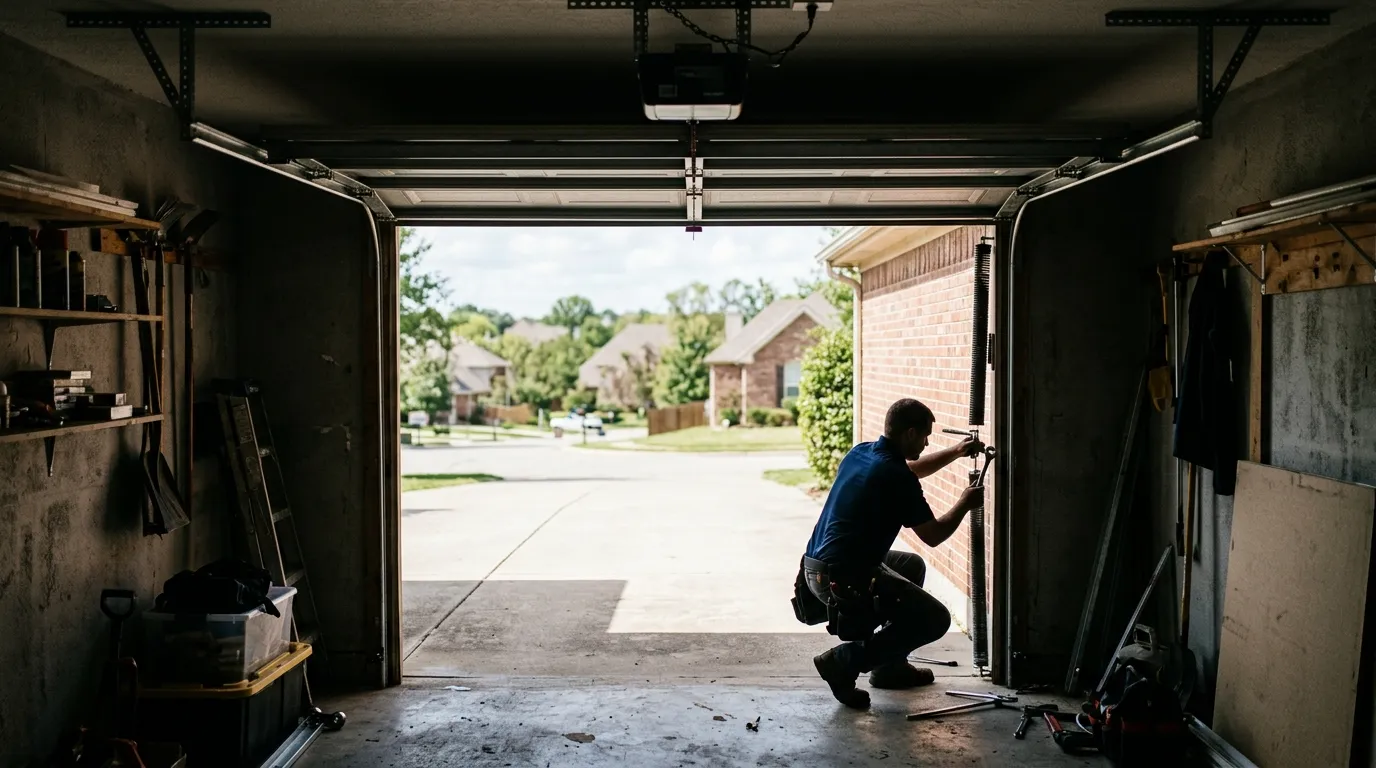
Roller Replacement in Center Line
Roller Replacement for Center Line's 1959-Era Garage Doors
Center Line's median household income sits well under Warren's service-area average, which changes the roller repair-versus-replace math on 1959-era doors. Here's how that plays out.
What Happens When You Call
-
1
Call or Request a Quote
Tell us what the door is doing and roughly how old the house is - that alone points us toward the likely part before a truck leaves.
-
2
On-Site Diagnosis
A tech checks the spring, cables, tracks, and opener in person and tells you plainly what is actually wrong.
-
3
Straight Price, No Surprises
You get a number before any work starts. It covers parts and labor, nothing added after the fact.
-
4
Fixed the Same Visit
Most repairs are done in one trip. If a part needs sourcing, we tell you that upfront instead of guessing.
Doing It Yourself
Center Line's median household income runs $52,857, noticeably lower than the $72,693 average across the broader Warren service area. That gap matters for a roller job because it's usually the point where a homeowner decides whether to fix what's there or start pricing a full door.
Swapping nylon rollers yourself on an older steel door isn't unreasonable if the track is straight and the door is light enough to lift safely off the spring. What trips people up is the track adjustment that follows - bent track from years of worn rollers grinding sideways needs to be re-set to gauge, and that's not a five-minute job with a socket wrench.
We'll say plainly: if you're comfortable disconnecting the opener and blocking the door open, replacing rollers on a straight track is within reach for a lot of homeowners. Where we'd stop you is anything involving the torsion spring or a cable under tension.
That's not a savings move, that's an ER trip. And on a house built around 1959, the odds of finding a door with side-mount hardware and older gauge track are higher than in newer subdivisions, so the roller alone may not be your problem.
How It Shows Up
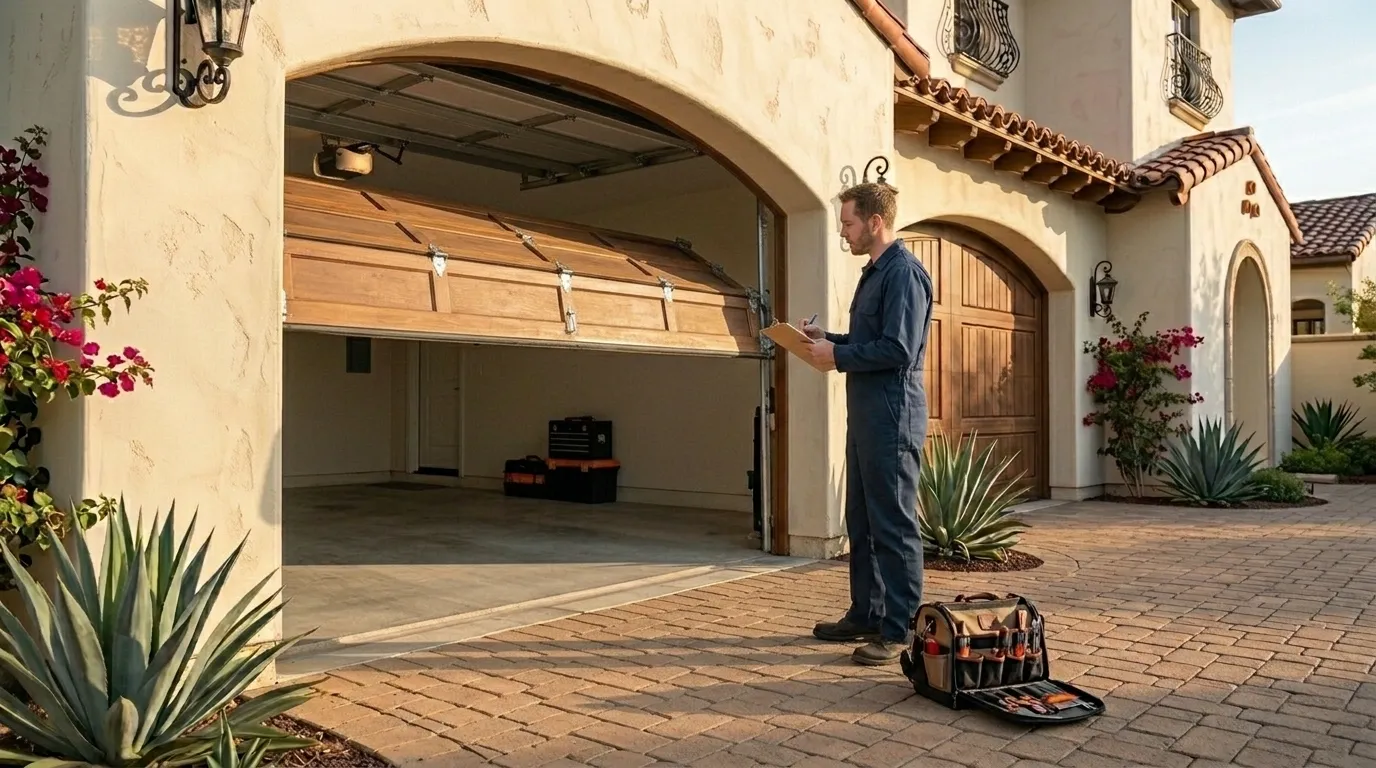
On the housing stock common to Center Line - built mostly mid-century, with plenty of homes from the same 1938-2000 range and 1957 median build year that runs across this whole side of the county - worn rollers show up as a grinding or popping sound right as the door passes the point where the track curves from vertical to horizontal. That's the section carrying the most side-load, and it's the first place steel rollers wear flat.
You'll also notice the door hesitating or jerking at that same spot, especially on colder mornings. If the door has started walking sideways in the track instead of running true, that's usually rollers that have worn down unevenly rather than a track or spring issue, though it's worth having both checked at once since they wear together on doors this age.
Why It Happens Here
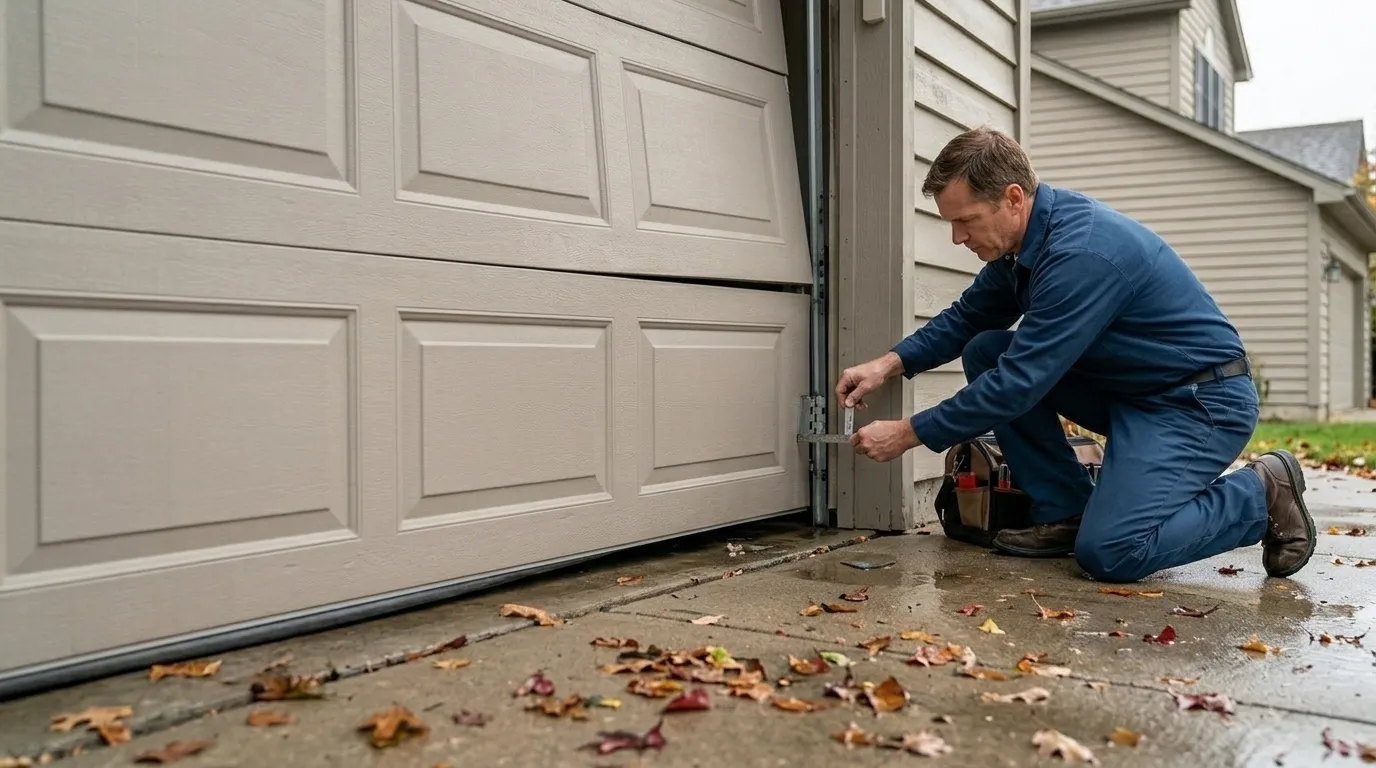
With around 3,702 households in Center Line and a housing stock that leans older - consistent with the pre-1960 build pattern found across most of the 41 communities this company covers - steel rollers on original hardware have had six decades to wear. Steel rollers were standard on doors from that era, and they were never designed to run maintenance-free that long. Add the region's cold, severe winter conditions and you get metal-on-metal contact that gets worse, not better, once ice forms in the track overnight and the door has to break free before it moves.
Houses a mile down the road in Warren share the same building era and the same climate exposure, so this isn't unique wear - it's the expected failure point for original hardware once a door hits somewhere past the thirty-year mark. Nylon rollers handle the cold better than the steel ones your door likely shipped with, which is part of why most replacements here move to nylon rather than swapping steel for steel.
The Complications
The complication specific to older Center Line homes is track condition. On a door built when steel rollers were standard, the track itself was sized for that hardware.
Swap in nylon rollers, which run slightly differently in the channel, and a track that's already bent or narrowed from decades of wear can bind instead of running smooth. That means a roller job on a house this age sometimes turns into a track replacement or adjustment mid-visit, not because anyone oversold the work, but because the two parts wear as a set.
We also won't pretend every roller failure is isolated. On original hardware from the late 1950s, a worn roller is often riding next to a worn hinge or a spring that's near the end of its cycle count. We'll tell you straight if the smart move is bundling the work rather than paying for a service call twice in the same year.
The Cost of This Job
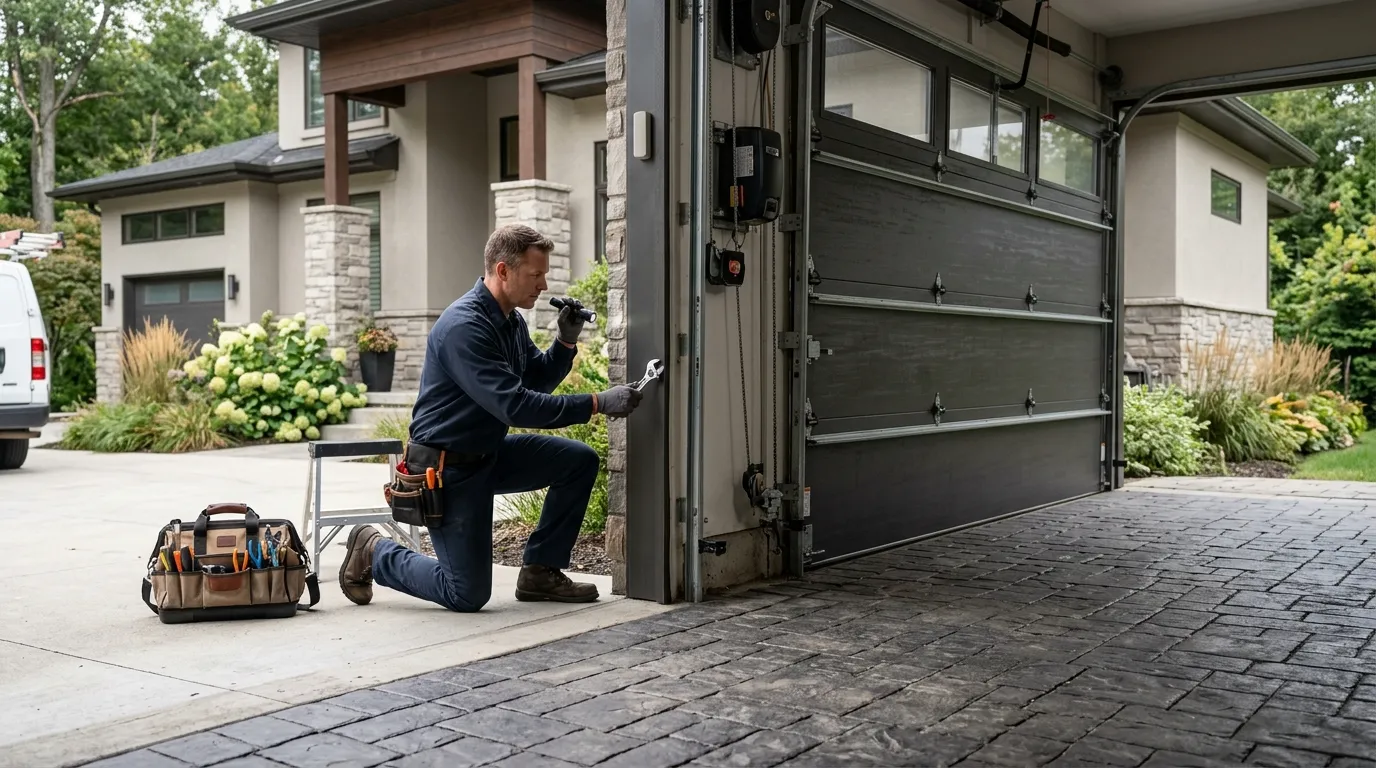
Given the median income here sits under the wider service area's average, we understand the roller-versus-door question isn't academic for a lot of Center Line households. A straightforward roller replacement on a door with a track that's still in reasonable shape is a modest repair. Where the number changes is if the track needs correcting alongside it - that's additional labor, not a separate visit fee, but it does move the total.
We don't have a fixed price to publish here, and giving you one without seeing the door and track condition would be a guess dressed up as a quote. What we can tell you is the same thing we'd tell a neighbor: on a door built when this house was, don't be surprised if the rollers aren't traveling alone.
Why Center Line Calls Us
Other Garage Door Services in Center Line
Talk to a Center Line Technician First
Describe what the door is doing and get a straight answer on what it likely needs.
Recent Work in Center Line
A look at jobs our crew has been on nearby.
Frequently Asked Questions
Are the garage doors in Center Line different from newer suburbs nearby?
A lot of them, yes. The housing stock here runs older on average, tied to the same pre-1960 pattern common across this side of the county. That means more original steel-roller hardware still in service, which wears differently than the nylon rollers found on newer doors.
Can I just replace the rollers myself?
On a straight track, often yes - it's a reasonable DIY job if you can safely secure the door open. Where we'd tell you to stop is if the track is visibly bent or the door won't hold position on its own, since that usually points to a spring problem, not just the rollers.
Why do steel rollers fail faster here than in warmer climates?
Cold weather stiffens the grease and lets ice form in the track overnight, so the door has to break loose against more resistance each time it runs. On steel rollers that are already decades old, that extra load speeds up the wear.
Does replacing rollers fix a door that's jerking or walking sideways?
Sometimes, but not always. If the rollers have worn unevenly, straightening that out often solves it. If the track itself has bent from years of that wear, the rollers alone won't fix the jerk - the track needs correcting too.
Need Roller Replacement in Center Line?
Call now for straight answers on cost and timing.