Opener Repair in Center Line
Opener Repair for Center Line's Older Garages
Opener repair for Center Line homes built mostly before 1960. We run this call from a mile up the road in Warren and know what these older garages ask of an opener.
What Happens When You Call
-
1
Call or Request a Quote
Tell us what the door is doing and roughly how old the house is - that alone points us toward the likely part before a truck leaves.
-
2
On-Site Diagnosis
A tech checks the spring, cables, tracks, and opener in person and tells you plainly what is actually wrong.
-
3
Straight Price, No Surprises
You get a number before any work starts. It covers parts and labor, nothing added after the fact.
-
4
Fixed the Same Visit
Most repairs are done in one trip. If a part needs sourcing, we tell you that upfront instead of guessing.
Doing It Yourself
Center Line sits about a mile from our shop in Warren, close enough that a service call here runs like a same-neighborhood job instead of a cross-town haul. That matters less for how fast we show up and more for how the visit goes: we're not guessing at what kind of house we're pulling into.
Before you call anyone, a few things are worth checking yourself. Wipe the eyes of the safety sensors near the floor on each side of the track - road salt and winter grime build up on them and the opener will refuse to close with a dirty or misaligned sensor, no repair needed.
Swap the remote and wall-button batteries. Look at the two small LED lights on the sensor brackets; if one is dark or blinking, that's your sensor alignment issue right there, and you can often nudge the bracket back into line by hand.
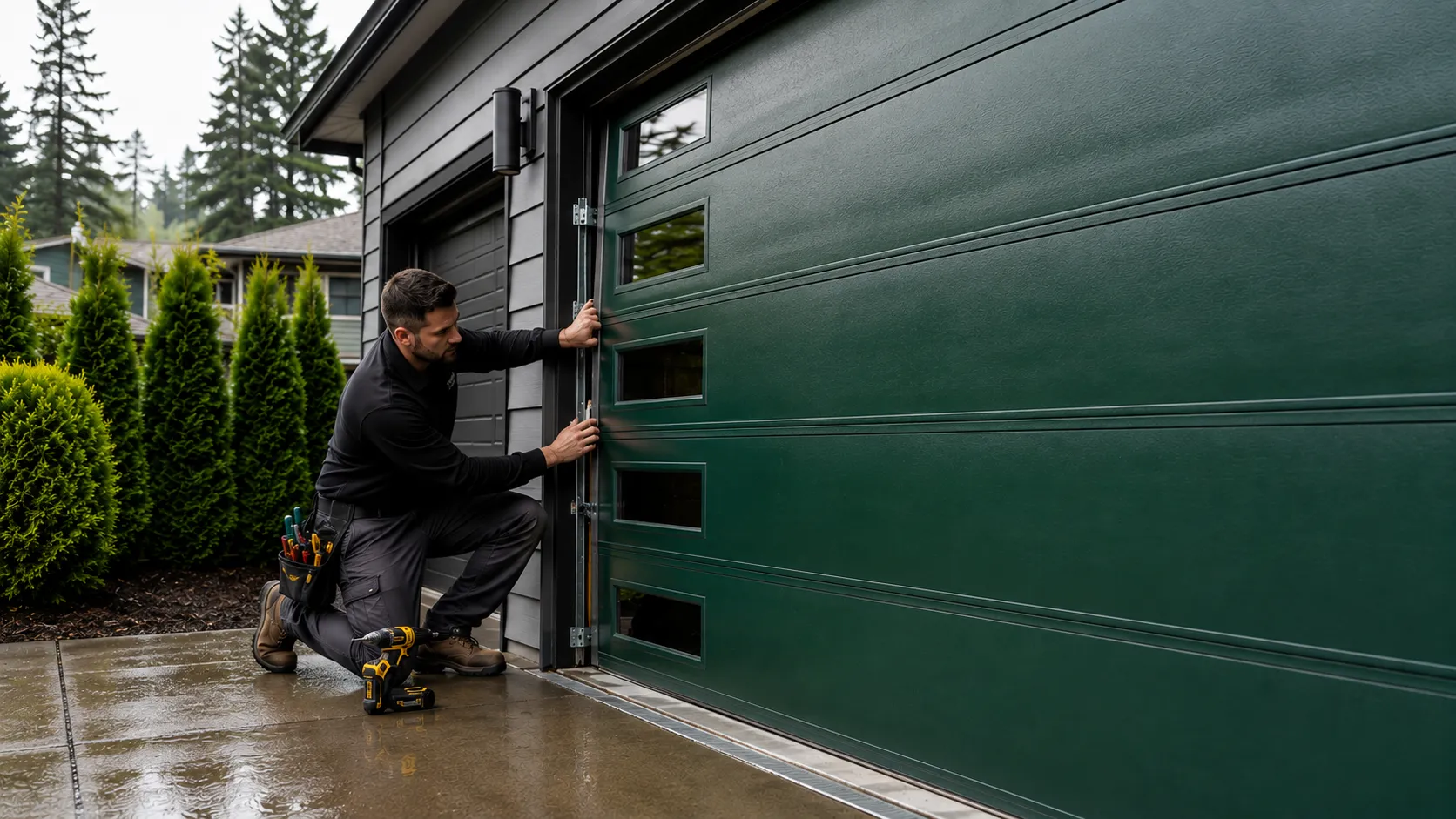
What you shouldn't do is open the motor housing on the unit itself. If the light blinks a fault code, or the door reverses before it hits the floor, or the motor runs but the trolley doesn't move, that's a gear, capacitor, or circuit board problem inside the head unit, and taking the cover off without knowing what you're looking at usually turns a repair into a replacement.
How It Shows Up
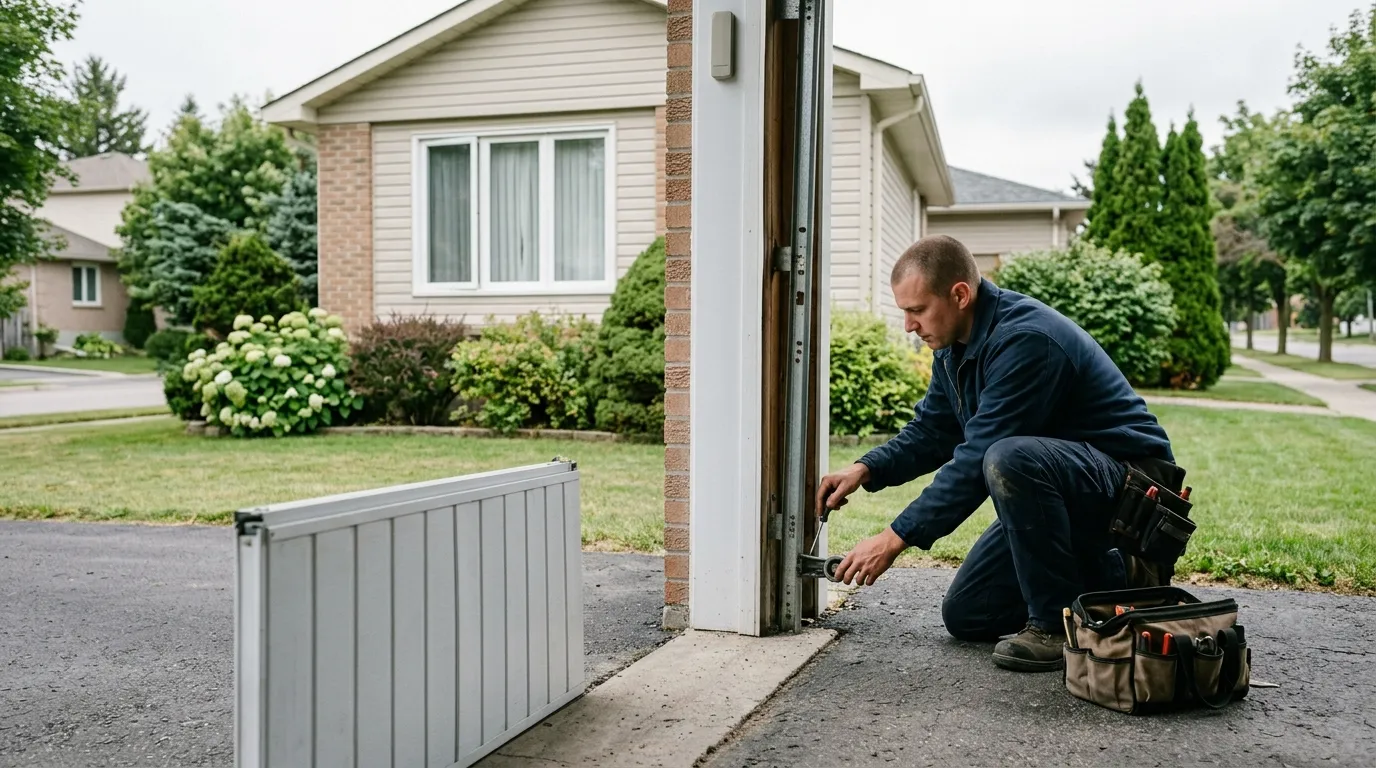
The most common call we get from this side of town is an opener that runs - motor humming, chain or belt moving - but the door itself doesn't budge. That's almost always a stripped nylon gear inside the unit, a part that wears out on a schedule regardless of brand.
Second most common: the door reverses partway down, or won't close at all, and the wall unit shows a blinking light. Nine times out of ten that traces back to the safety sensors, either dirty, knocked out of alignment, or wired loose after years of vibration.
A third pattern shows up more in winter: the opener works fine most days but hesitates or refuses to start on the coldest mornings, then behaves normally again once the garage warms up. That's a symptom of an aging capacitor or a chain that's stiffened up in the cold, not something that fixes itself with time.
Why It Happens Here
Housing in this part of the service area mostly went up between 1938 and 2000, with the bulk of it clustered around 1957 to 1959 - Center Line's own median build year lands right in that window. That means most garages here were built for a single-car or narrow two-car door, framed with the shallow headroom typical of the period, and the openers installed in them have usually been replaced once or twice since the house was new.
The cold is the other half of the story. This area sits in a climate zone rated cold and severe, and that's hard on opener hardware in specific ways: grease inside the gearbox thickens, chain tension changes as metal contracts, and the capacitor that gives the motor its starting punch is one of the first parts to weaken under repeated cold starts. An opener that's been fine for eight winters can fail on the ninth cold snap, not because anything broke suddenly, but because the cold finally found the weak part.
The Complications
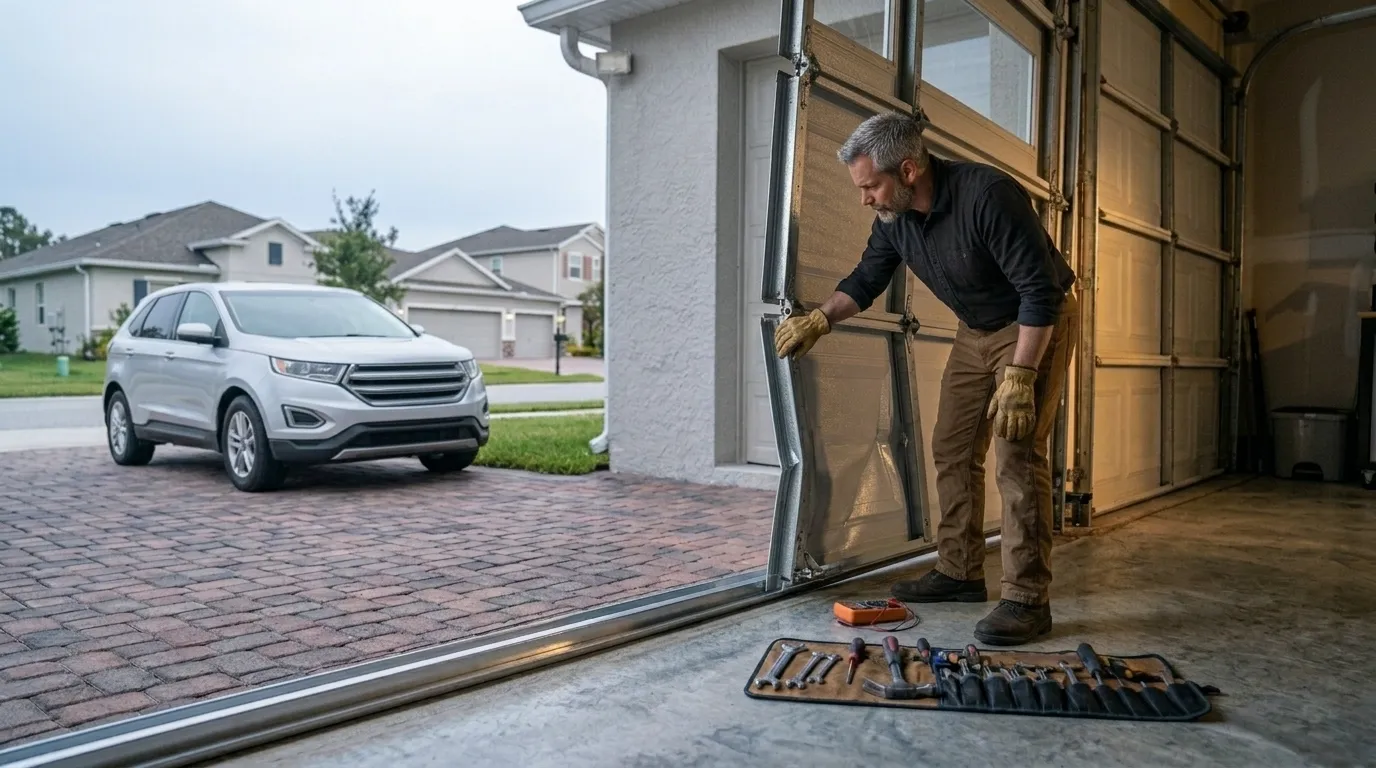
Because so much of the housing stock here predates 1960, we run into garages where the opener has been swapped out for a newer unit but the door itself, the track, or the header framing is original. A modern opener bolted onto an old, sagging header can throw the whole system out of alignment even when the opener itself is fine - the fault isn't where it looks like it is.
Low headroom is the other recurring issue. Garages from this era were often built without much clearance above the door, which limits which opener models will physically fit and sometimes rules out a straight swap for the exact unit that failed. We'll tell you upfront if that's the case rather than force a fit.
One honest limit: if the opener has failed because the door itself is out of balance - a spring that's lost tension, or a track that's bent - replacing or repairing the opener alone won't fix the real problem. We'll flag that before we replace a part that isn't the cause.
The Cost of This Job
We don't post a flat price for opener repair here, because a bad capacitor and a stripped gear cost different amounts, and a full opener replacement is a different job than either. What we can say is that median household income in Center Line runs $52,857, noticeably below the $72,693 median across the wider area we cover - and that gap shows up in the decisions people make on this job. More often than not, if a repair can extend the life of a working opener another few years, that's the call homeowners here want us to make, not an automatic swap to a new unit.
We'll always give you the repair-versus-replace numbers before we start, and if the honest answer is that the opener is old enough that parts are getting hard to source, we'll say so instead of running up a bill chasing a fix that won't hold.
Why Center Line Calls Us
Other Garage Door Services in Center Line
Talk to a Center Line Technician First
Describe what the door is doing and get a straight answer on what it likely needs.
Recent Work in Center Line
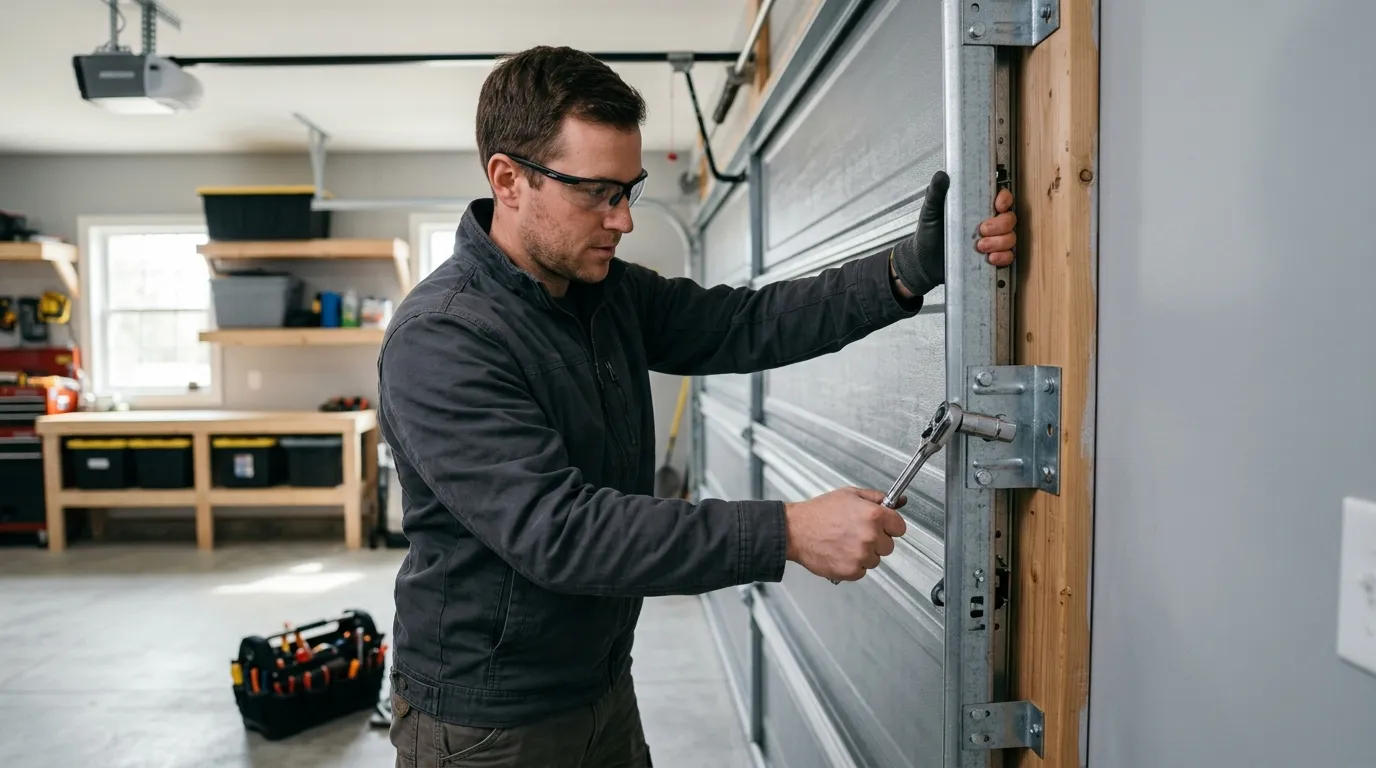
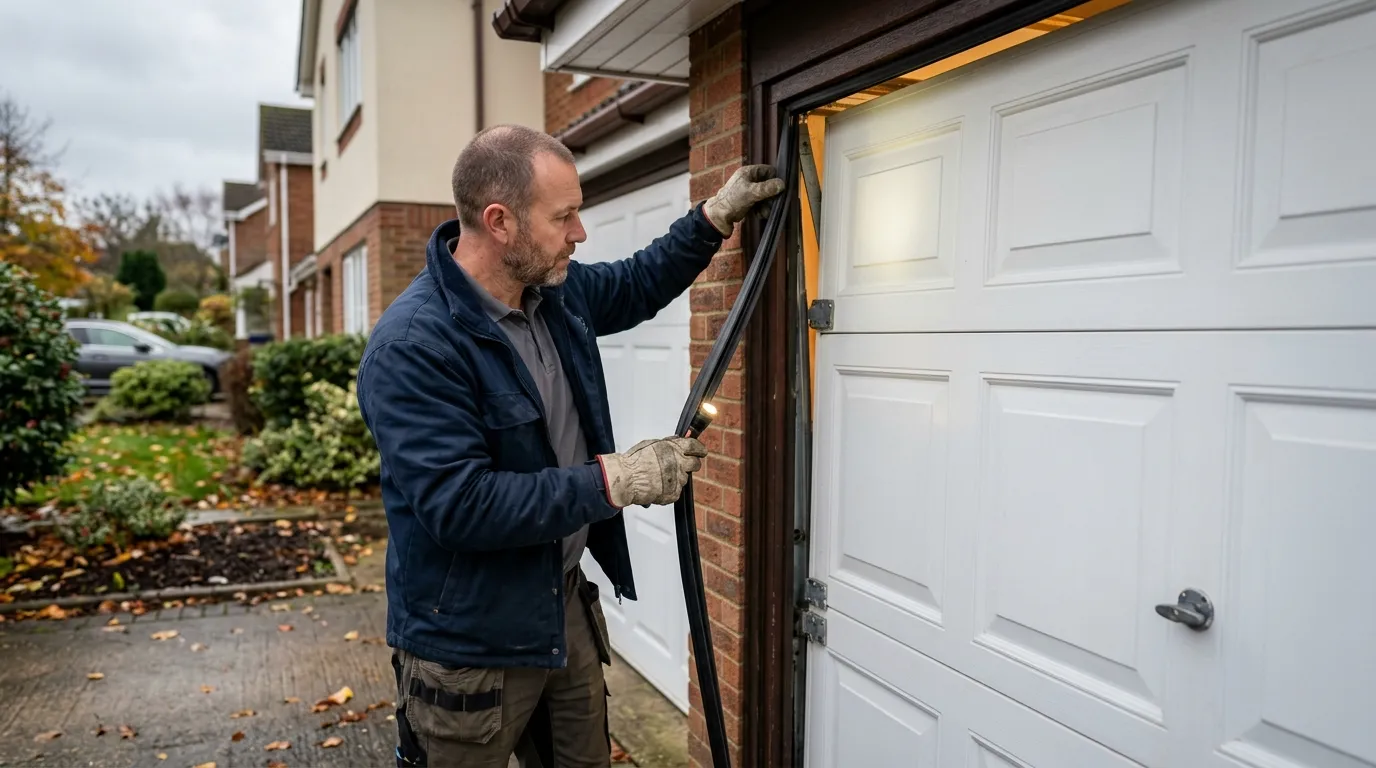
A look at jobs our crew has been on nearby.
Frequently Asked Questions
How far out is Center Line from your Warren shop?
About a mile. It's close enough that we don't add a mileage charge or a longer wait window for this town versus jobs right in Warren - it's effectively the same service radius.
Why does my opener only act up in cold weather?
Cold thickens the grease in the gearbox and weakens the motor's starting capacitor. If your opener hesitates on the coldest mornings but runs fine once the garage warms, that's usually a capacitor nearing the end of its life, not a one-time glitch.
Can you fit a new opener in an older Center Line garage?
Most of the time, yes, but garages built here in the late 1950s often have shallower headroom than newer construction, which limits which models fit. We check clearance before recommending a specific unit rather than assuming a standard fit.
Is it worth repairing an old opener or should I replace it?
Depends what's wrong. A stripped gear or bad capacitor is usually a straightforward repair. If the motor itself has failed or parts are hard to find for the model, replacement often costs less in the long run than chasing repeated fixes.
Need Opener Repair in Center Line?
Call now for straight answers on cost and timing.