
New Door Installation in Center Line
New Garage Doors for Center Line's 1959-Median Housing Stock
Center Line's 1959-median housing stock carries single-car wood-panel doors on old hardware. Here's what a new install means for homes a mile from Warren.
What Happens When You Call
-
1
Call or Request a Quote
Tell us what the door is doing and roughly how old the house is - that alone points us toward the likely part before a truck leaves.
-
2
On-Site Diagnosis
A tech checks the spring, cables, tracks, and opener in person and tells you plainly what is actually wrong.
-
3
Straight Price, No Surprises
You get a number before any work starts. It covers parts and labor, nothing added after the fact.
-
4
Fixed the Same Visit
Most repairs are done in one trip. If a part needs sourcing, we tell you that upfront instead of guessing.
Doing It Yourself
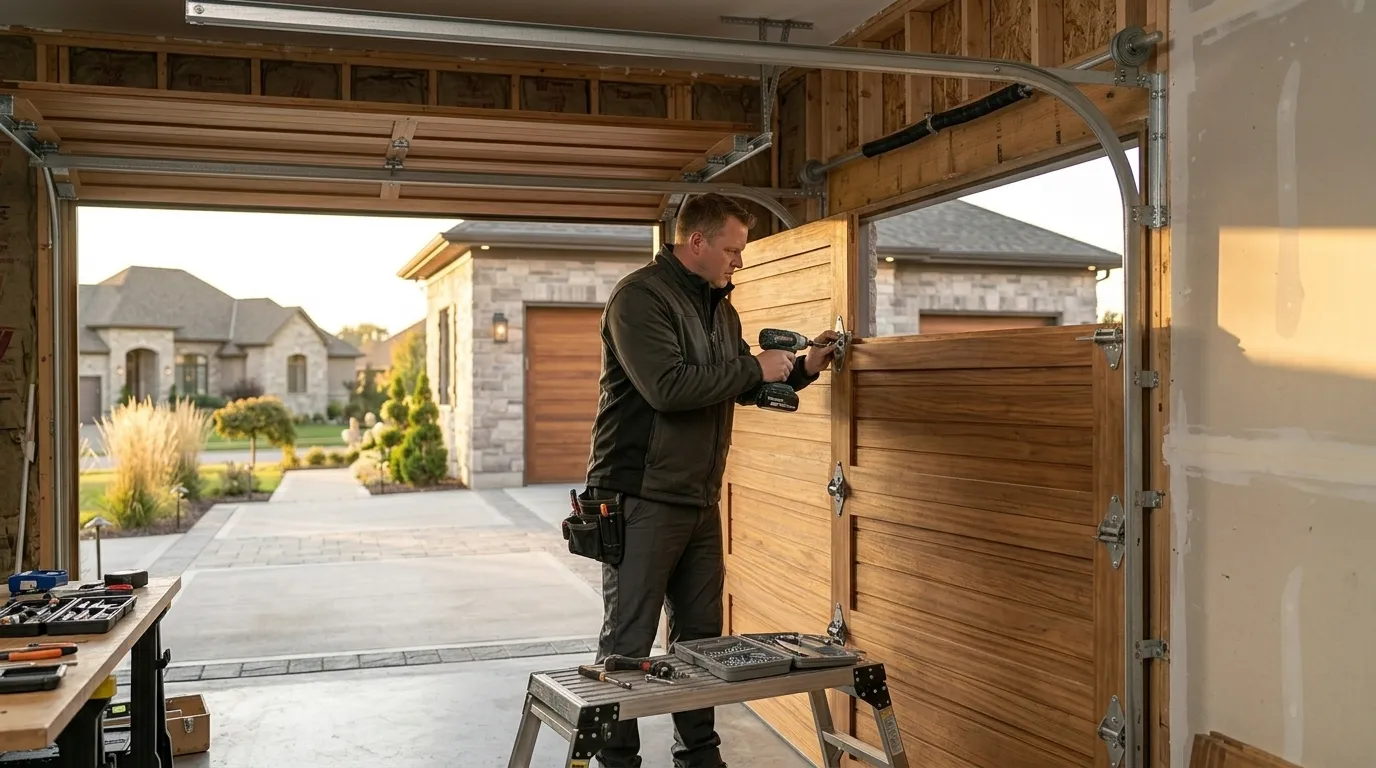
Center Line's houses went up around a median year of 1959, and a lot of them still carry the original single-car opening - usually 8 or 9 feet wide, sized for the one-car garages that came standard with that generation of home. Swapping that door yourself means handling a panel that's heavier than it looks, torsion springs wound to a tension that can break a wrist if the winding bar slips, and an opening that may not match the stock sizes sold at a big-box store without trimming the jamb. We won't talk you out of trying if you've done this kind of work before.
But if you've never wound a spring under load, this is the one job in the garage where a mistake doesn't mean a redo - it means an ER visit. That's the honest limit here: we'll walk you through picking a door on the phone, but we won't talk anyone through winding springs solo.
How It Shows Up
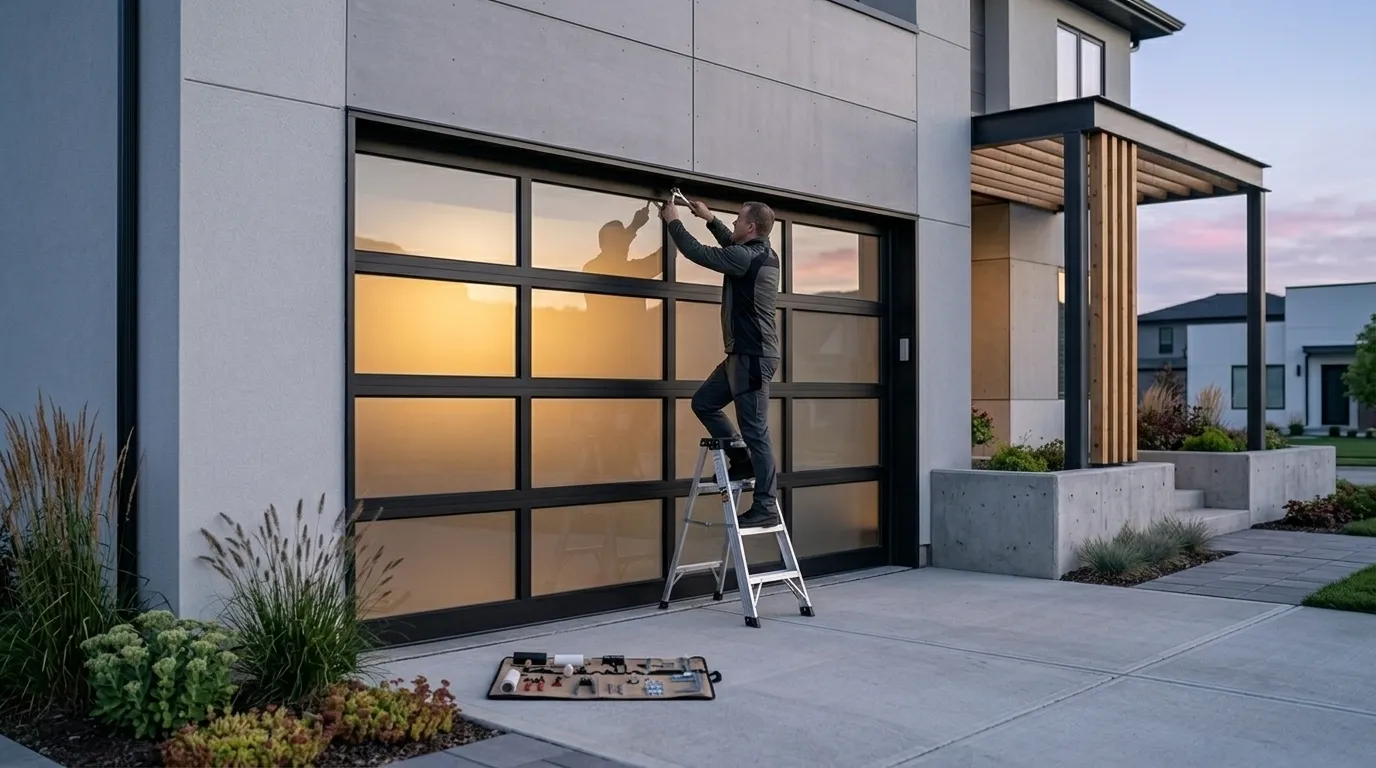
In a town built mostly before 1960, the tell is almost always the opening itself, not just the door. Homeowners call after measuring for a replacement and finding the rough opening is a half-inch or more off standard, or after noticing the track hardware is side-mounted instead of the overhead style most new doors expect.
Sometimes it shows up as a door that still opens fine but rattles loose panels in the wind - original steel doesn't insulate the way a two-layer polystyrene door does, and in a house this age that gap has usually been ignored for decades. The other pattern: owners replacing a door after storm damage or a car backing into it, who assume they need the exact same size and are surprised when we tell them the old single-car frame can often take a wider door if the header's sound.
Why It Happens Here
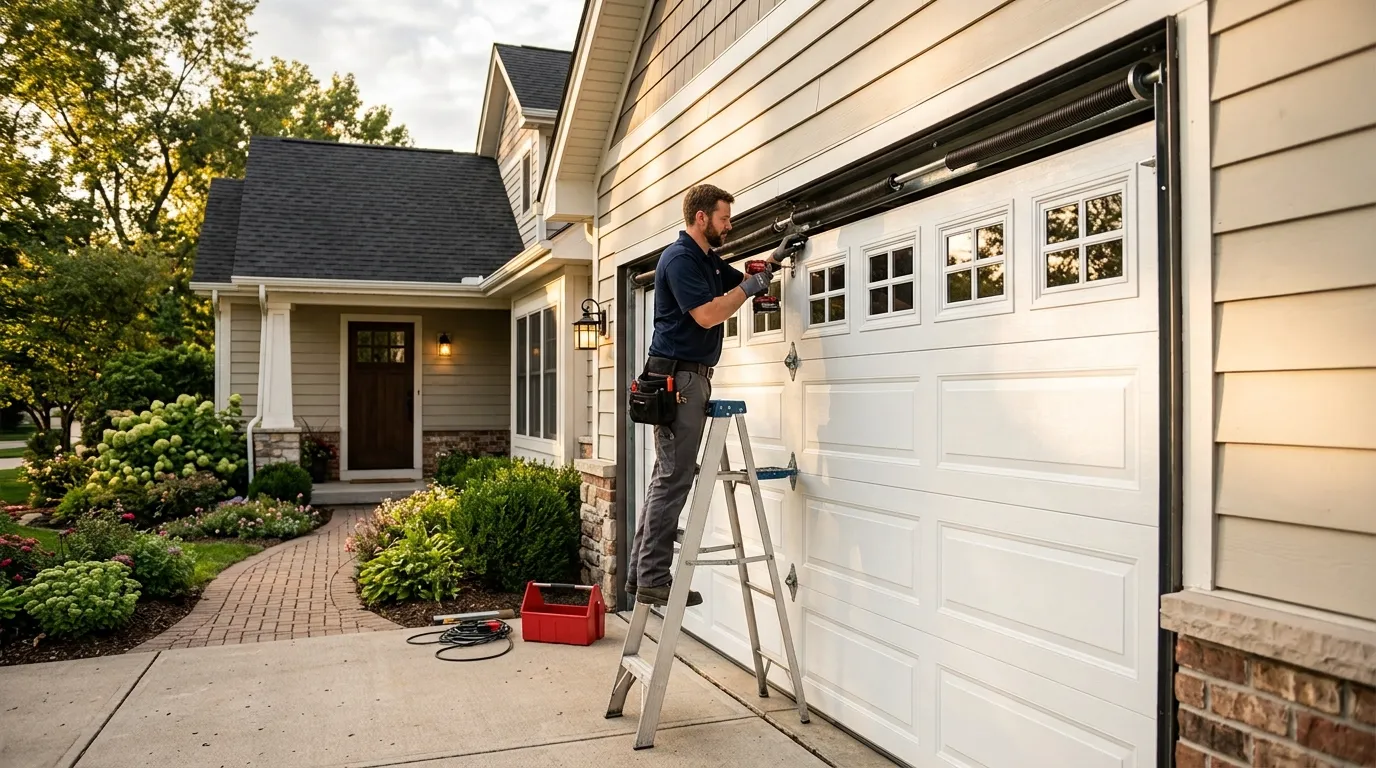
Two things stack on each other in Center Line. First, the housing stock: with a median build year of 1959, most garages here were framed for the cars and doors of that decade, not for the 16-foot double-wide bays common in newer construction. Second, the climate band is severe cold, which means any door installed here needs weatherstripping and insulation rated for hard freezes, not just a swap of the panel.
A homeowner in a newer subdivision further out might just be picking a color and an opener. Here, the install usually starts with confirming whether the framing itself needs shimming or rebuilding before a new door goes in square.
The Complications
The complication that comes up most in a town this age is header height. Original single-car openings were often framed tight to code minimums from the 1950s, and a modern insulated door - thicker than the steel single-skin doors of that era - sometimes needs an inch or two more clearance than the frame gives. That means either a slimmer track kit or minor carpentry before the door goes in.
We also see openers original to the house that predate current safety-reversal standards; those get replaced as part of the job, not left in place. None of this is unusual for a house built around 1959, but it does mean the quote changes once we're standing in front of the actual opening, not just talking dimensions over the phone.
The Cost of This Job
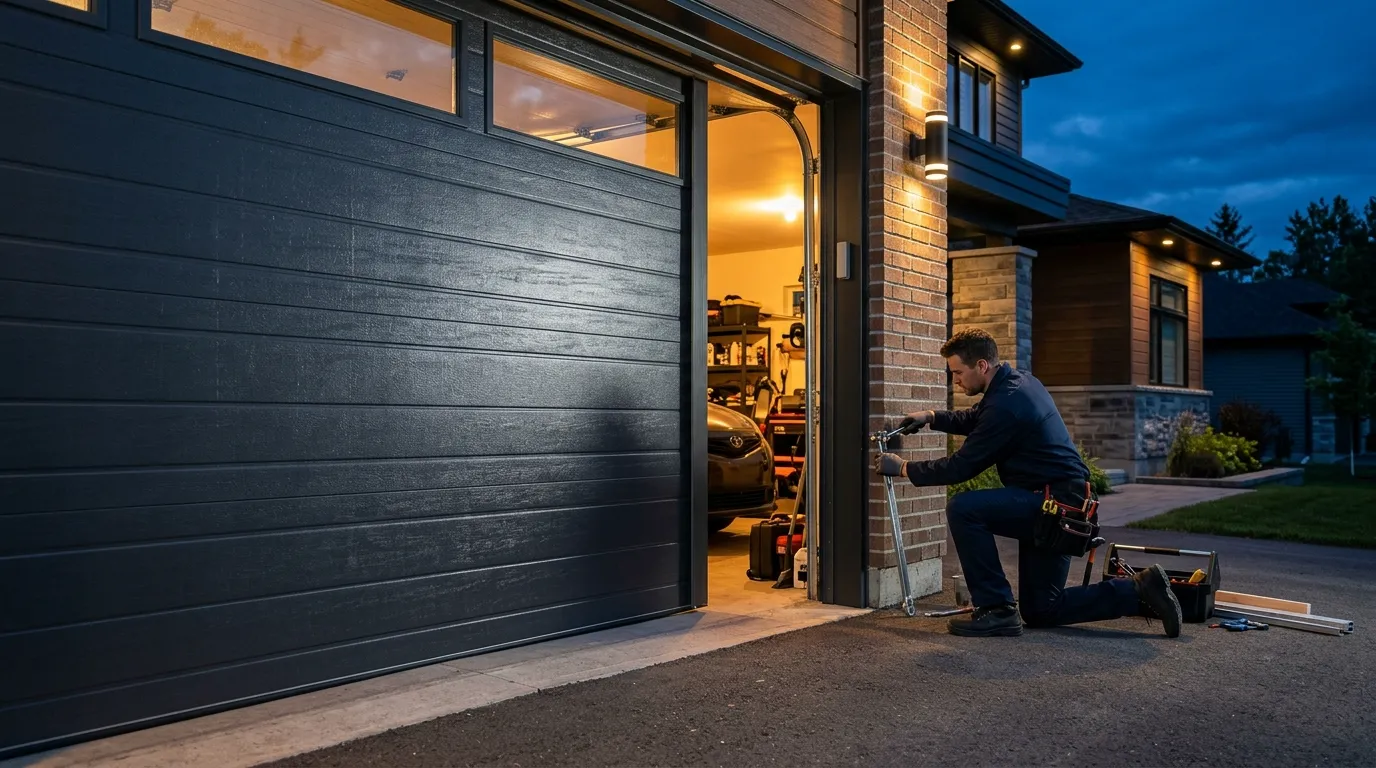
We don't have a fixed price to hand you here - every one of these jobs prices out differently once we've seen whether the opening needs framing work. What we can tell you: median household income in Center Line runs $52,857, noticeably below the $72,693 median across the wider area this company covers, and that gap tends to show up in which door gets chosen - insulated steel over the higher-end wood-composite lines, single-layer options where the budget's tight.
With 3,702 households in a town this size, compared to roughly 338,897 across the whole service area, Center Line is a small slice of the map. The crew comes from Warren, a mile away, for every job - there's no branch office in town, just the drive.
Why Center Line Calls Us
Other Garage Door Services in Center Line
Talk to a Center Line Technician First
Describe what the door is doing and get a straight answer on what it likely needs.
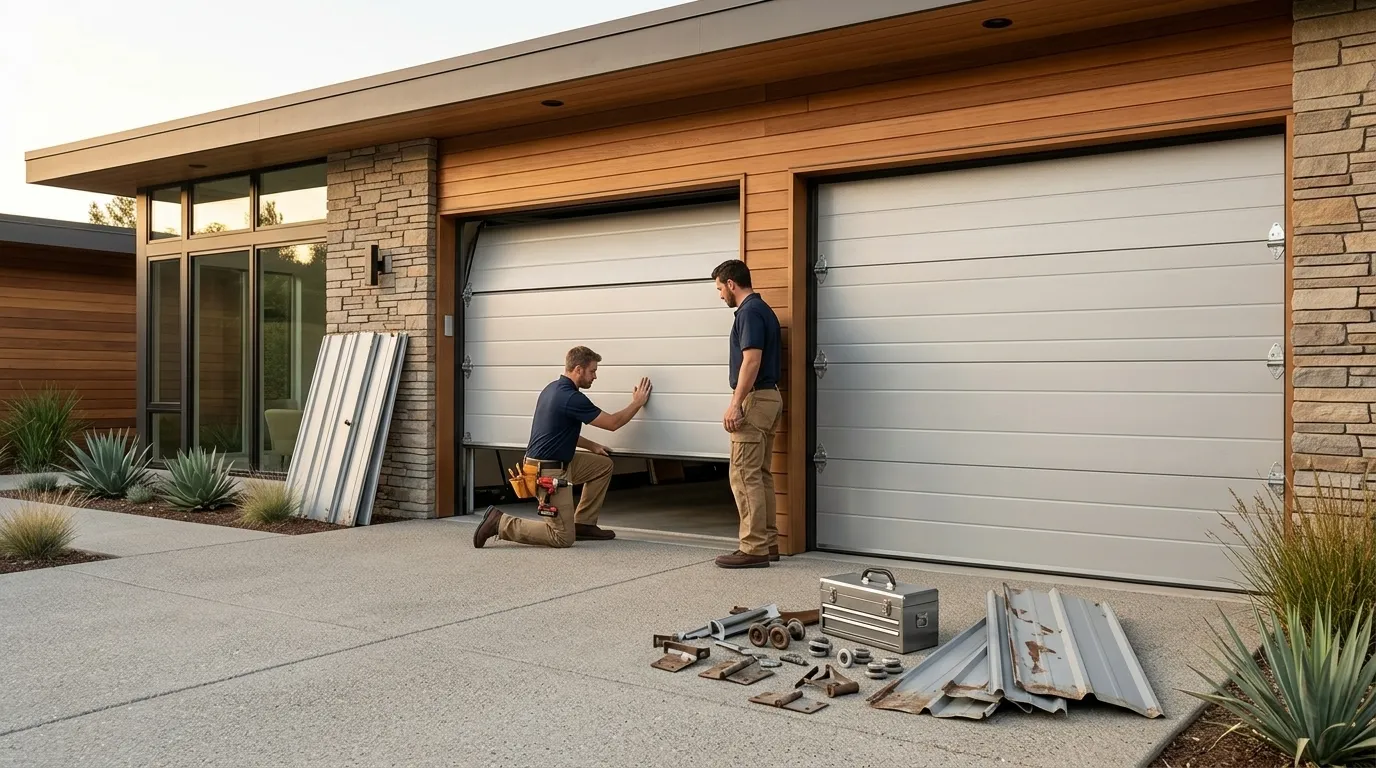
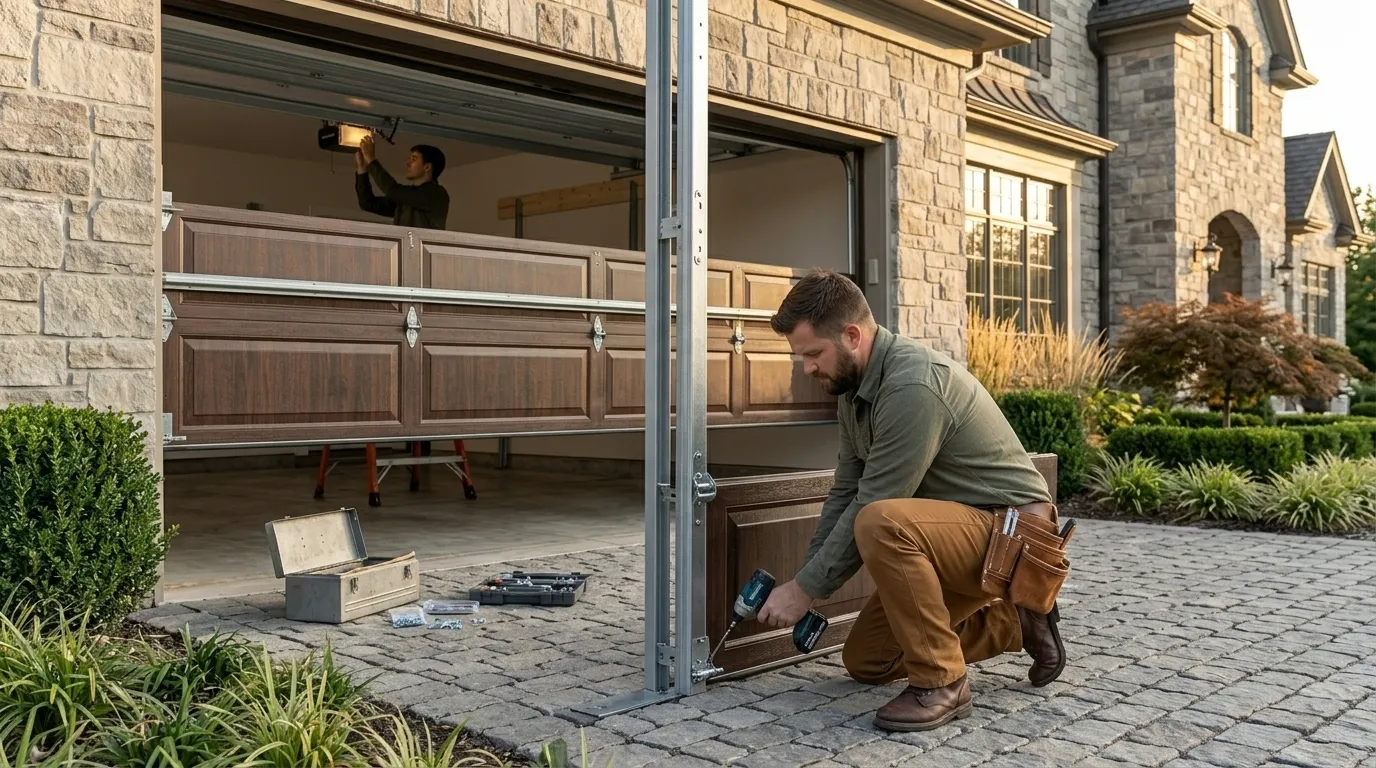
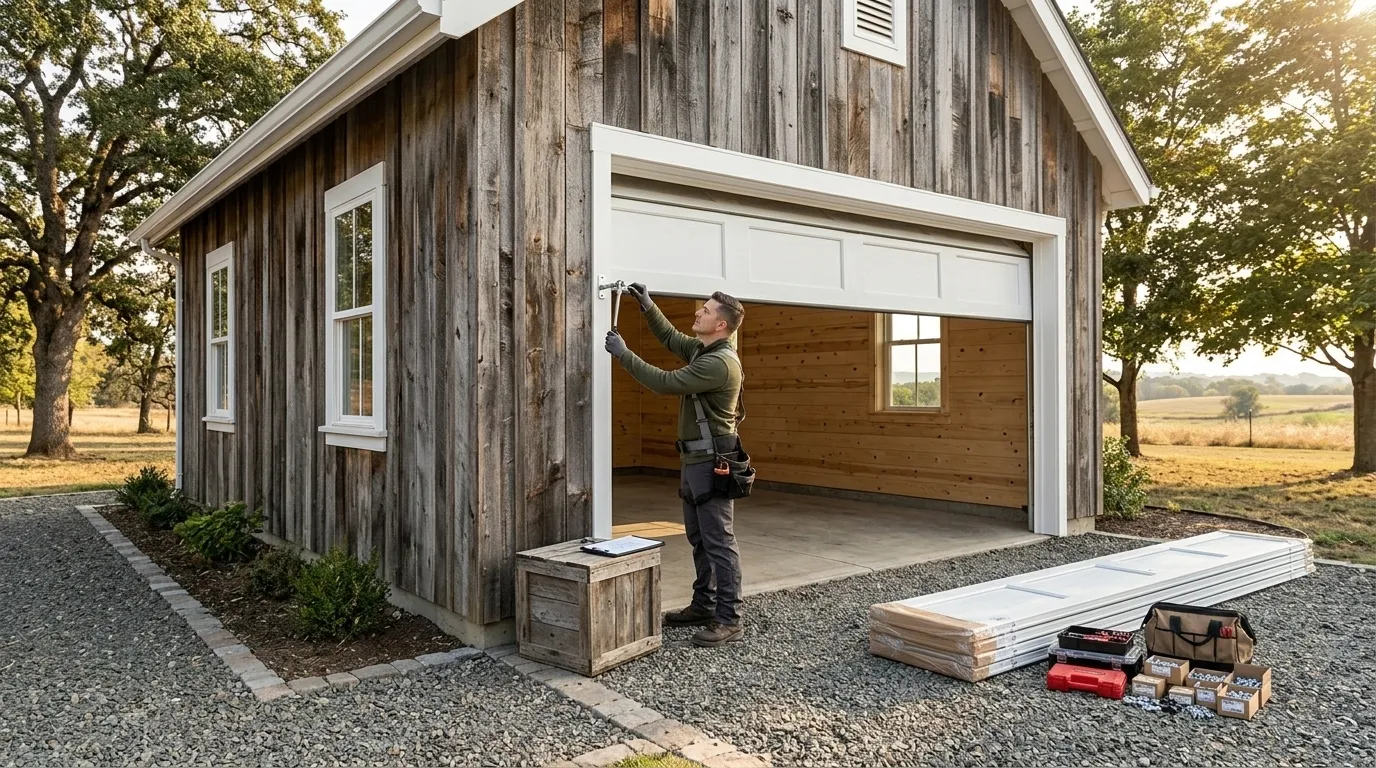
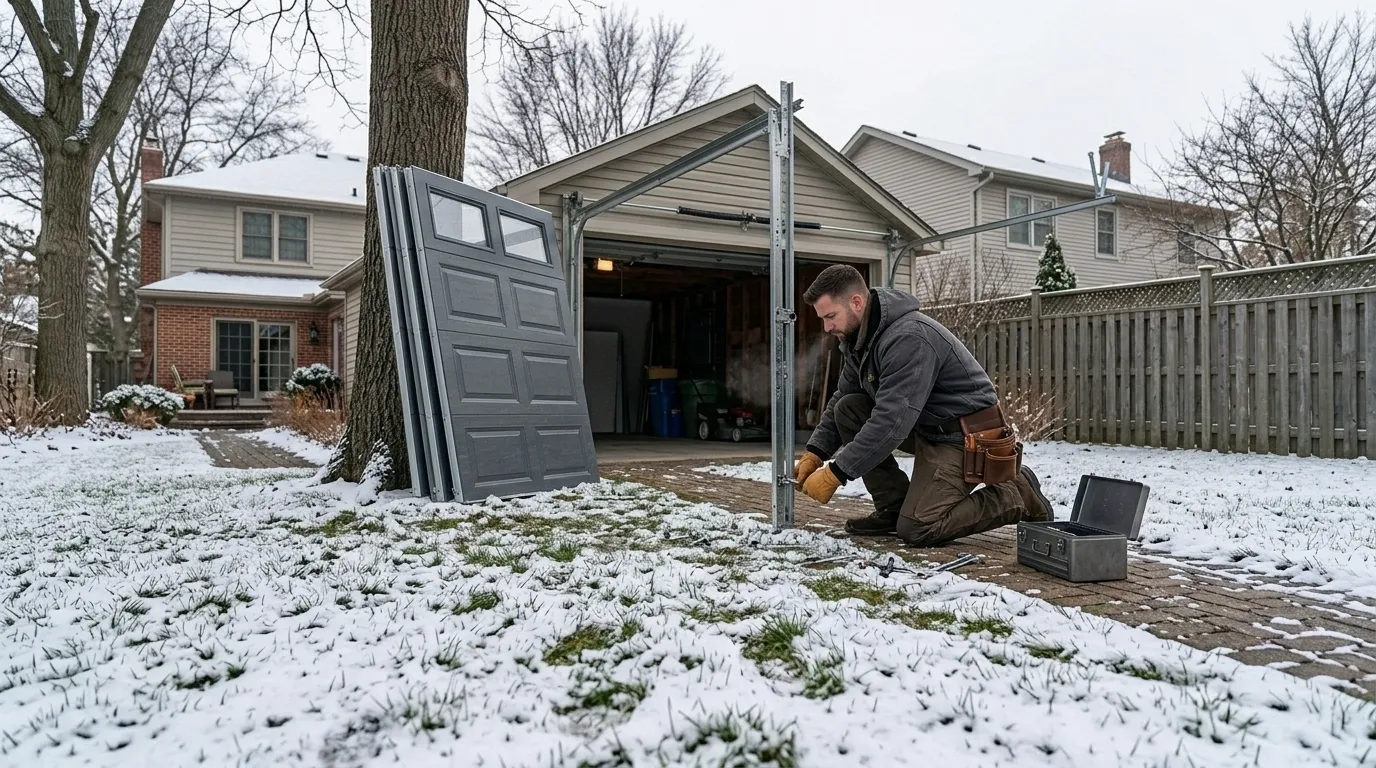
Recent Work in Center Line
A look at jobs our crew has been on nearby.
Frequently Asked Questions
Will a new door fit my original 1959 opening without construction work?
Sometimes. If the framing is square and the header height clears modern door thickness, a standard-size replacement fits without changes. If not, we'll tell you before we order anything - it usually means a small amount of trim or header work, not a full reframe.
Do you install openers that meet current safety codes on older doors?
Yes. If your opener predates current safety-reversal standards, we replace it as part of the install rather than pairing a new door with old opener hardware.
Is a wood-panel door still a reasonable choice for a house this age?
It can look right on a 1959-era house, but original wood panels don't insulate well against Michigan's severe cold. Most homeowners here go with an insulated steel door styled to look like the original panel instead.
Do you have a crew based in Center Line?
No - we work out of Warren, a mile away, and drive to Center Line for jobs. There's no local branch here.
Need New Door Installation in Center Line?
Call now for straight answers on cost and timing.