
Service
Garage Door Service for Warren's Older Housing Stock
Warren homes built mostly before 1960 run original torsion hardware sized for a different era. We service the springs, tracks, and openers that fail in this cold.
- Licensed & Insured
- Same-Area Service Calls
- Upfront Pricing
Why It Happens Here
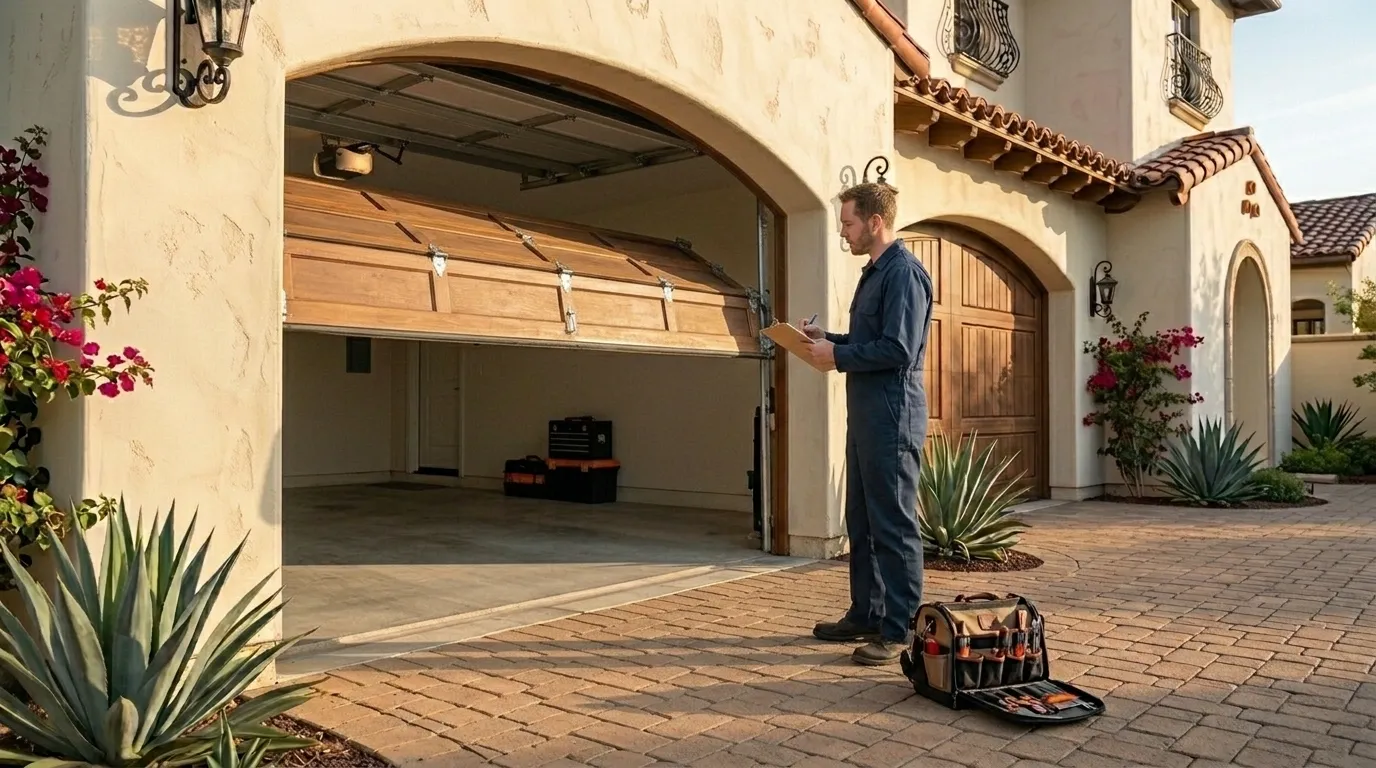
Warren's housing runs from 1938 up through 2000, but the bulk of what's on the ground went up around 1957, and that number matters. A door and track system installed when a house was built in the 1950s or early 60s was sized and hung for hardware nobody manufactures anymore. Torsion springs from that era used different wire gauges and drum sizes than what ships on a truck today, and the jambs themselves are often out of square from six decades of settling.
Layer on the climate. This is a cold-severe zone, and that means real freeze-thaw cycling every winter, not just a cold snap or two. Steel springs lose temper faster when they're cycling through hard freezes, and grease in old bearings and rollers stiffens up right when the opener is trying to pull the most weight - first cold morning of the year, panel frozen to the weatherstrip, opener straining against a spring that's already lost tension.
So the pattern here isn't random. It's a direct match between a housing stock that's mostly pre-1960 across the area and a climate that punishes old steel. Newer subdivisions built after 1990 see less of this, but they're the minority of what's actually standing.
How It Shows Up
The complaint we hear most from this side of town is a door that worked fine in September and won't lift past halfway by December. That's a spring losing the last of its tension right as the cold makes the opener's job harder - the two failures compound instead of happening separately.
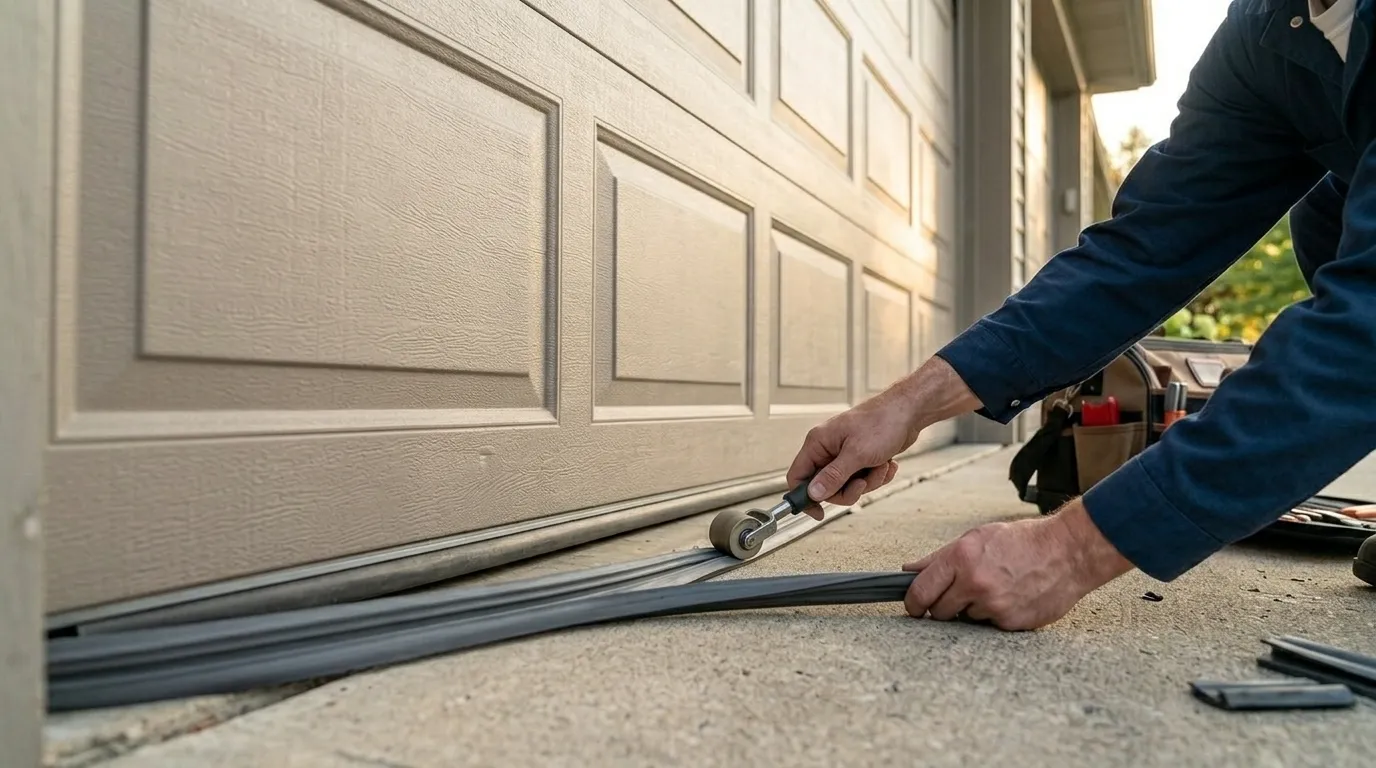
Second most common: a grinding or slapping noise from the track that wasn't there last winter. On houses from the 1950s and 60s the horizontal track brackets were fastened directly into framing that's shifted over the decades, so the track itself is running slightly out of true. Cold makes the metal contract just enough to turn a minor misalignment into a roller that catches on every cycle.
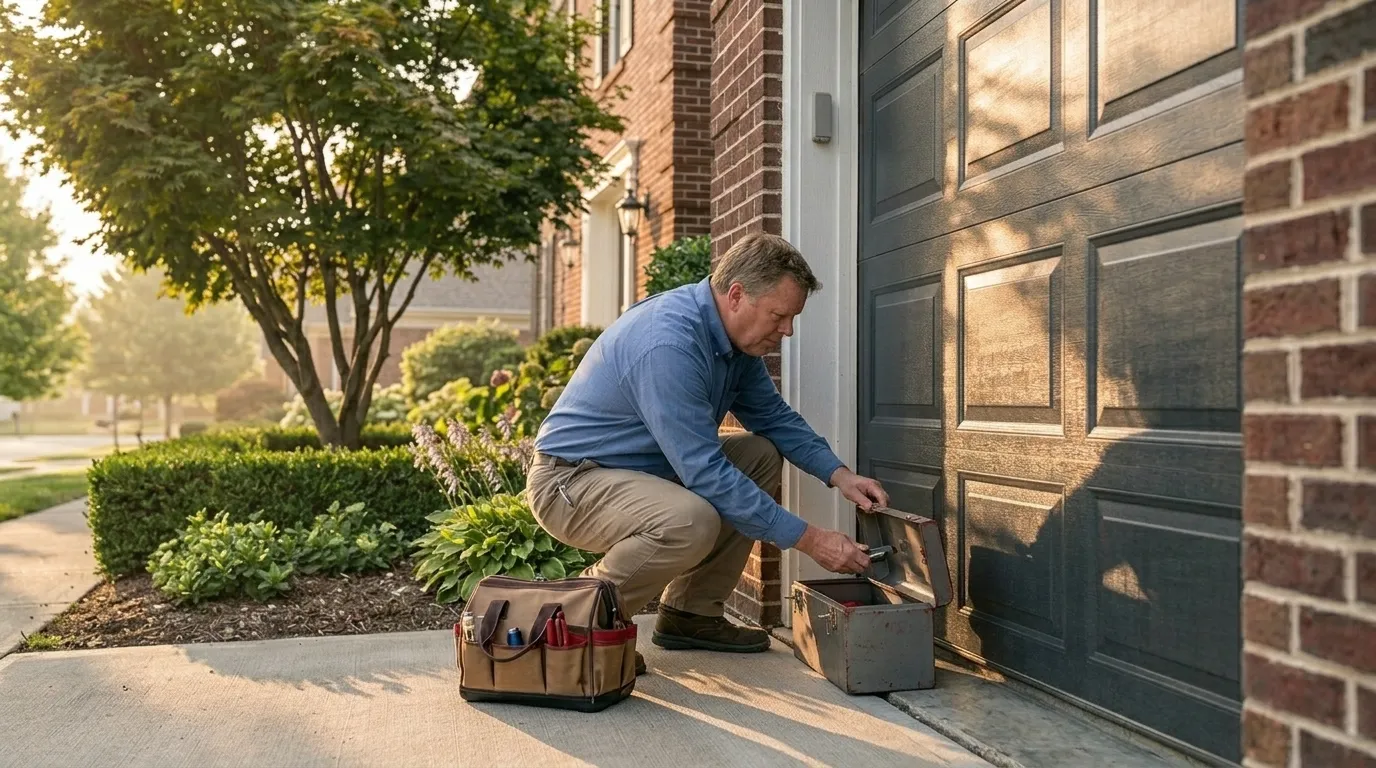
Third, and this one surprises people: openers that trip the safety reversal for no visible reason. Original hardware on these houses often predates any photo-eye safety sensor requirement, so a lot of these systems have had sensors retrofitted at some point, sometimes wired in a way that's sensitive to the cold-weather voltage drop on an older circuit. It's not a mystery fault, it's a mismatch between newer safety tech and older bones.
The Cost of This Job
We're not going to quote a number here that doesn't hold up once we're standing in your garage. What we can tell you honestly is what drives the range on this specific job.
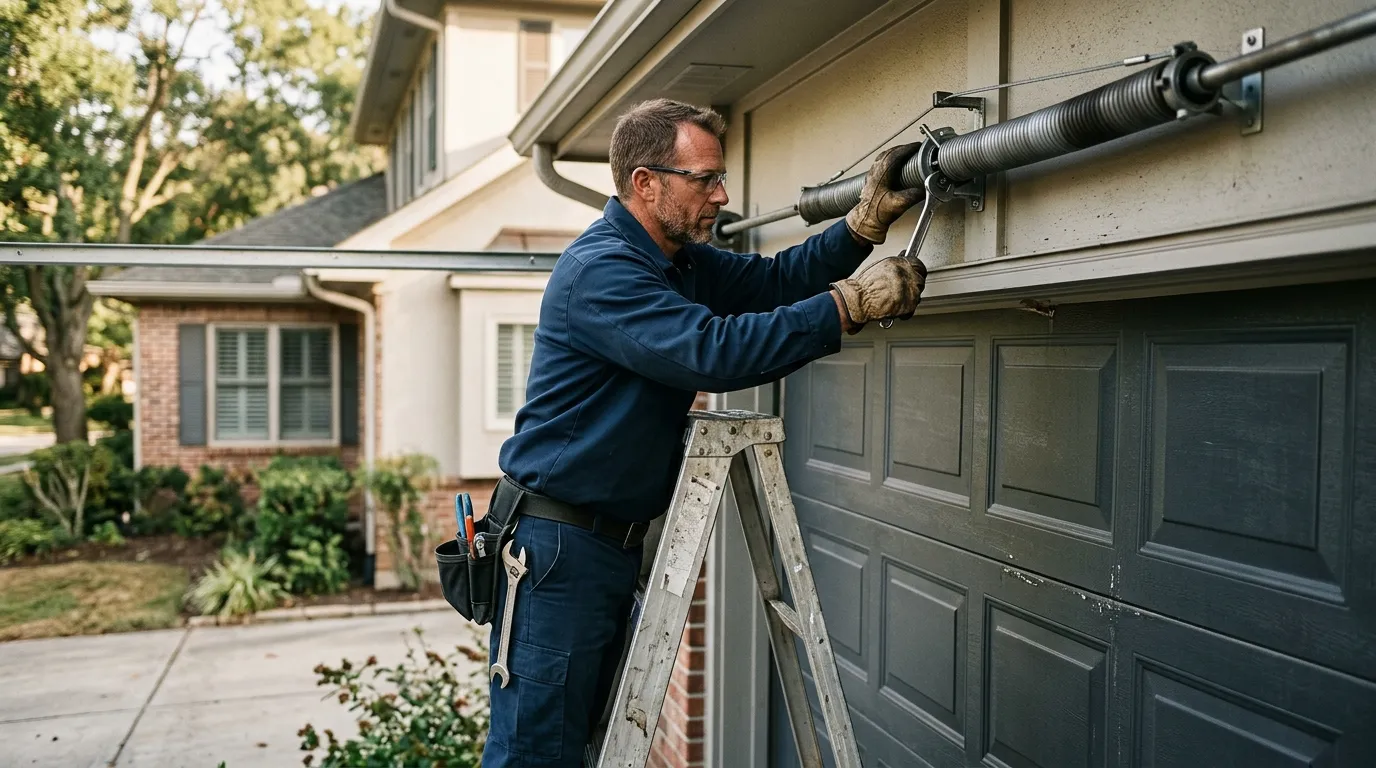
A straightforward spring swap on a door with standard-width hardware is one price. A door where the track brackets are also bent, or where the drum size doesn't match anything we carry off the truck because it was installed to a 1950s spec, is a different job entirely - more time, sometimes a special-order part.
Household income across this service area runs a median around $72,693, and most of the calls we get are homeowners trying to decide between a repair and a full replacement. That's a real decision, not a sales pitch: if the door itself is original and the track is bent along with the spring, sinking money into old hardware can cost more over two years than replacing the unit once. We'll tell you which side of that line your door is on before we start work, not after.
Time on the Job
We don't post a blanket turnaround time because it depends on what's actually wrong and what's on the truck versus what has to be ordered. A spring replacement on common hardware is usually done in one visit. If your door is running original 1950s-era track or a drum size we don't stock, that visit becomes two - one to diagnose and measure, one to install once the part's in.
That's the honest limitation on this job: we can't promise same-visit completion on hardware that hasn't been made in decades. It's a small share of calls, but it happens more here than it would in a neighborhood built entirely in the last twenty years, simply because of how much pre-1960 stock is still standing and in daily use.
We cover Warren and the surrounding area - Center Line a mile off, Madison Heights, Hazel Park, and Eastpointe each about four miles out, Roseville and Fraser a bit further - and scheduling around a cold snap gets tighter everywhere at once, since freeze-related spring failures tend to hit a lot of houses in the same week.
Why Warren Calls Us
What Happens When You Call
Call or Request a Quote
Tell us what the door is doing and roughly how old the house is - that alone points us toward the likely part before a truck leaves.
On-Site Diagnosis
A tech checks the spring, cables, tracks, and opener in person and tells you plainly what is actually wrong.
Straight Price, No Surprises
You get a number before any work starts. It covers parts and labor, nothing added after the fact.
Fixed the Same Visit
Most repairs are done in one trip. If a part needs sourcing, we tell you that upfront instead of guessing.
Talk to a Technician Before You Book
Describe what the door is doing and get a straight answer on what it likely needs.
Recent Work
Jobs Like Yours
Recent work from this service line.
Other Ways We Can Help
Frequently Asked Questions
Why did my garage door spring break in the middle of winter?
Cold makes steel springs lose tension faster, and this area sees real freeze-thaw cycling most winters. If your spring was already near the end of its life from age, the first hard freeze is often what finishes it. It's a seasonal pattern here, not bad luck.
Is it worth repairing an old door or should I replace it?
Depends on what else is worn. If the track and brackets are original alongside the spring, repeated repairs on 1950s-era hardware can cost more over time than one replacement. We'll look at the whole system before recommending either.
Do you carry parts for older garage door hardware?
We stock what fits most standard doors. Some homes here still run original drum sizes and track widths from the 1950s and 60s that aren't common stock anymore, and those sometimes need a special order, which we'll flag before starting.
Get Started
Need Garage Door Service for Warren's Older Housing Stock?
Call now for straight answers on cost and timing.