
Warren Garage Door Guide
What a Service Call Actually Covers in Warren
A real look at what a Warren, MI garage door service call covers, tied to the town's 1950s housing stock and cold-severe winters, not generic advice.
- Licensed & Insured
- Same-Area Service Calls
- Upfront Pricing
How Local Conditions Play In
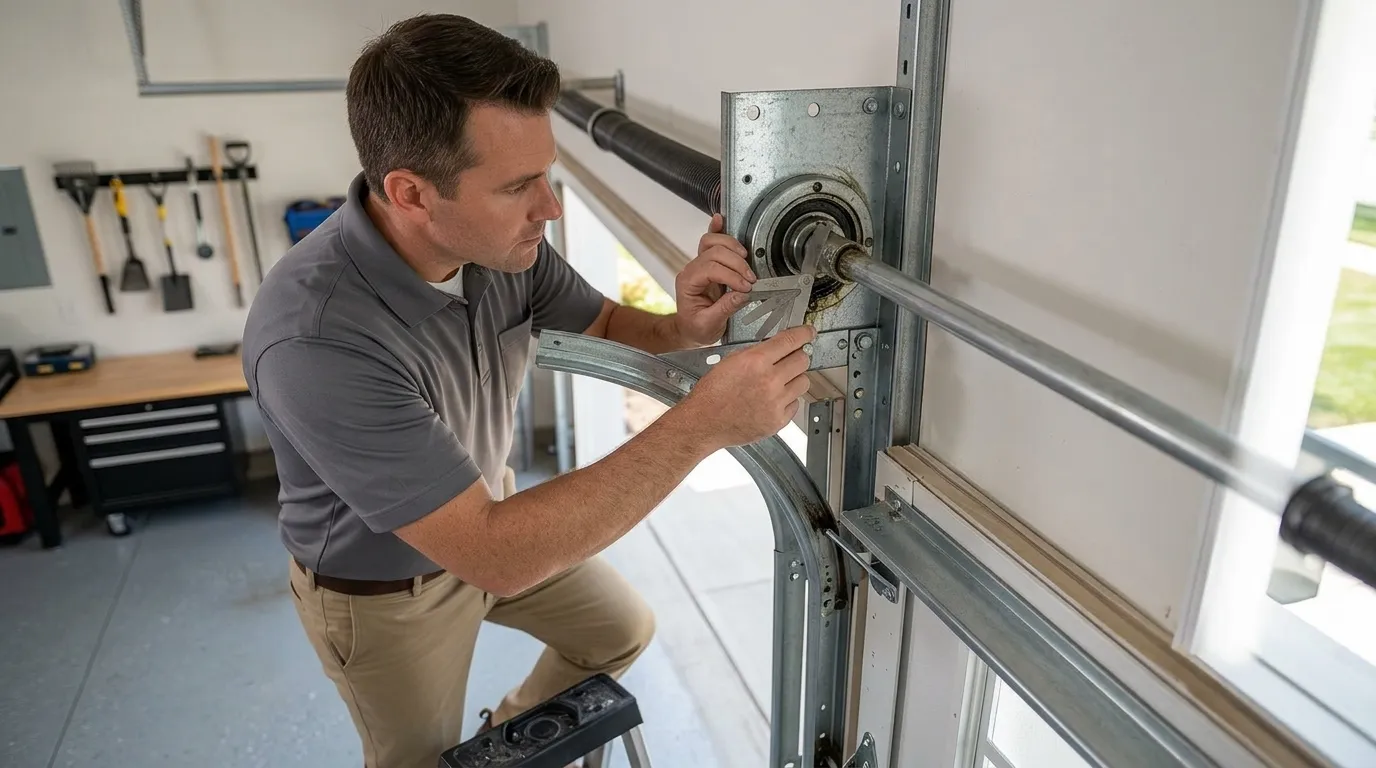
Warren's housing stock runs mostly 1938 to 1957, with plenty of it pre-1960 across the named areas we cover, and that shapes almost every call we take. A house built in 1954 usually still has its original jamb and header framing, even if the door itself has been swapped once or twice since. That means hardware spacing, track width, and header clearance often don't match what ships on a new door out of the box.
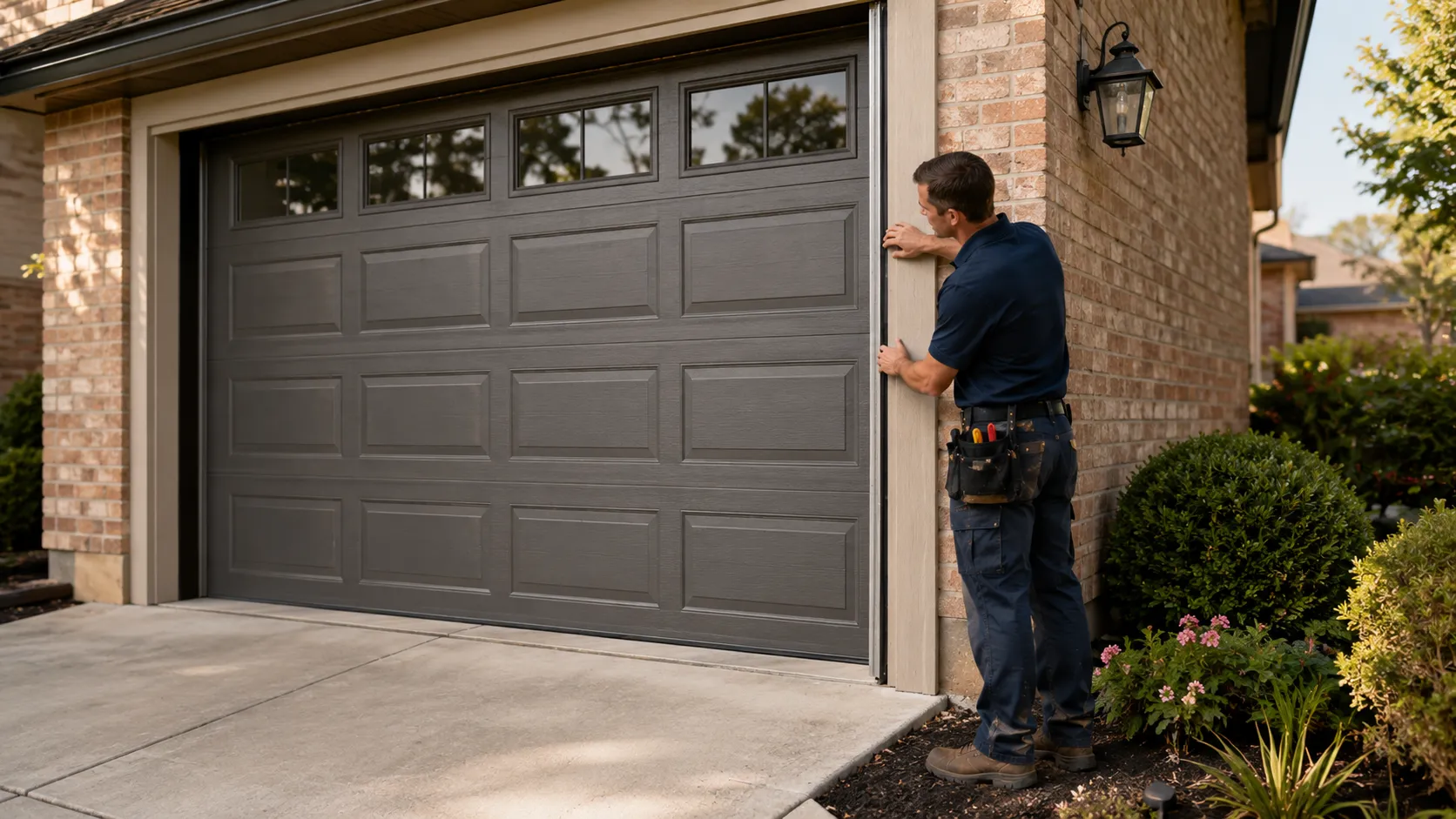
We measure before we quote, because a door that looks like a standard 16-by-7 on paper can be an inch off in a house from that era. With 197,913 owner-occupied houses across the service area and a median household income of $72,693, most of our calls are repair, not replacement - people want the door working again, not a full remodel. A service call starts with us looking at what's actually there: the track, the header, the wall studs the brackets are lagged into, before we touch a spring or a cable.
When It Stops Being a DIY Job
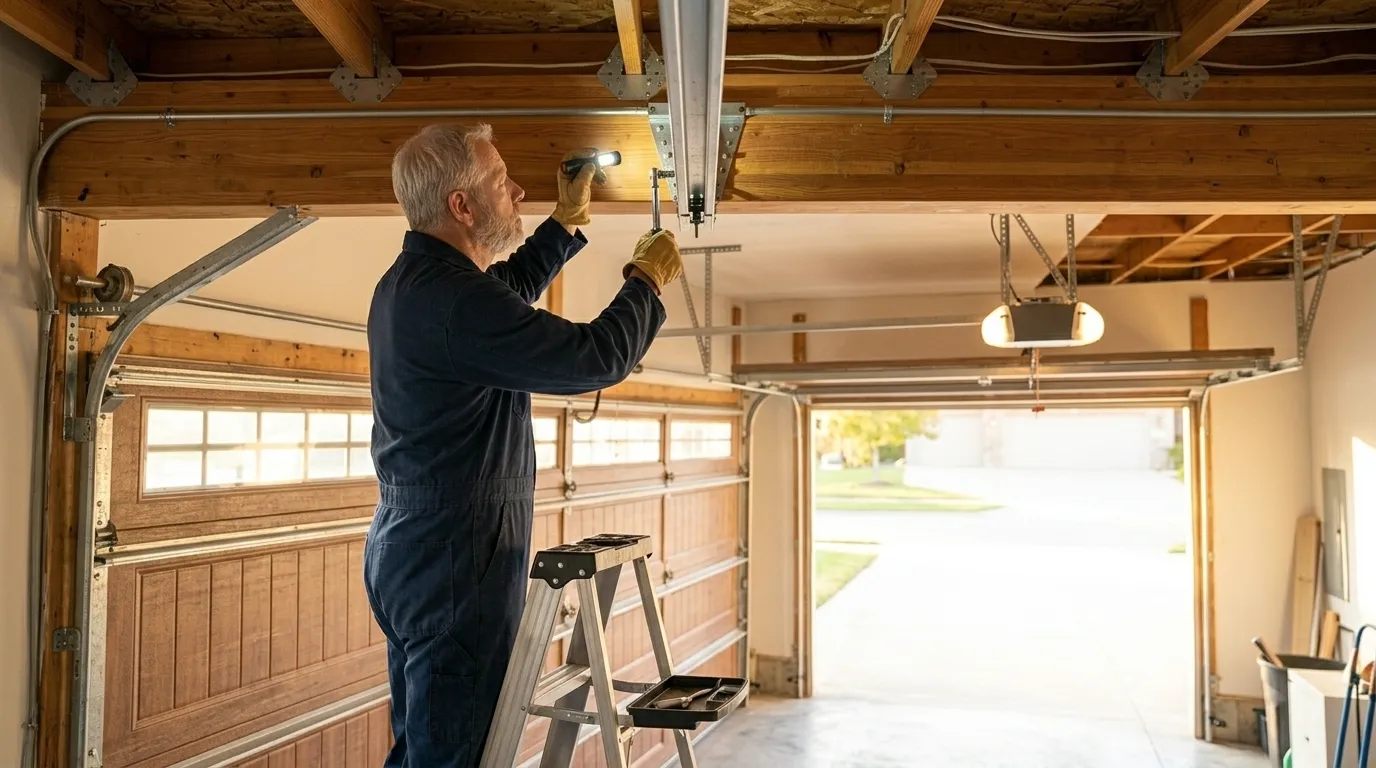
A torsion spring under full wind holds enough stored force to break a hand or worse, and that's true whether the door is five years old or fifty. On the older stock common here, the spring is often the original size, sometimes with a replacement cone that doesn't quite match the shaft - someone's past fix. We won't hand a customer a winding bar and a phone call's worth of advice for that kind of job.
If the bottom bracket is bent, if a cable has jumped the drum, or if the door won't stay up on its own, that's a call, not a project. Where we do point people toward doing it themselves: lubricating rollers, tightening loose hinge bolts, clearing the photo-eye sensors of dust. Those are five-minute jobs with a rag and a wrench.
Anything involving the spring system, the torsion tube, or the opener's drive gear housing is where the honest answer is to have someone come look at it, because the failure mode on those parts is sudden, not gradual.
What Changes With the Season
Warren sits in a cold-severe climate band, and that changes what breaks and when. Steel contracts as temperatures drop, and a torsion spring that's already fatigued tends to let go on the first hard cold snap of the year rather than on some slow afternoon in July. We see a real jump in spring-failure calls once nighttime lows settle in for good.
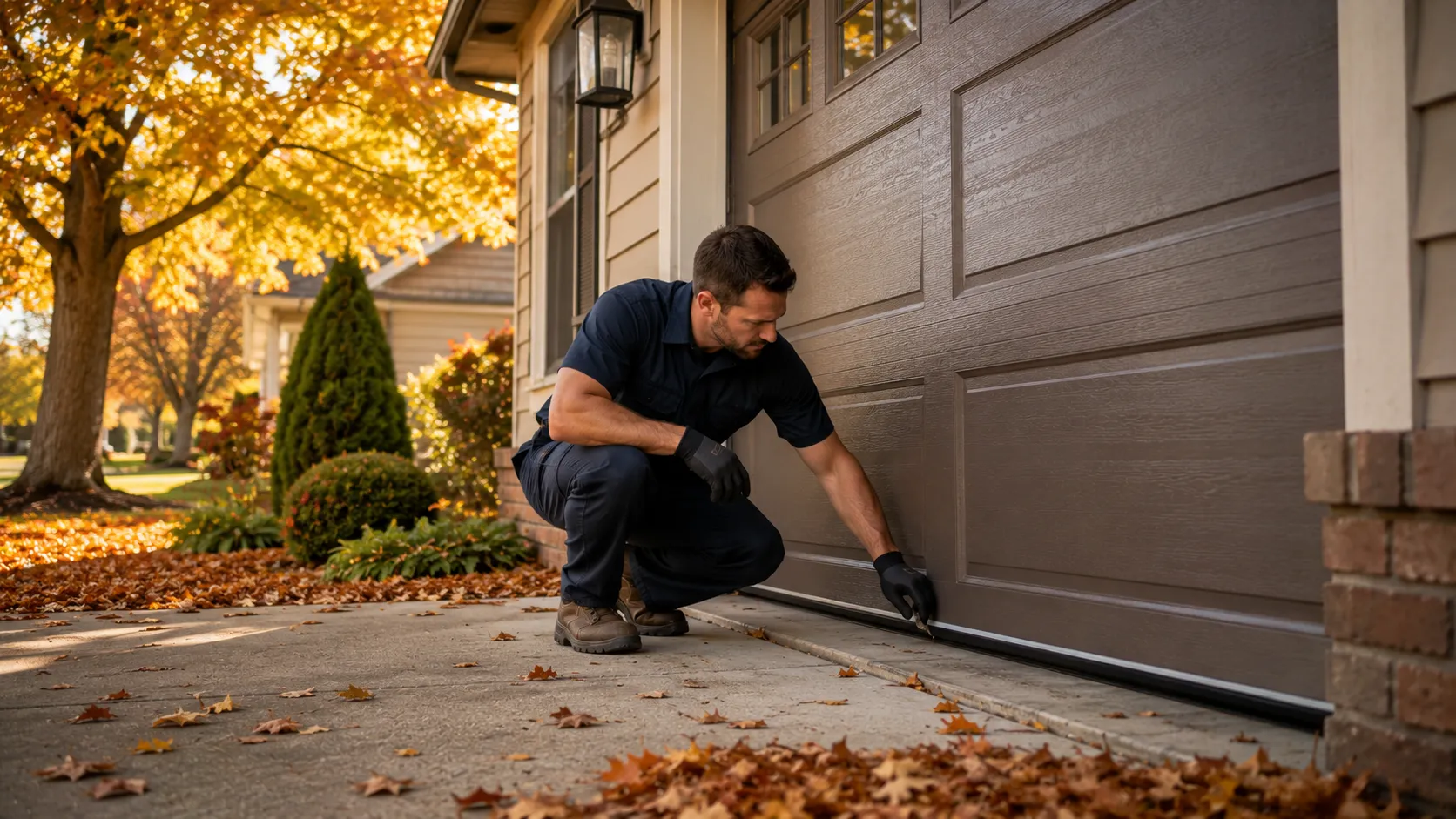
Openers slow down too - the grease in an older gear housing thickens, and a door that used to close in six seconds starts taking nine or ten, which is usually the first sign before a full stall. Weatherstripping on doors installed decades ago has usually hardened past the point of sealing anything, letting cold air and road salt spray track dust into the garage. None of this is exotic; it's what steel and rubber do in a climate that swings hard every winter.
The fix is often as simple as a spring adjustment or a bottom seal replacement, but timing matters - waiting until a spring has already snapped in January means colder hands and a longer wait for parts.
What Is Going On
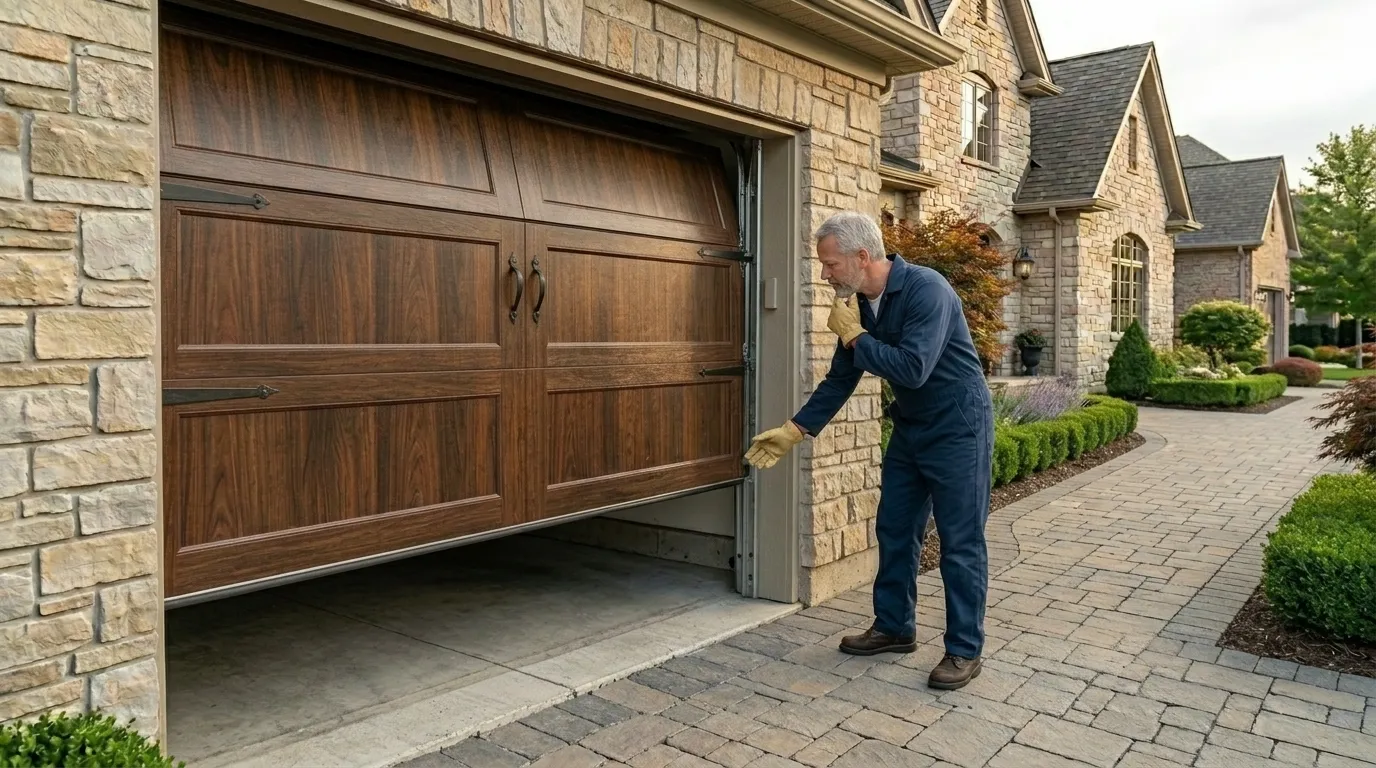
When we get a call, the first job is figuring out what's actually failing versus what's just old. A door that drags on one side might have a bent track, a worn roller, or a cable stretched unevenly - three different fixes with three different price points. On houses from the 1938-to-1957 wave that makes up so much of this area, we sometimes run into hardware sizes that current suppliers don't stock in bulk, which can mean a short wait on a specific bracket or drum rather than a same-day fix.
We tell people that up front rather than pretending every part is on the truck. For neighboring areas like Center Line a mile off, or Madison Heights and Hazel Park a few miles out, the housing age and the winter load are close enough that the same failure patterns show up. A service call ends with us telling you plainly whether what you have is worth repairing or whether the door's earned its retirement - we don't pad a repair just to avoid saying replace.
How We Can Help
Garage Door Repair
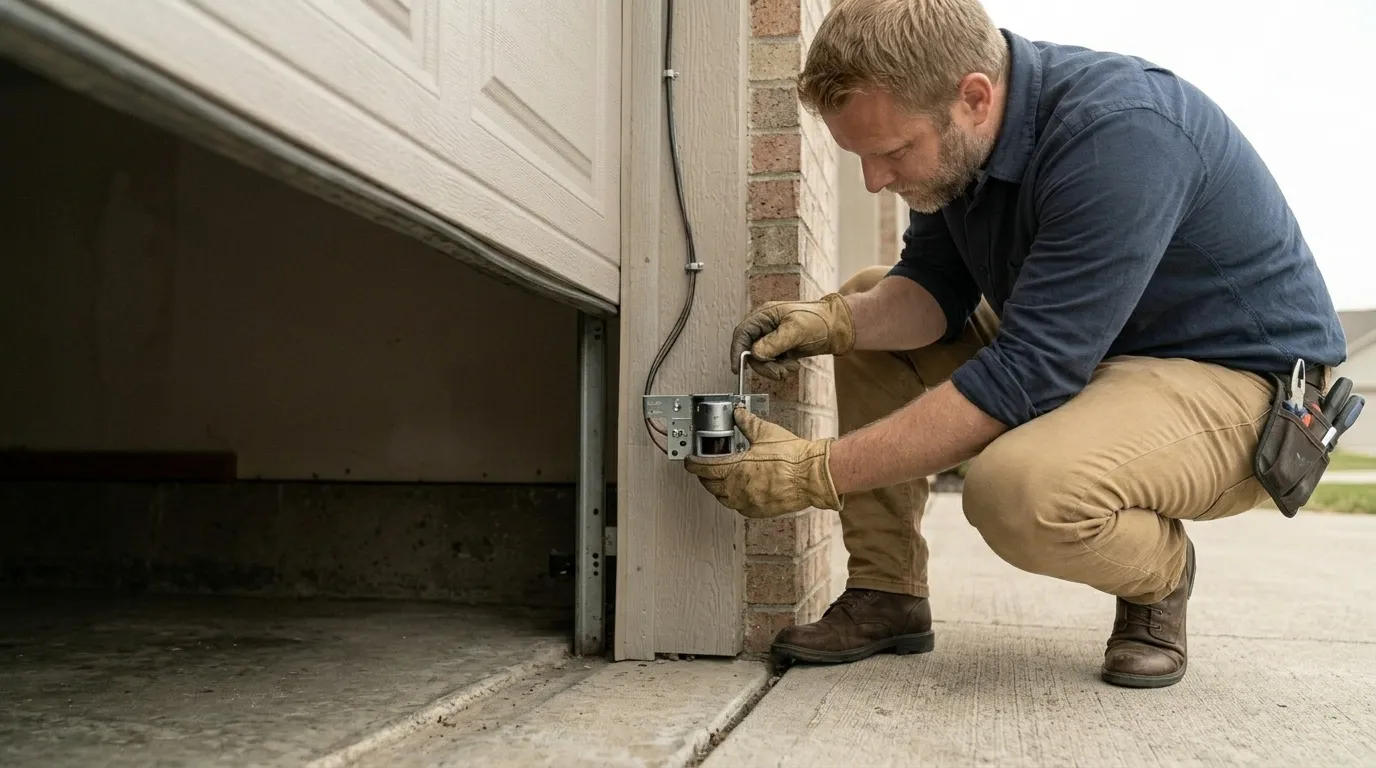
Springs, cables, tracks, rollers, and openers fixed by a tech who explains the problem before touching anything.
Learn more →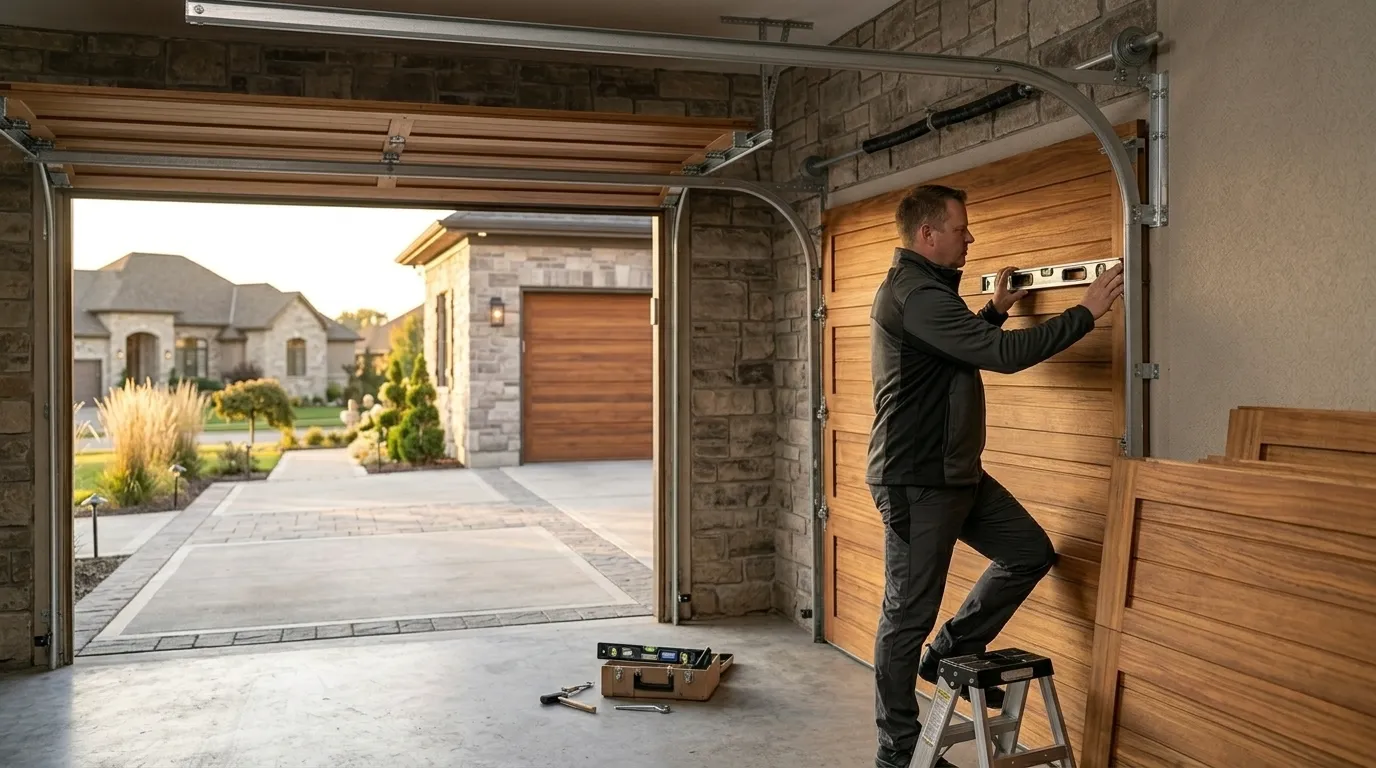
Garage Door Installation
New sectional doors sized and installed for the housing stock actually built in this area.
Learn more →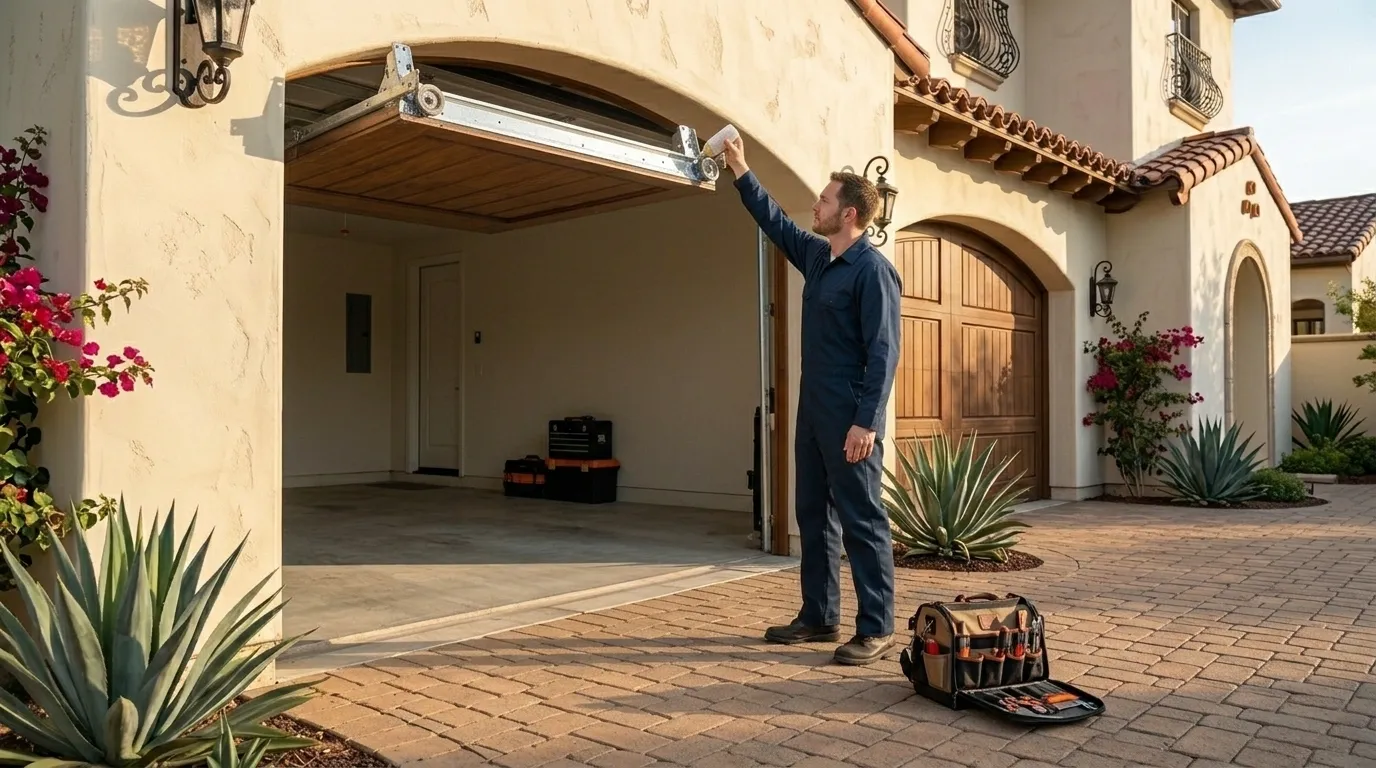
Garage Door Service
Tune-ups, lubrication, and safety checks that catch a small problem before it becomes a service call.
Learn more →Frequently Asked Questions
Why did my spring break in the middle of winter?
Steel contracts in cold, and a spring that's already worn from years of cycling tends to fail right when temperatures drop hard, not gradually. Warren's cold-severe winters mean this pattern shows up more here than in milder climates. If your door is original to a 1950s-era house, the spring has likely done a lot of cycles already.
My door is original to a house built in the 1950s - can parts even be found?
Usually yes, but not always same-day. Some bracket and drum sizes from that era aren't standard stock anymore, so a repair on original hardware can mean a short wait on a specific part rather than an immediate fix. We'll tell you at the time we look at it, not after.
Is it ever cheaper to replace than repair?
Sometimes. If the door itself is original from that 1938-1957 wave and the track, hinges, and panels are all showing wear at once, patching one part just means the next one fails soon after. We'll say so directly if that's what we see, rather than stringing along a series of small repairs.
Get Started
Have a Door That Needs a Second Opinion?
Call and describe what it is doing - we will tell you what it likely is.