
Warren Garage Door Guide
Warren's Cold Snaps Break Springs Without Warning
A broken torsion spring on a cold Warren morning isn't a weekend fix. Here's why pre-1960 housing stock and severe winters make this call an emergency.
- Licensed & Insured
- Same-Area Service Calls
- Upfront Pricing
How Local Conditions Play In
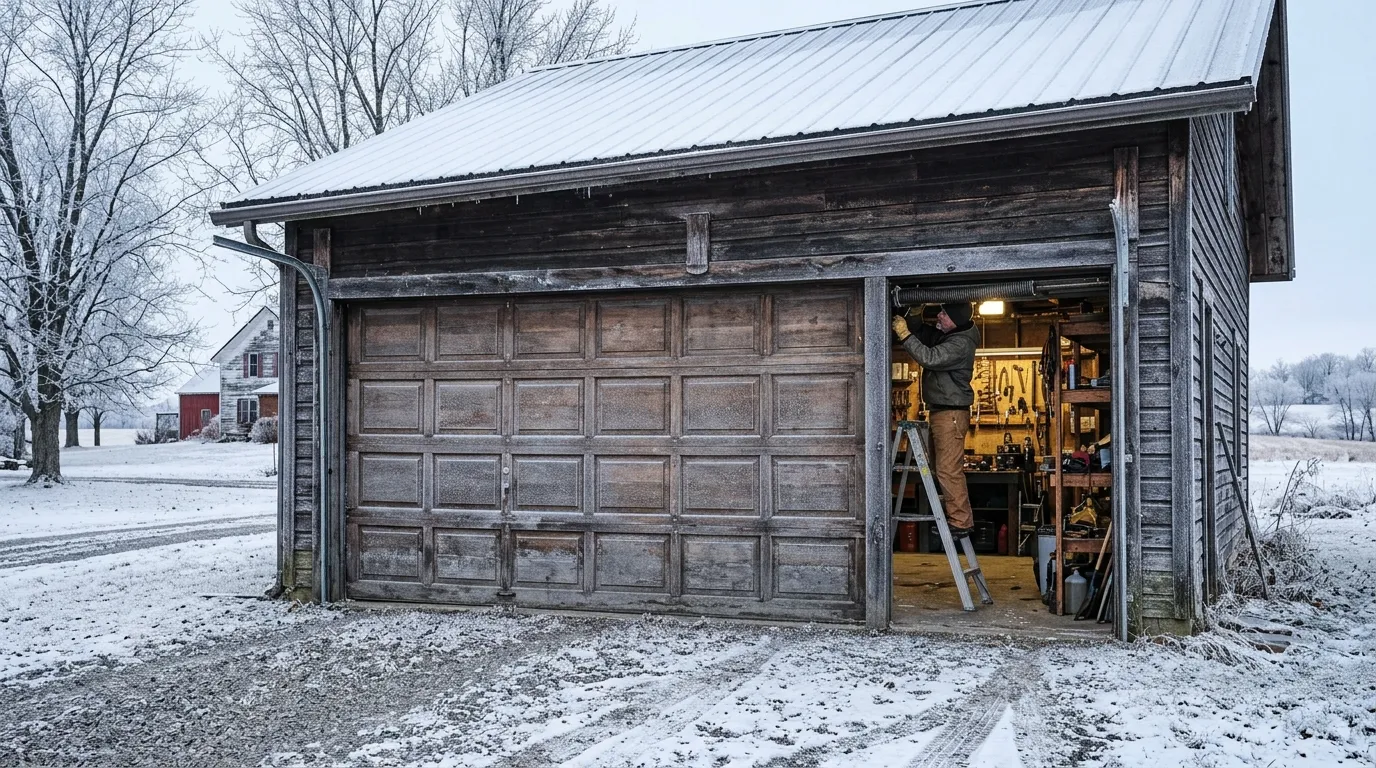
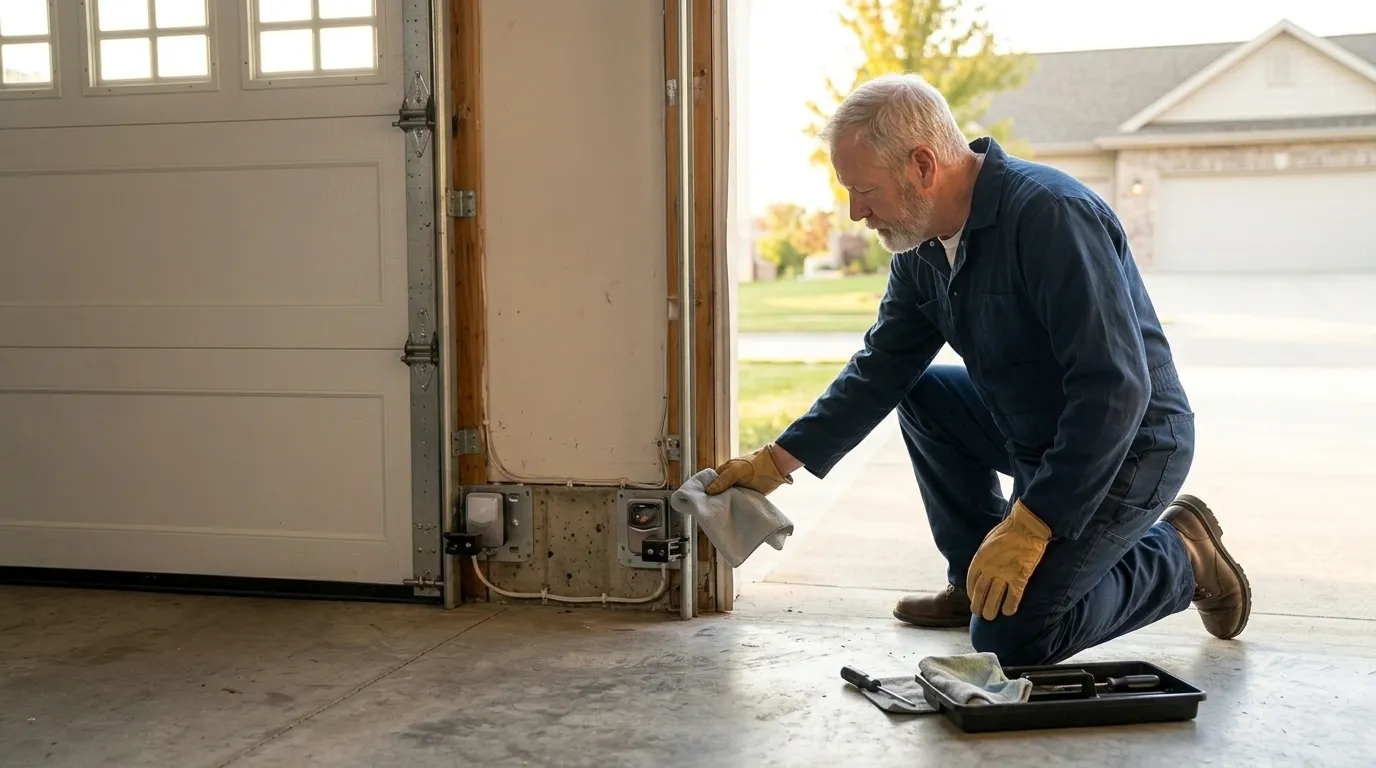
Most of the houses on this side of Warren went up between 1938 and 2000, with the median sitting around 1957, which puts a lot of original torsion hardware still hanging over driveways. Center Line sits a mile up the road, and Madison Heights, Hazel Park, and Eastpointe all sit within four miles, which tells you this is a tight, dense stretch of aging inner-ring suburb, not a spread-out newer build zone. That matters for springs because a torsion spring wound in the 1950s or 60s was sized for a lighter, single-layer wood or steel door, and it's been cycling through Michigan winters for decades longer than the doors going up now.
Steel fatigues faster in the cold, and a spring that's already lost some of its temper from age doesn't have much left to give when the metal contracts on a hard freeze. Newer builds around the edges of the service area don't carry that same load of old hardware, but this stretch does. If your house falls in that 1938-1960 band, the spring on it has already outlived a lot of newer hardware elsewhere, and cold is what usually finishes the job.
When It Stops Being a DIY Job
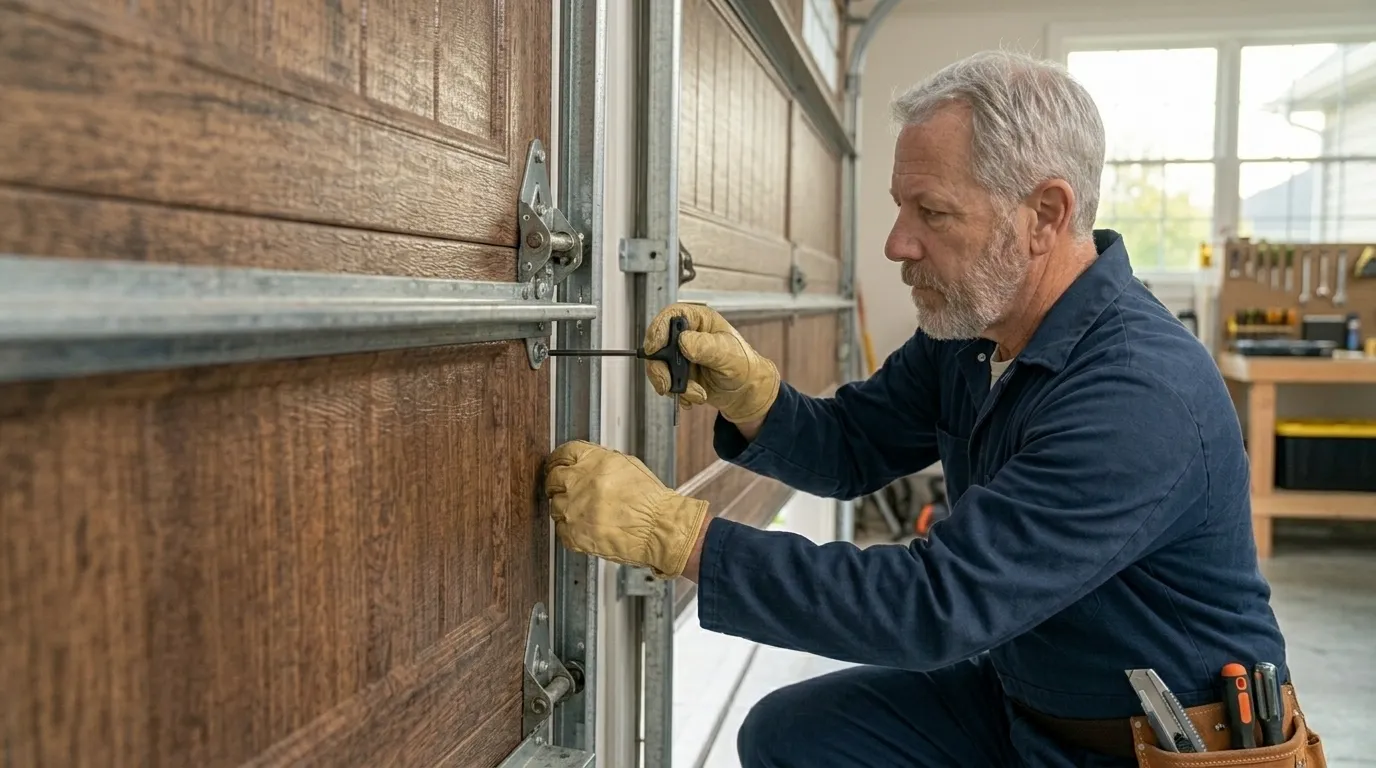
A torsion spring under tension is not a part to guess at, and cold makes it worse, not easier. When steel is cold it's stiffer and more brittle at the point of failure, so a spring that snaps in January doesn't just let go quietly, it can whip the winding cone and bar hard enough to hurt someone standing too close. If the door is one of the older one-piece units common on houses built before 1960 here, the spring is likely mounted on hardware that predates the safety cable standard, which means there's nothing stopping that bar from becoming a projectile.
That's the line: if the spring is broken, if the door won't stay up on its own, or if you hear a bang and then the door won't budge, that's a call, not a project. We don't carry every spring size for the oldest one-piece doors on the truck, since some of that older gauge wire isn't something a supplier stocks in volume anymore, so those jobs sometimes take a day or two to source the right part. That's the honest limitation - we'd rather order the correct spring than force a close-enough substitute onto sixty-year-old hardware.
What Changes With the Season
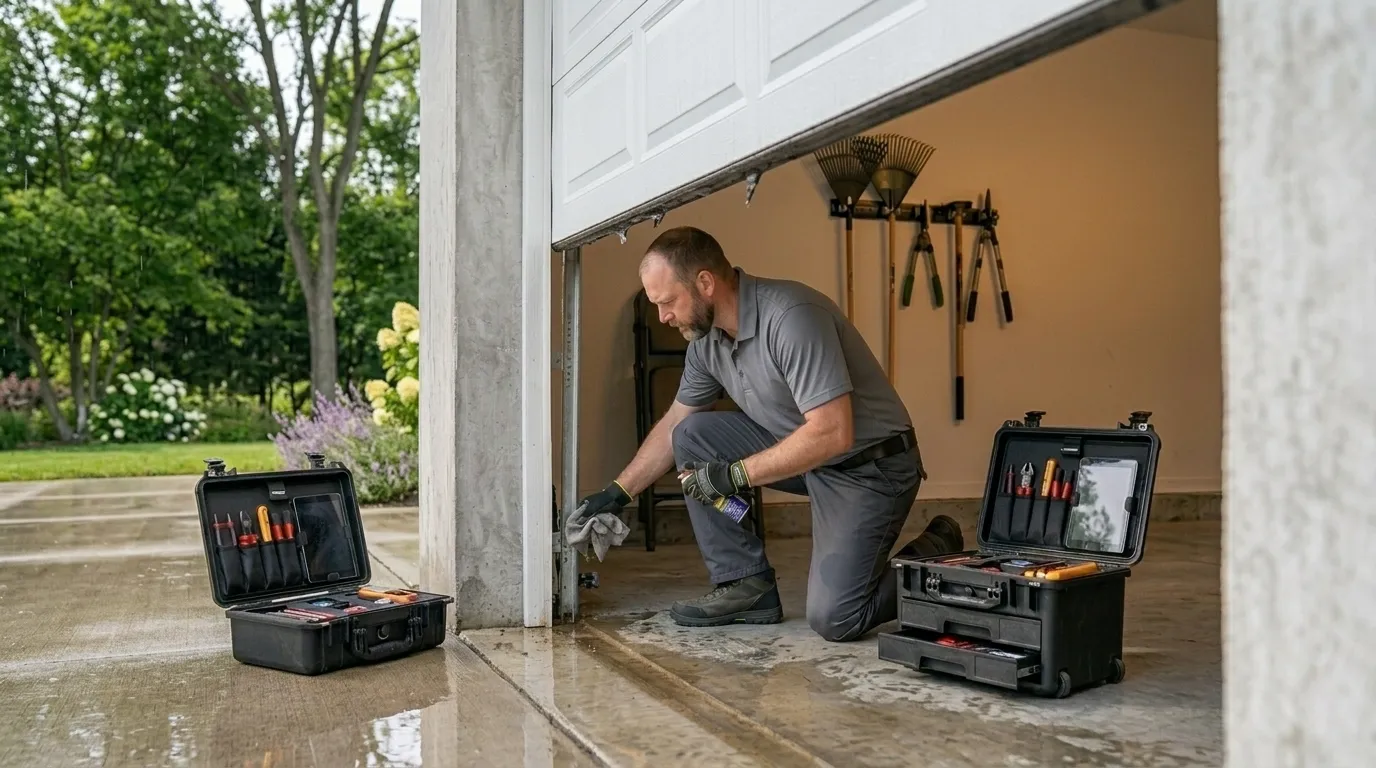
Warren sits in a cold-severe climate band, and that shows up in more than just how the door feels to lift. Steel springs lose a measurable amount of tension as temperature drops, and the repeated swing between a warm garage in the afternoon and a hard freeze overnight puts more stress cycles on a spring in one winter than a mild season would in three. Openers feel it too - the gears in an older chain-drive unit stiffen up in the cold, and a motor that was already working at the edge of its capacity in summer can stall out entirely once the grease thickens.
Rollers on steel track are the other piece: nylon rollers get brittle and can crack in sustained cold, and steel rollers on older tracks squeal and bind as clearances tighten. None of this is dramatic on its own, but stacked together on a house with 1950s-era hardware, it adds up to a spring that's already near the end of its life picking the coldest morning of the year to go.
What Is Going On
When a spring goes in cold weather, it's usually not a surprise failure so much as the last stress cycle a fatigued spring can take. Torsion springs are rated for a certain number of open-close cycles, and a spring installed when a house was built in the 1950s or 60s has likely gone through more cycles than its rated life, especially on a door used daily for decades. Cold accelerates the finish: the wire has already got microscopic fatigue cracks from years of winding and unwinding, and the added brittleness at low temperature is often enough to make that final crack propagate all the way through.
With 197,913 owner-occupied houses across this service area and most of the stock dating to that same pre-1960 window, this isn't a rare event here - it's a predictable one tied directly to how old the hardware is and how cold it gets. The fix itself is straightforward once we're on site: match the spring to the door's weight and drum size, wind it to the correct turns, and check the cable and drum for wear at the same time, since a spring failure often means the cable took some abuse too.
How We Can Help
Garage Door Repair
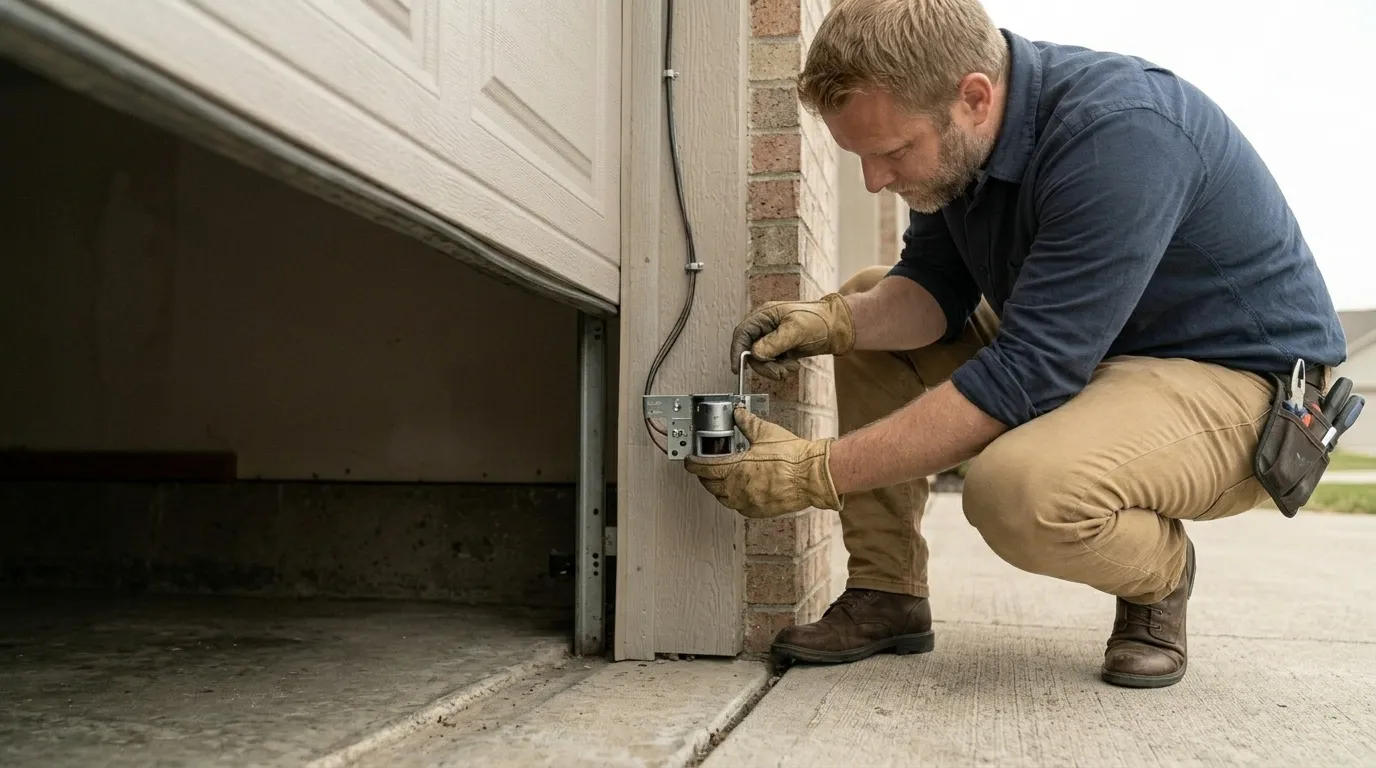
Springs, cables, tracks, rollers, and openers fixed by a tech who explains the problem before touching anything.
Learn more →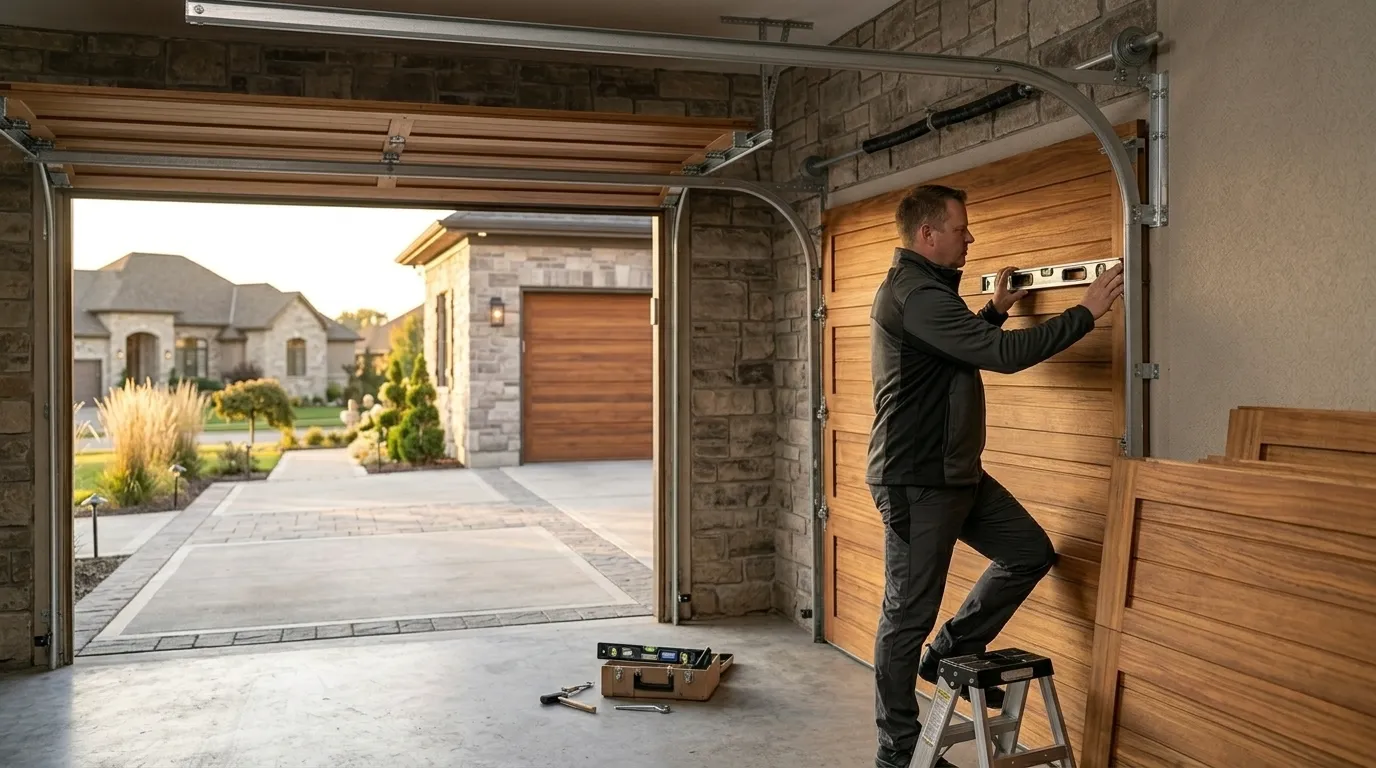
Garage Door Installation
New sectional doors sized and installed for the housing stock actually built in this area.
Learn more →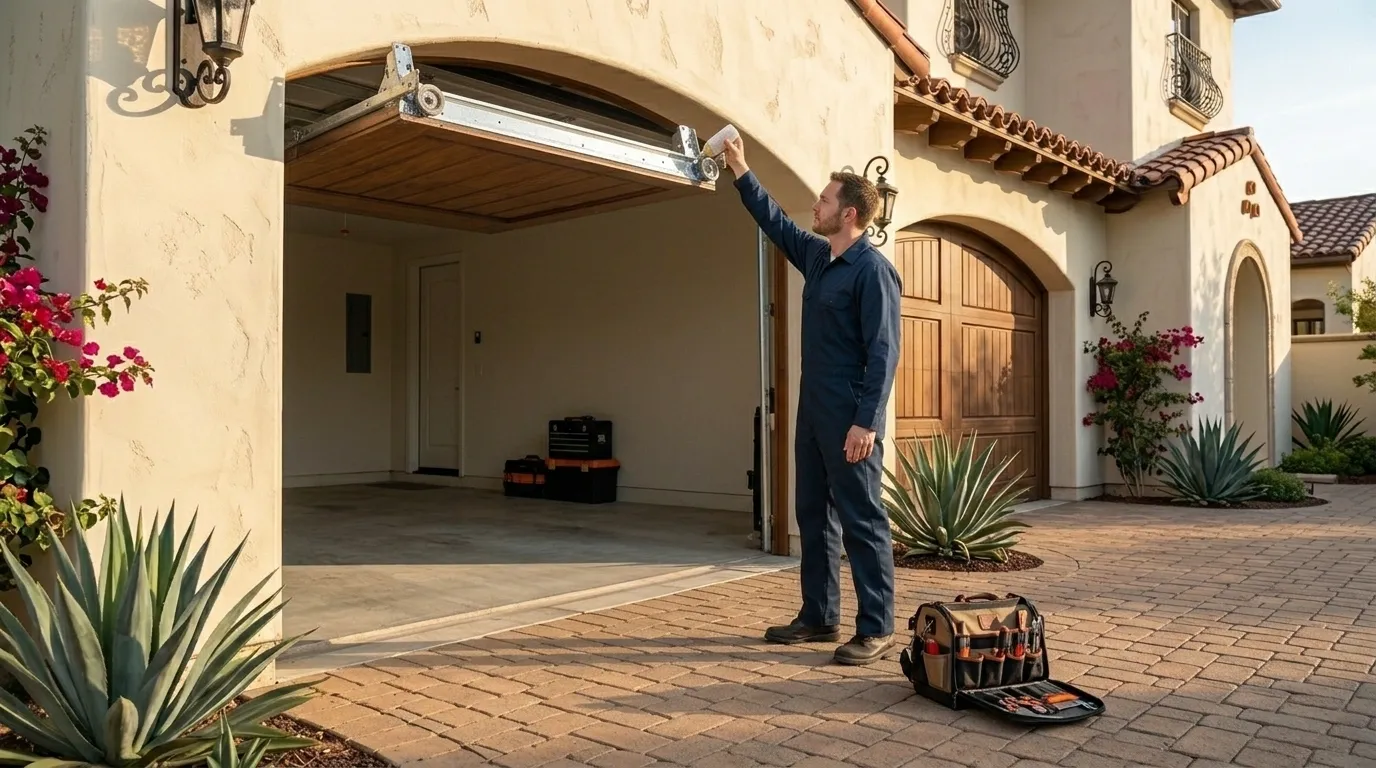
Garage Door Service
Tune-ups, lubrication, and safety checks that catch a small problem before it becomes a service call.
Learn more →Frequently Asked Questions
Why did my spring break in the middle of winter with no warning?
Torsion springs fatigue over years of cycling, and cold steel is more brittle at the exact point where a hairline crack finally gives way. On a house from the 1950s or 60s that's had the same spring the whole time, a hard freeze is often the trigger, not the cause. The spring was already near the end of its life before the cold got involved.
Can I just tighten or oil the spring myself to get through winter?
No. A torsion spring under tension can cause serious injury if it lets go while you're working on it, and oil doesn't fix fatigue in the steel. If the door is sluggish or the spring looks stretched or gapped, that's a sign it needs replacing, not lubricating.
Do you have every spring size in stock for older one-piece doors?
Not always. Houses built before 1960 in this area often used one-piece doors on hardware with wire gauges suppliers don't keep in heavy rotation anymore. We'll get the right spring rather than force a substitute, but that sometimes means a short wait on parts for the oldest doors.
Get Started
Have a Door That Needs a Second Opinion?
Call and describe what it is doing - we will tell you what it likely is.