
Warren Garage Door Guide
Why Your Safety Sensors Keep Drifting Out of Alignment
Warren's pre-1960 housing stock and cold-severe winters shift garage floors and door frames enough to knock safety sensors out of alignment. Here's why, and what to check.
- Licensed & Insured
- Same-Area Service Calls
- Upfront Pricing
How Local Conditions Play In
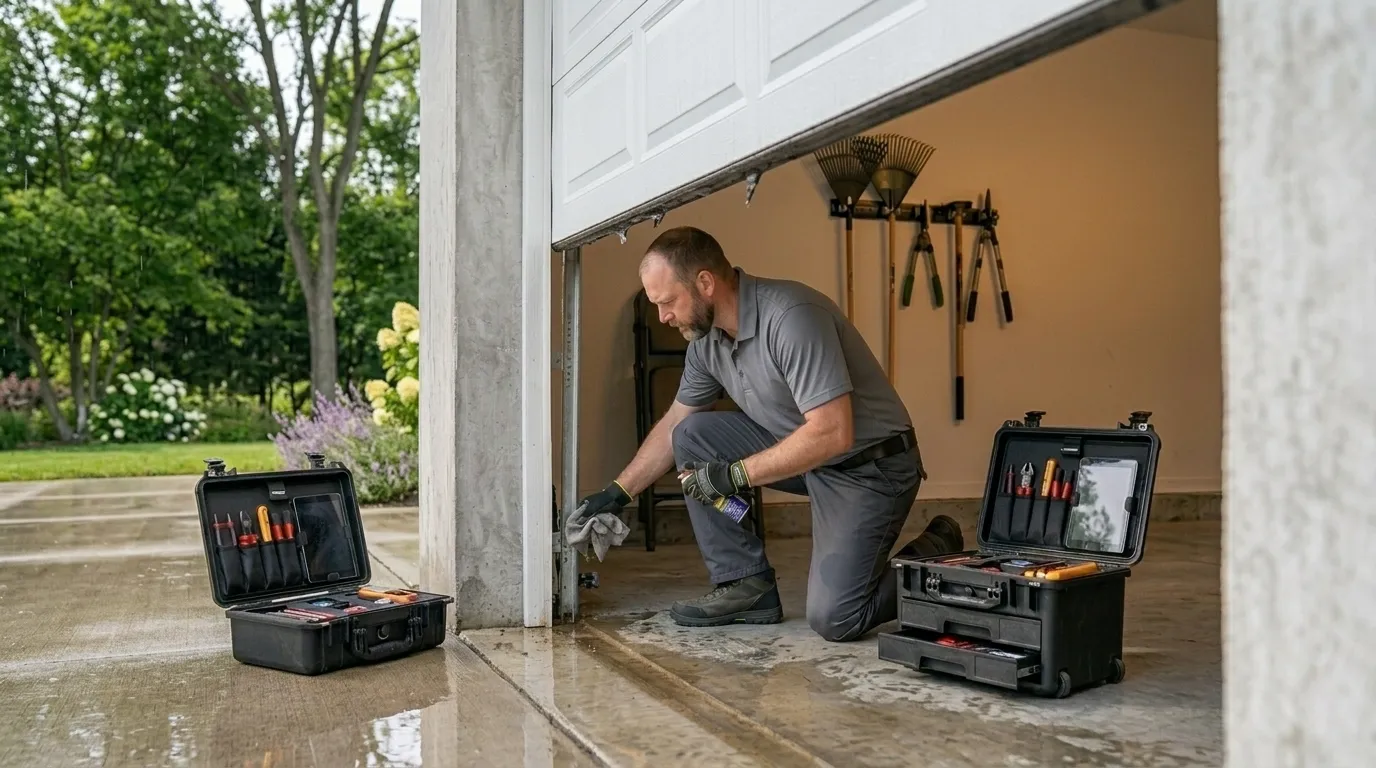
Most houses in this part of the service area went up between 1938 and 1957, back when a garage was often a single-car add-on poured on its own thin slab, set apart from the house foundation rather than tied into it. Over six decades that slab moves independently of the house. It's not dramatic movement - a quarter inch here, an eighth there - but it's enough to twist the door frame slightly out of square, and the safety sensor brackets are usually screwed straight into that frame at ankle height, right where the movement shows up first.
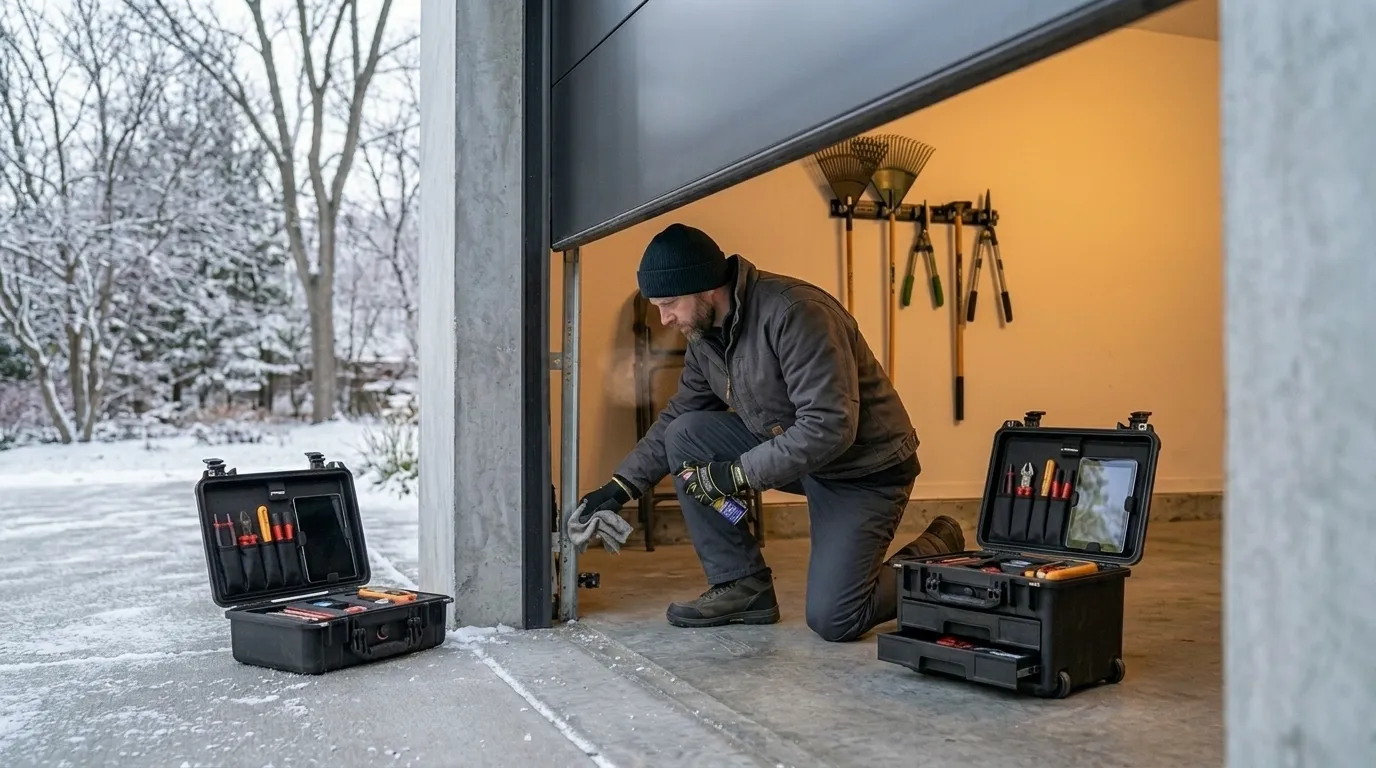
This area sits in a climate band the federal data marks cold-severe, which means the ground doesn't just get cold once a winter - it freezes and heaves repeatedly across the season. Each freeze-thaw cycle nudges that old slab a little more.
Add in the fact that roughly 197,913 houses across this service area are owner-occupied and most sit on slabs poured before 1960, and you've got a lot of garages where the sensor eyes were aimed correctly the day they were installed and haven't been checked since. A door that closes fine in August and refuses in January is telling you exactly what season did it.
When It Stops Being a DIY Job
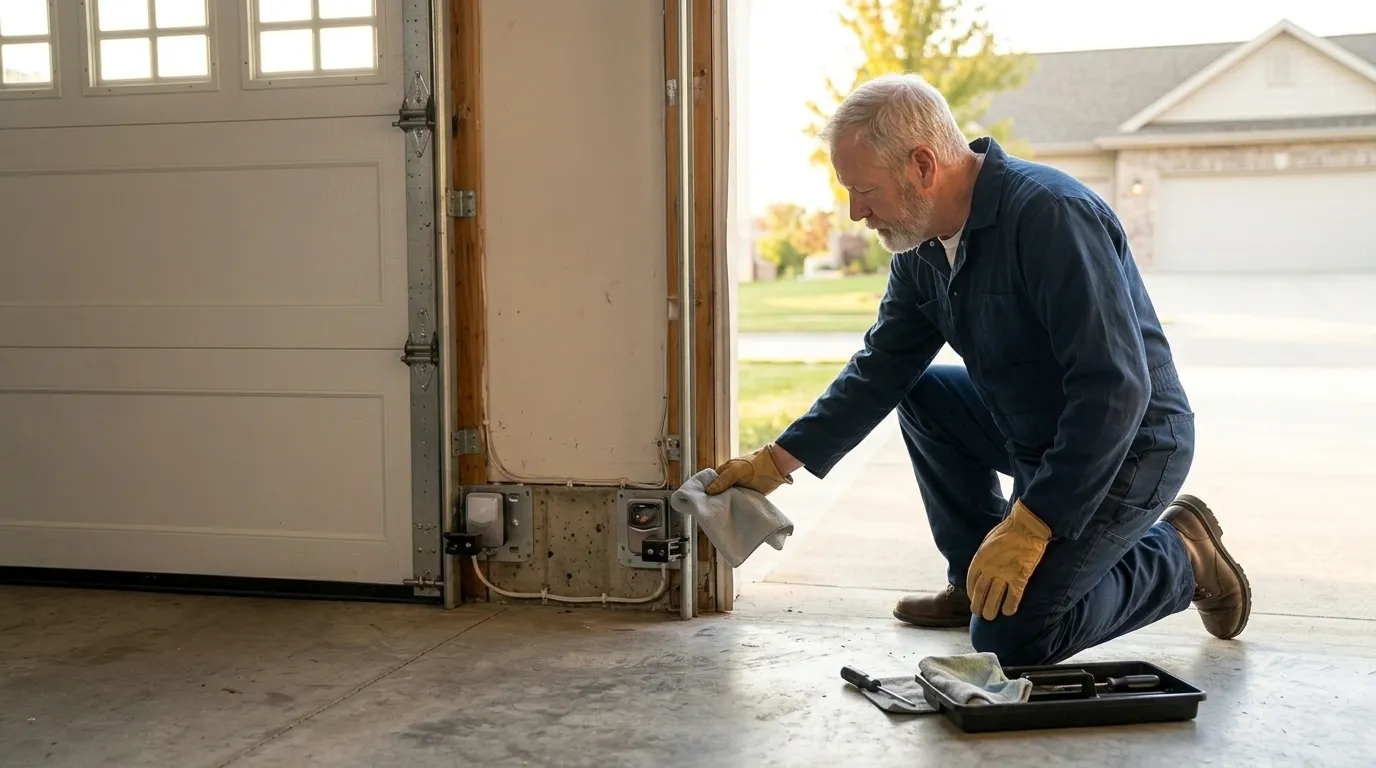
A lot of sensor misalignment is a five-minute fix - loosen the wing nut, nudge the bracket until both LEDs go solid, tighten it back down. If that's all it takes, you don't need us out there.
Where it stops being a DIY job is when the bracket itself won't hold a fixed position anymore because the wood jamb it's screwed into has softened or split from decades of moisture cycling, which is common in the older single-car garages typical of this area's 1938-to-1957 housing. At that point tightening the screw doesn't fix anything - the wood gives again in a week. Fraying or brittle sensor wiring is another one; older installs sometimes run wire along the floor where it gets nicked by a snow blower or a bike tire, and a nicked wire can mimic drift without ever actually being a bracket problem.
We don't guess on wiring faults over the phone - we'd rather see it and test it than have you replace a sensor that was never the issue. That's the honest limit of what we can diagnose sight unseen.
What Changes With the Season
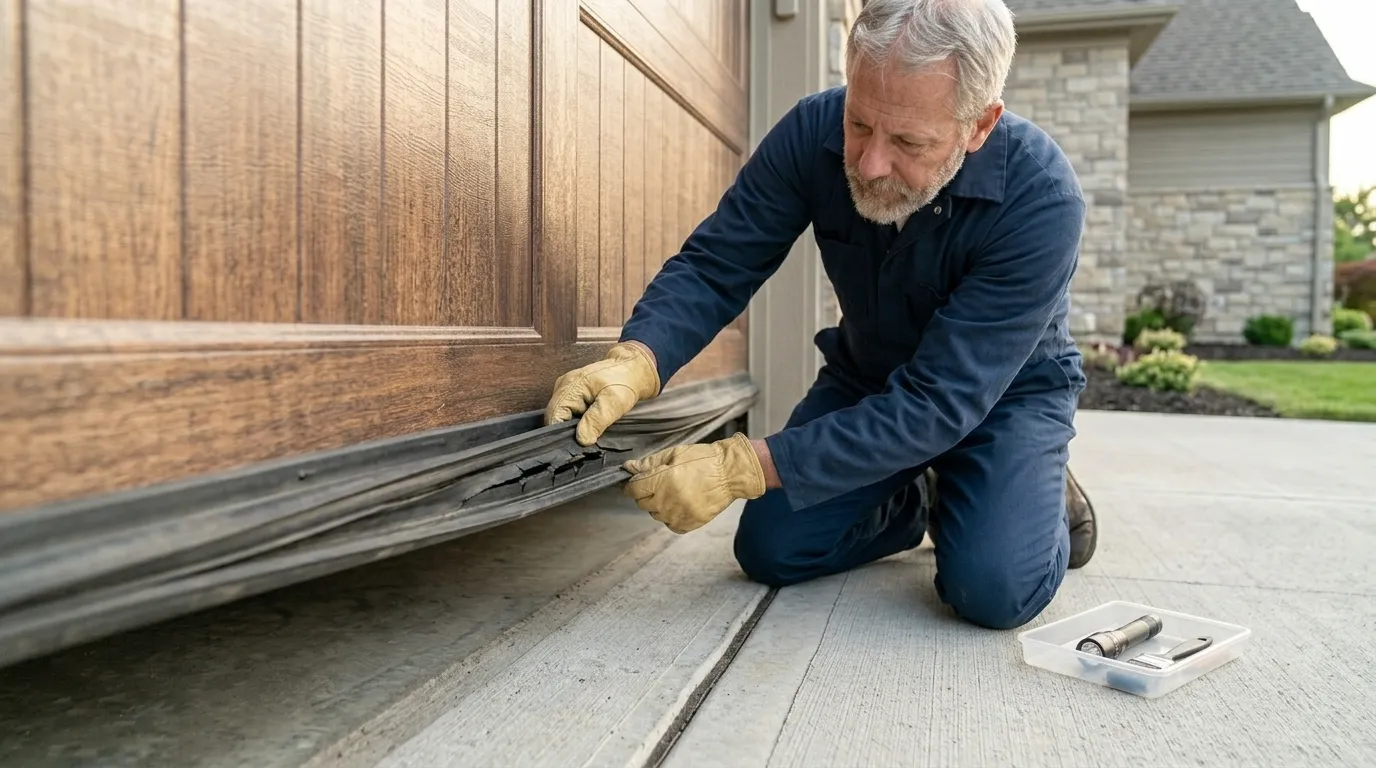
In a cold-severe climate band like this one, the sensors themselves rarely fail from cold - the lenses and brackets are built for it. What gets them is the swing.
A 40-degree afternoon that drops to single digits by night causes condensation on the lens, and that condensation can freeze into a thin film that scatters the infrared beam just enough to trip a false reading. You'll see the door start to close, then reverse for no obvious reason, and the culprit clears itself an hour later when the ice sublimates off.
Snowmelt refreeze does something similar at the base of the frame - water runs off the roof, pools near the sensor mount, and freezes overnight, shifting the bracket a degree or two out of true. By March, after months of that cycle, a sensor that was dead-on in October can be off enough to matter.
It's not a sign anything's broken. It's what happens to hardware bolted to wood and slab that move with the season in a place that gets a real winter.
What Is Going On
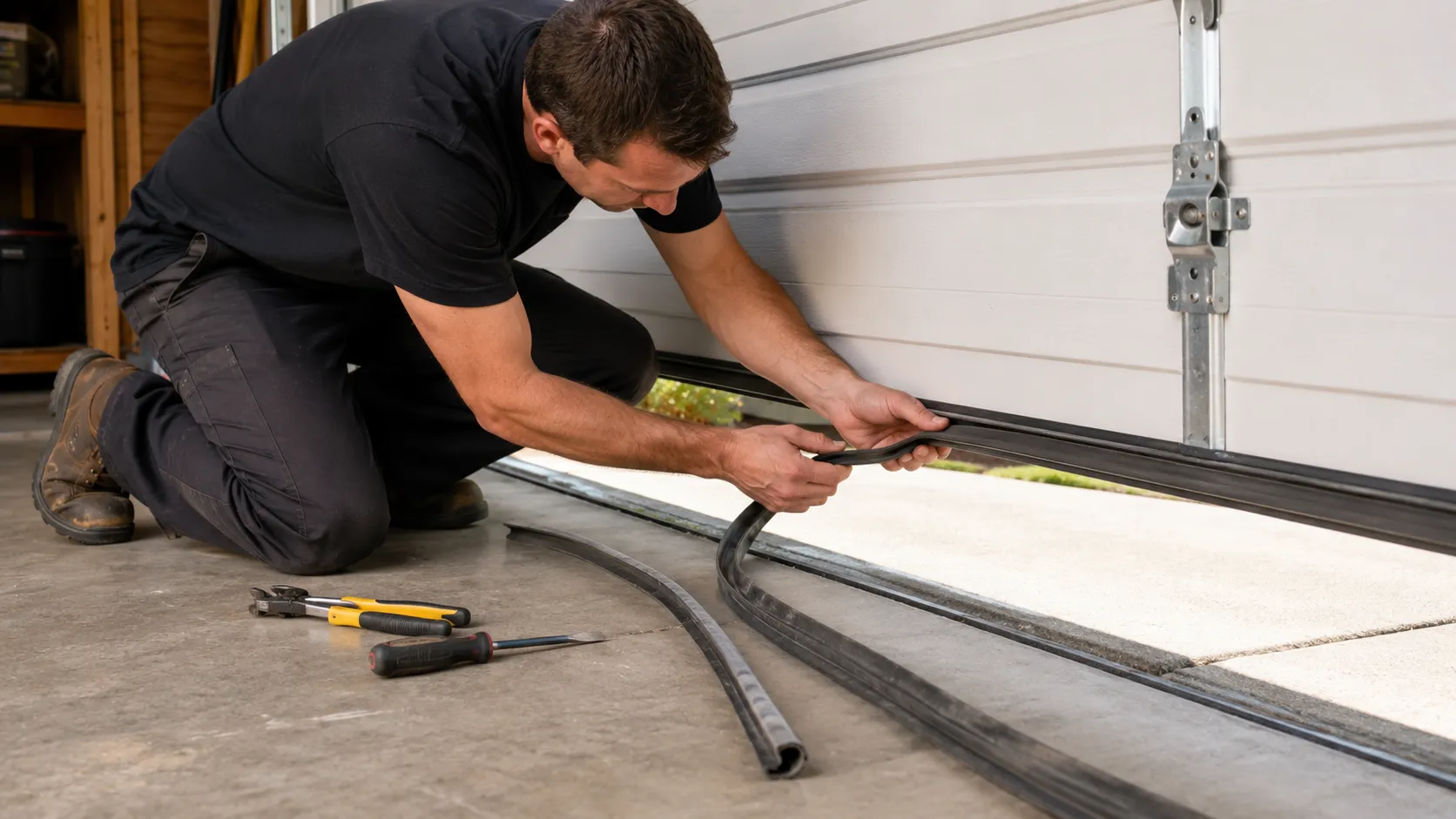
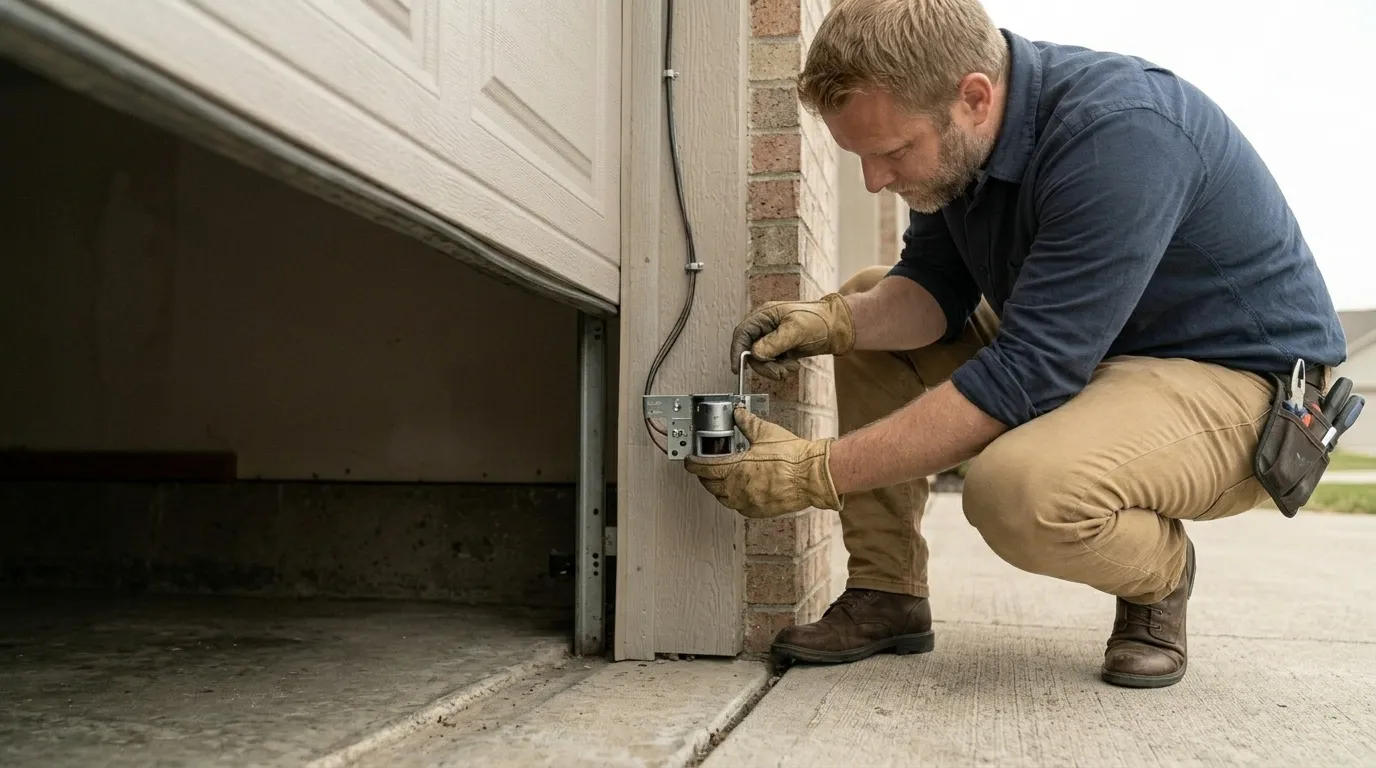
Two sensors sit low on either side of the door, a few inches off the floor, staring at each other across the opening. One sends an infrared beam, the other receives it.
Break that beam and the door won't close - that's the whole system, and it's supposed to be that simple. Drift happens when the two eyes stop pointing at exactly the same spot, usually because one bracket moved and the other didn't.
Given the age of the housing stock in this service area - median year built 1957, per Census data - most of these brackets were mounted on original garage framing that's had sixty-plus years to settle, dry out, or get bumped by a car bumper more than once. The fix is almost always mechanical, not electrical: re-square the bracket, clean the lens, check the wire isn't pinched.
It's rarely the sensor unit itself that's bad. Replacing a sensor pair when the actual problem is a loose bracket is a common and avoidable expense.
How We Can Help
Garage Door Repair
Springs, cables, tracks, rollers, and openers fixed by a tech who explains the problem before touching anything.
Learn more →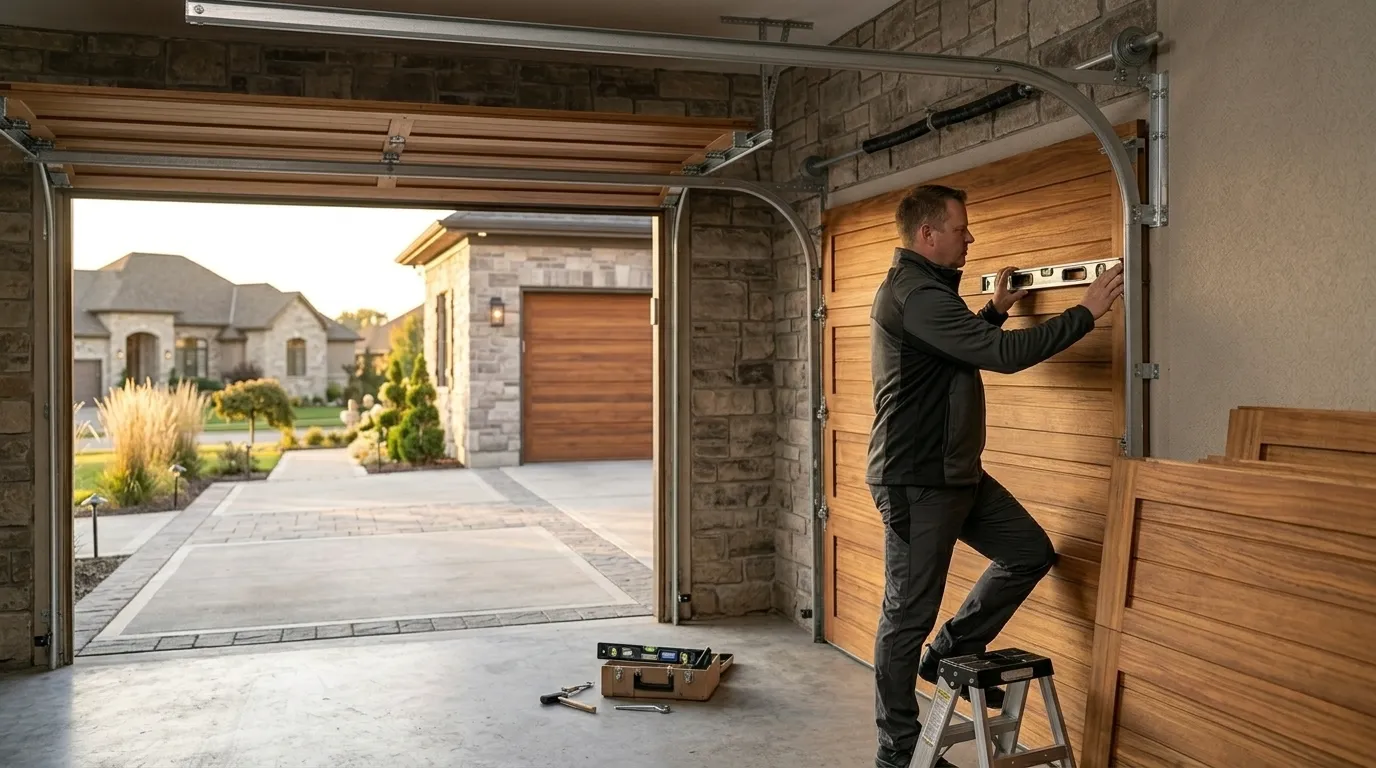
Garage Door Installation
New sectional doors sized and installed for the housing stock actually built in this area.
Learn more →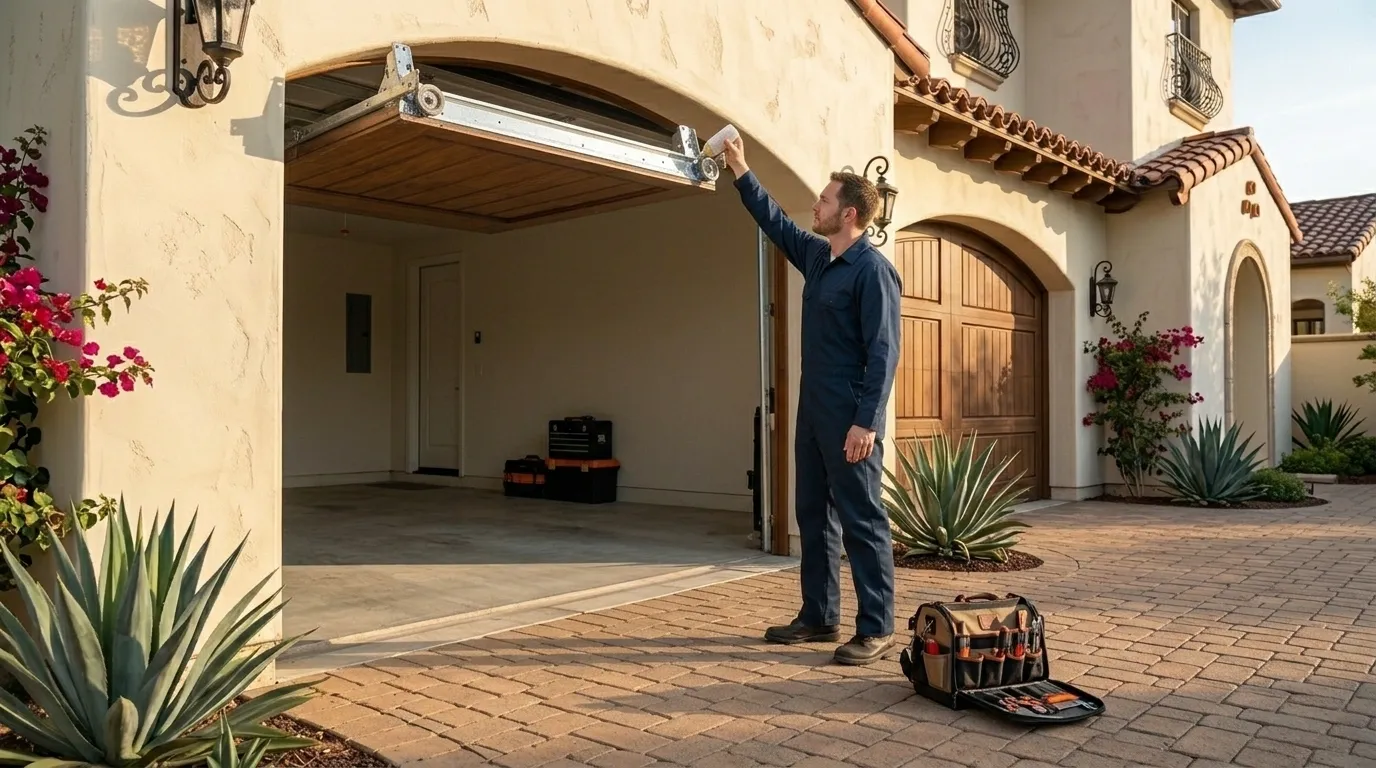
Garage Door Service
Tune-ups, lubrication, and safety checks that catch a small problem before it becomes a service call.
Learn more →Frequently Asked Questions
Why does my garage door reverse right before it closes, only sometimes?
That's almost always a sensor beam getting interrupted - by a stray shadow, condensation on the lens, or a bracket that's drifted a degree out of alignment. Given how much the older slabs and frames in this area shift with a cold-severe winter, intermittent reversal is more often a mechanical alignment issue than a failed part.
Can I realign the sensors myself?
Usually yes. Loosen the wing nut or screw holding the bracket, adjust until both LED indicators show solid rather than blinking, and retighten. If the bracket won't hold that position because the mounting surface has softened or split, that's when it's worth a call.
Does cold weather damage the sensors directly?
Not usually. The lenses and housings are built for winter use. What causes trouble is the temperature swing - condensation freezing on the lens, or the ground and slab shifting slightly with each freeze-thaw cycle, which nudges the mounting brackets out of true alignment.
My house is older - is that why this keeps happening?
It can be. A lot of the housing in this service area dates to the 1938-to-1957 range, when garages were often built as separate slabs from the main house. Decades of settling plus this area's cold-severe winters means the frame and brackets move more than they would on a newer poured foundation.
Get Started
Have a Door That Needs a Second Opinion?
Call and describe what it is doing - we will tell you what it likely is.