
Warren Garage Door Guide
What We Check First on a Warren Service Call
In Warren's mostly pre-1960 housing stock, a garage door tech starts with the spring, track, and hardware most likely to fail in a cold Michigan winter.
- Licensed & Insured
- Same-Area Service Calls
- Upfront Pricing
How Local Conditions Play In
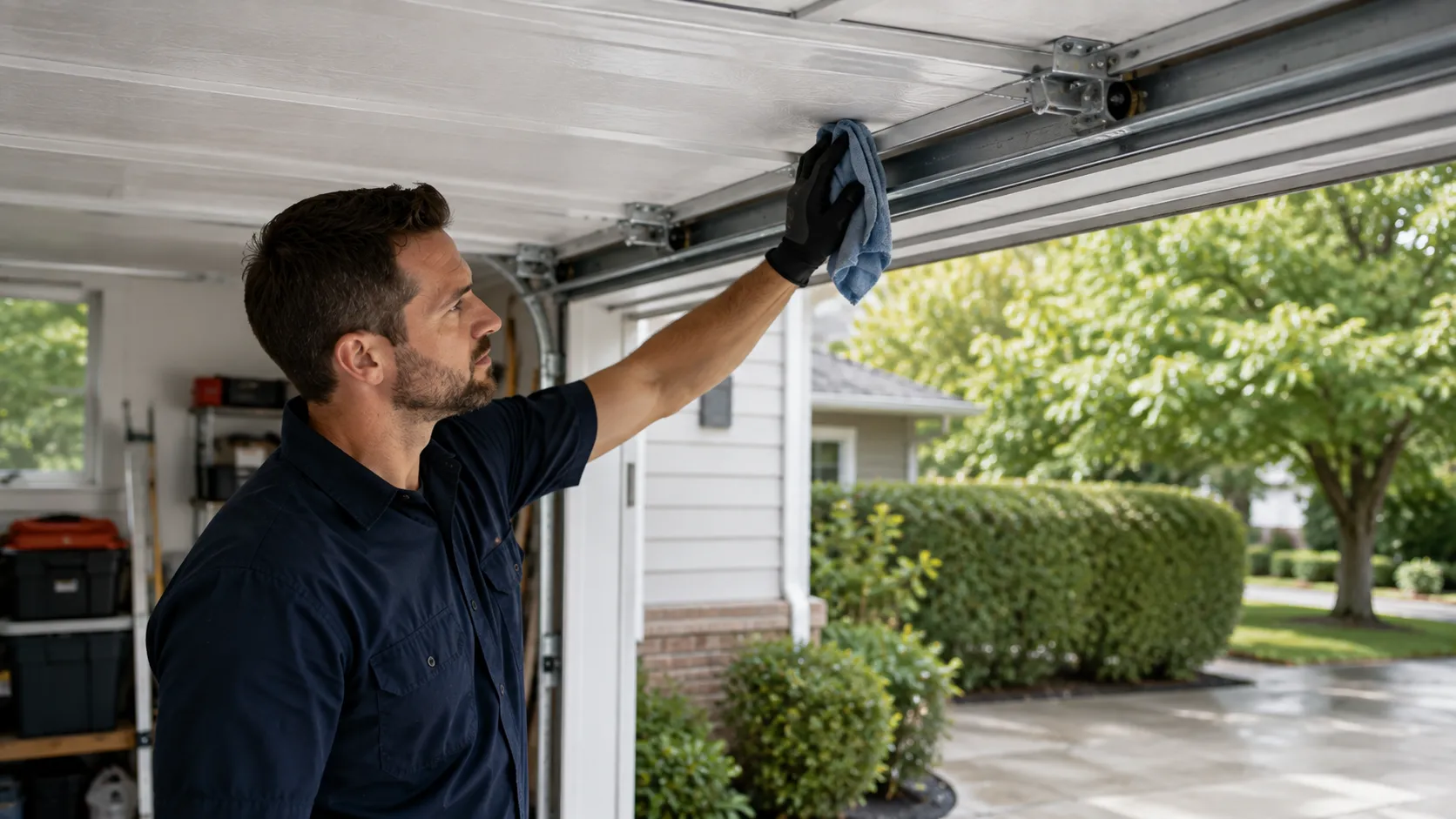
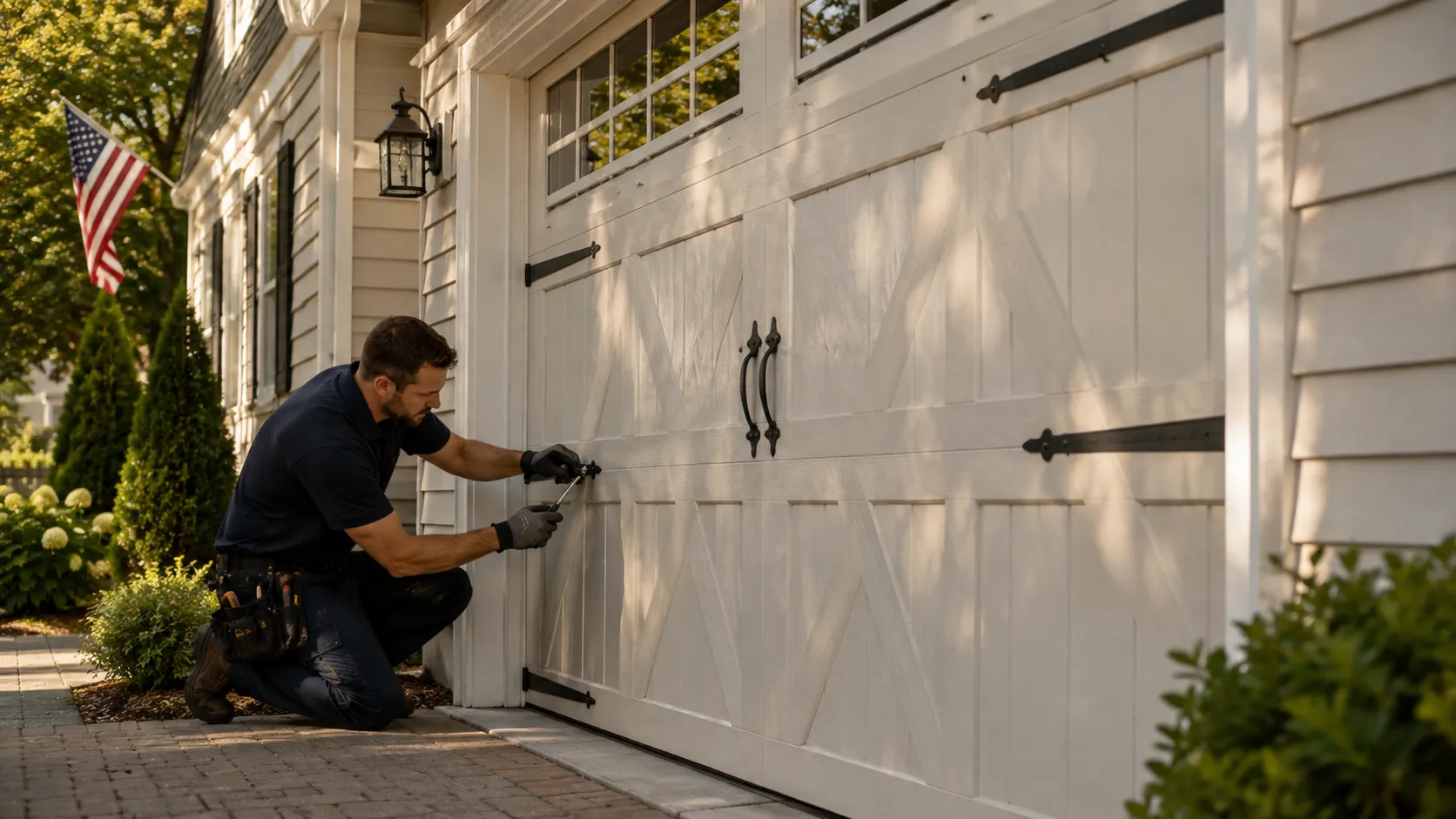
Most of the housing in this service area went up between 1938 and 2000, with a median build year of 1957, and across the 41 named areas we work in, the stock leans older than that median suggests. A lot of it predates 1960 outright. That matters on a service call because a house built in the Eisenhower era usually still has its original header framing and, in plenty of cases, its original torsion hardware bolted to it.
Warren sits a mile from Center Line and within a few miles of Madison Heights, Hazel Park, and Eastpointe, and the housing pattern doesn't change much crossing those lines - same era, same builders, same doors. A technician who's worked this stretch knows to look for a hand-wound torsion spring on an undersized shaft before assuming the door needs a modern kit. We also work in a climate band the federal data marks cold-severe, which means the door isn't just old, it's been through sixty-plus winters of freeze and thaw on the same track bolts.
That combination - old house, hard winters - is the first thing that shapes what gets checked, in what order, before a tool ever comes out of the truck.
When It Stops Being a DIY Job
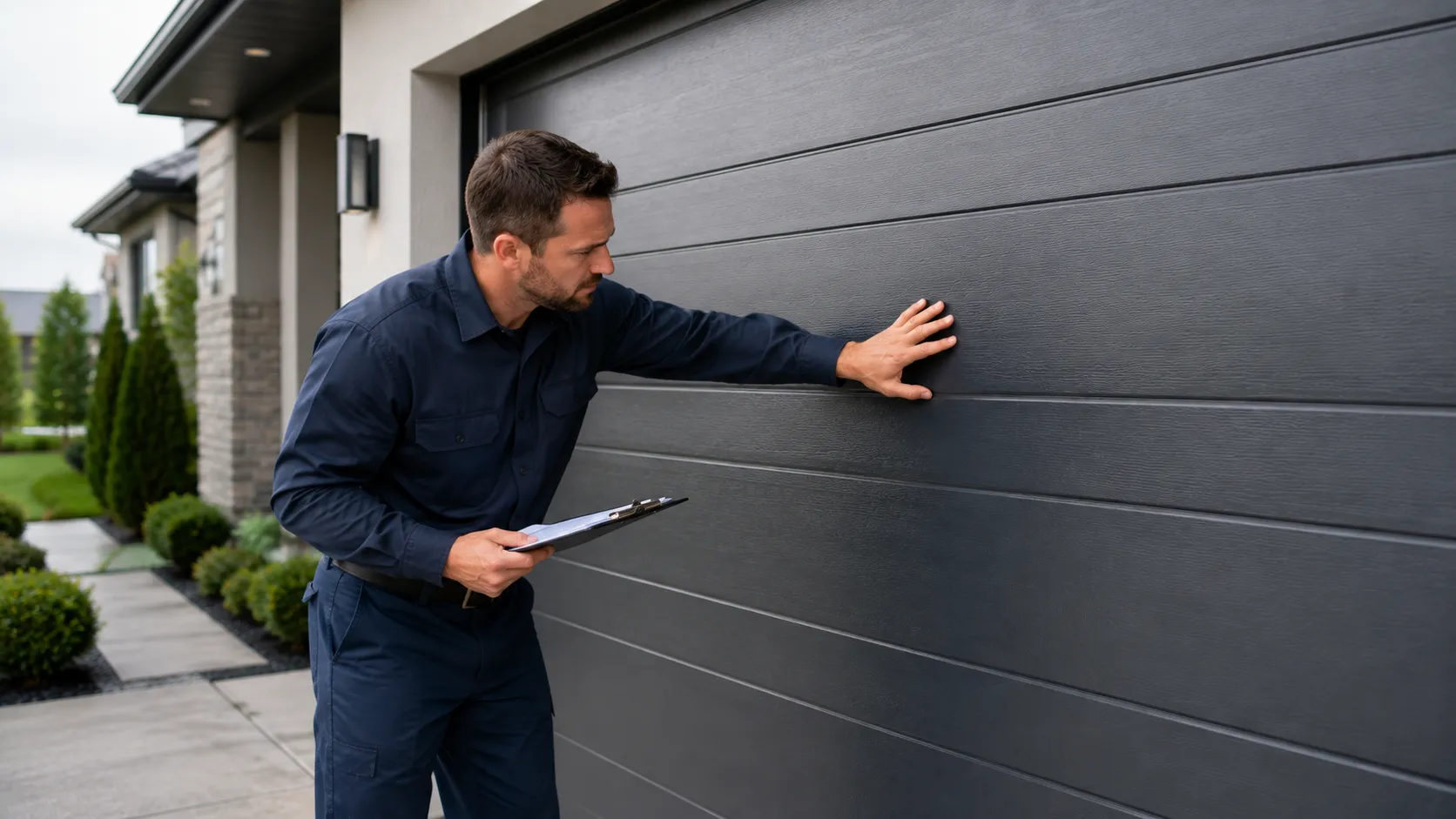
A broken torsion spring on a double door is not a job for a ladder and a YouTube video. The spring is wound under enough tension to break a wrist or worse, and on a house from the 1950s or 60s the shaft, bearing plates, and cable drums are often original parts that don't match anything sold today. That's when a phone call replaces a trip to the hardware store.
Track misalignment is the other line we watch for - once a track bracket pulls loose from framing that's seventy years old, tightening the bolt back into softened wood doesn't hold, and the fix is a new bracket location, not a quick screw. Here's the honest limit: on some of the oldest one-piece doors still standing in this area, we can't always source an exact replacement panel. When that's the case, we say so, and the conversation moves to whether a full replacement makes more sense than chasing parts for a door built before most parts suppliers existed.
Not every old door is worth saving, and pretending otherwise costs the homeowner more in the long run.
What Changes With the Season
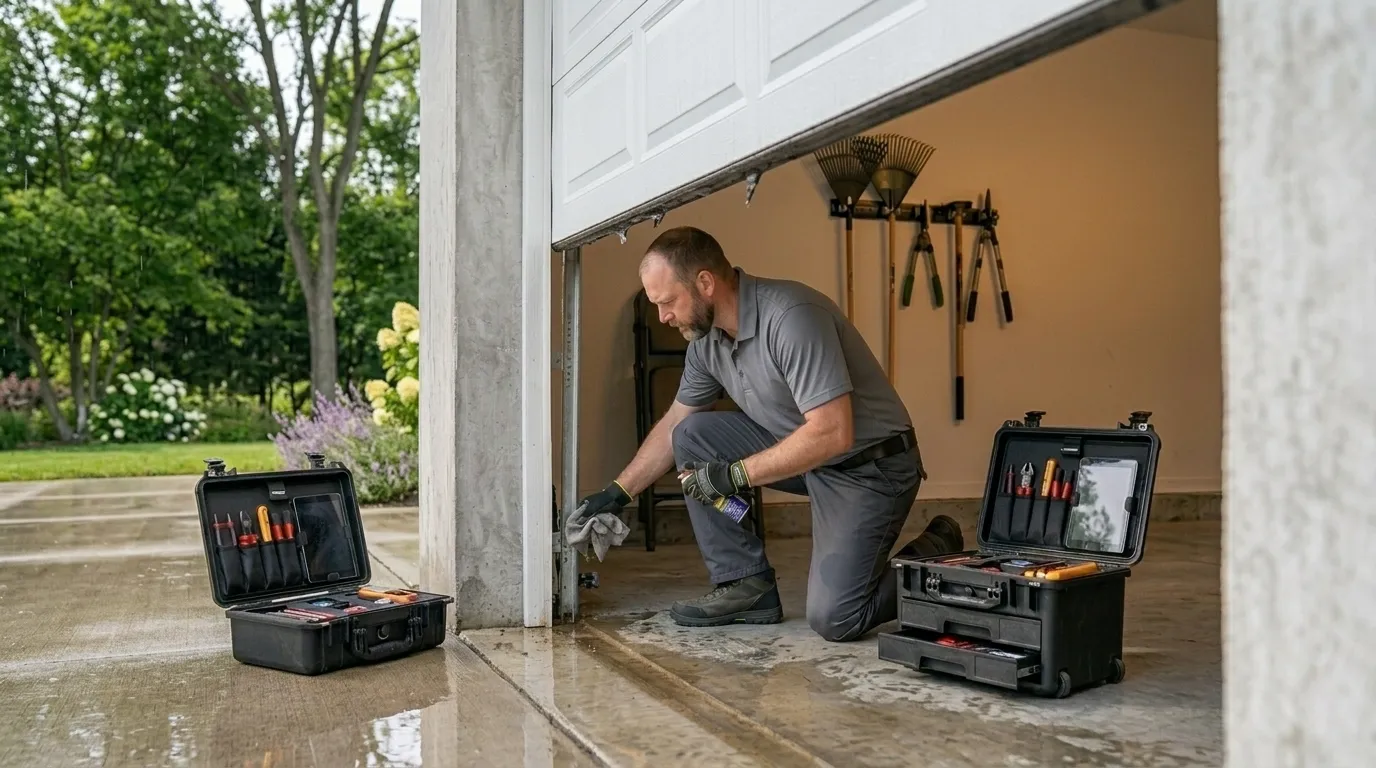
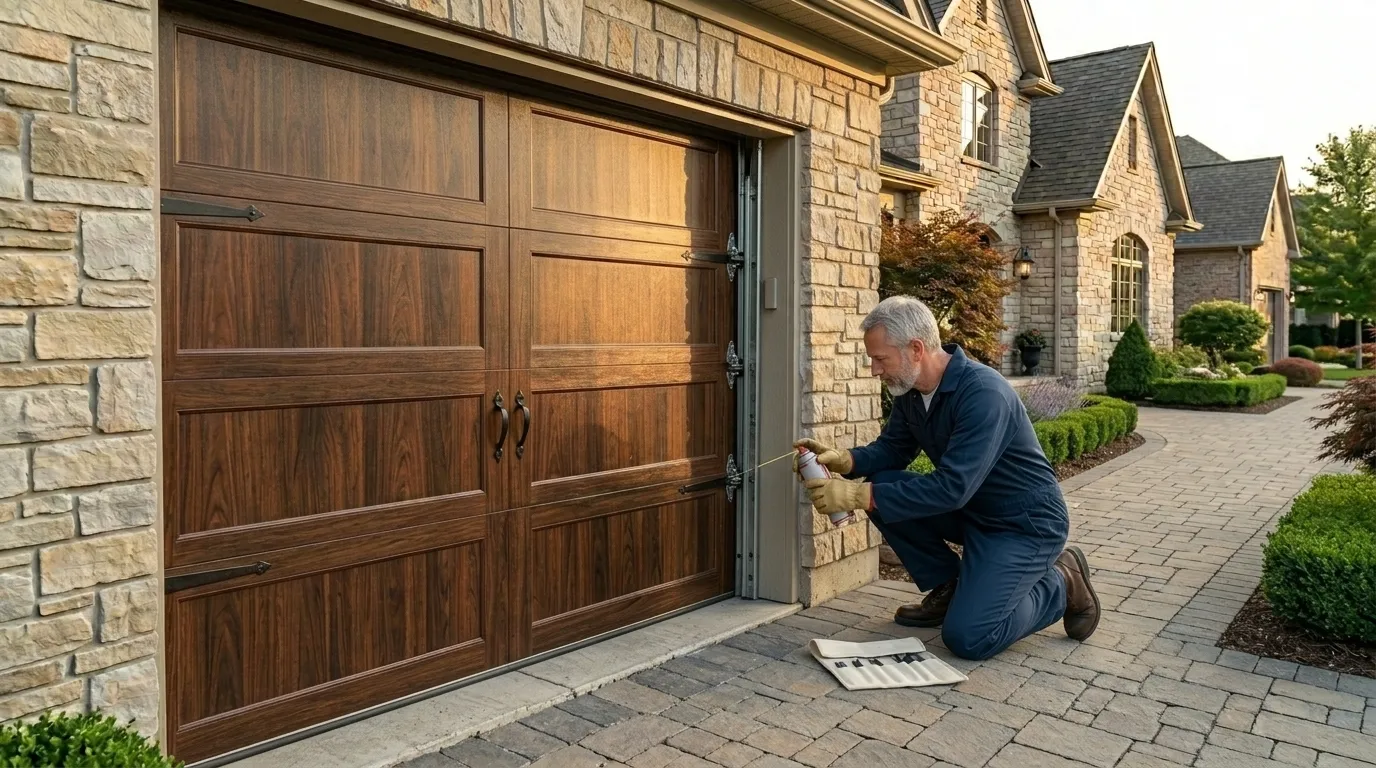
This area falls in a cold-severe climate band, and that shows up in specific, predictable ways on a service call. Bottom seals split and stiffen in deep cold, which lets the door bind on the track right where ice tends to form first. Nylon rollers that were fine in August start binding once temperatures drop, and steel rollers on original 1950s-era hardware get noisy and then seize if they haven't been lubricated before the freeze sets in.
Openers see it too - the travel limit that worked in summer heat often needs a small adjustment once the door frame contracts in cold weather, and safety sensors mounted low on the track can get knocked out of alignment by snow and salt spray off the driveway. None of this is dramatic, but it adds up on houses that have been through six or seven decades of the same cycle without the track hardware ever being swapped out. A seasonal check on an older door in this climate isn't optional maintenance, it's the difference between a five-minute adjustment now and a stuck door in January.
What Is Going On
Put together, the diagnosis on most calls in this area starts from the same two facts: the house is probably older than the door parts industry currently stocks for, and the winters are hard enough to accelerate wear on whatever's still original. So the checklist runs in a specific order - spring tension and shaft condition first, because that's the highest-risk original part; track alignment against the framing second, since older lumber shifts; roller and hinge wear third, since those show cold-weather stress fastest; and opener calibration last, because it's usually the newest part on the door and the least likely to be the actual problem. Across the roughly 198,000 owner-occupied houses in this service area, a large share still carry builder-installed doors from decades back, and that shapes what gets found.
It's rarely one thing. It's usually an old spring paired with a track that's drifted half an inch off true, and a technician who checks in the right order finds both instead of only fixing the noisy one.
How We Can Help
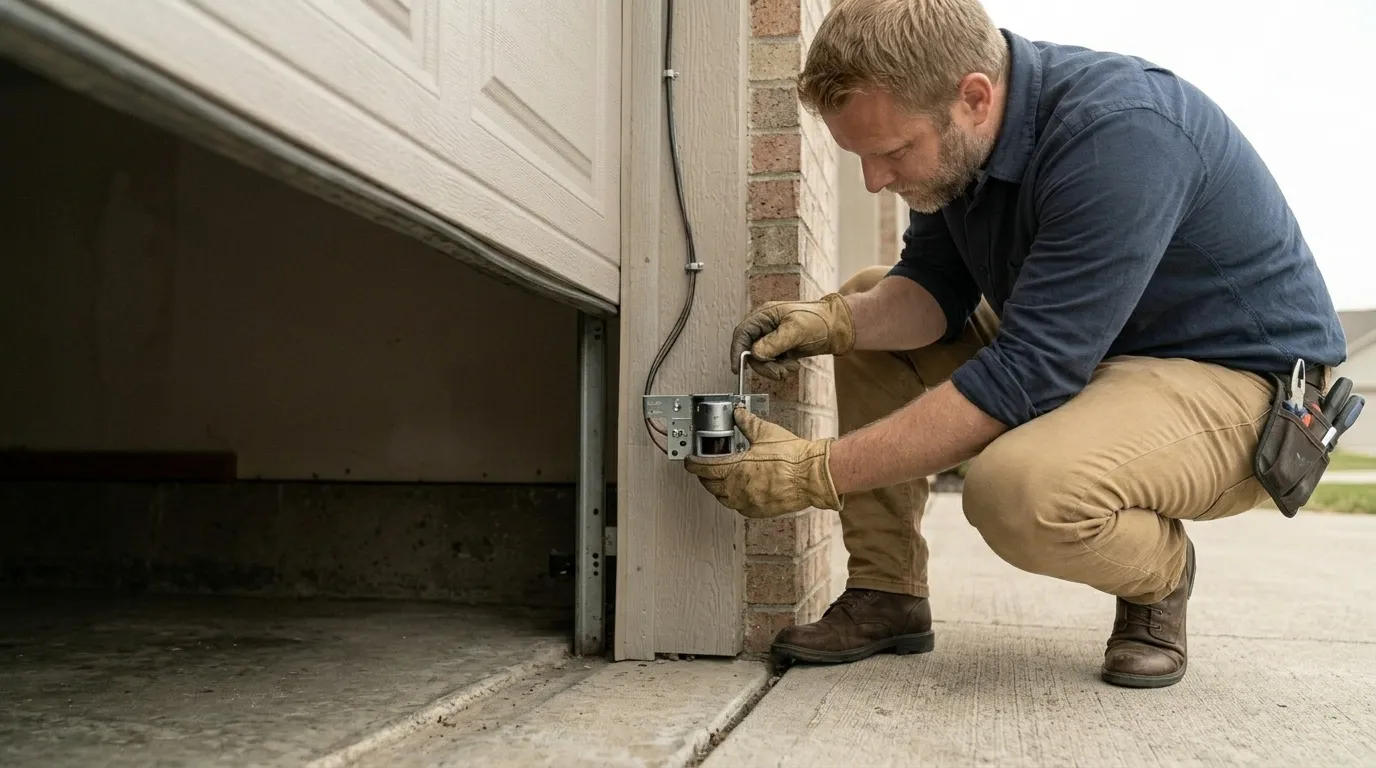
Garage Door Repair
Springs, cables, tracks, rollers, and openers fixed by a tech who explains the problem before touching anything.
Learn more →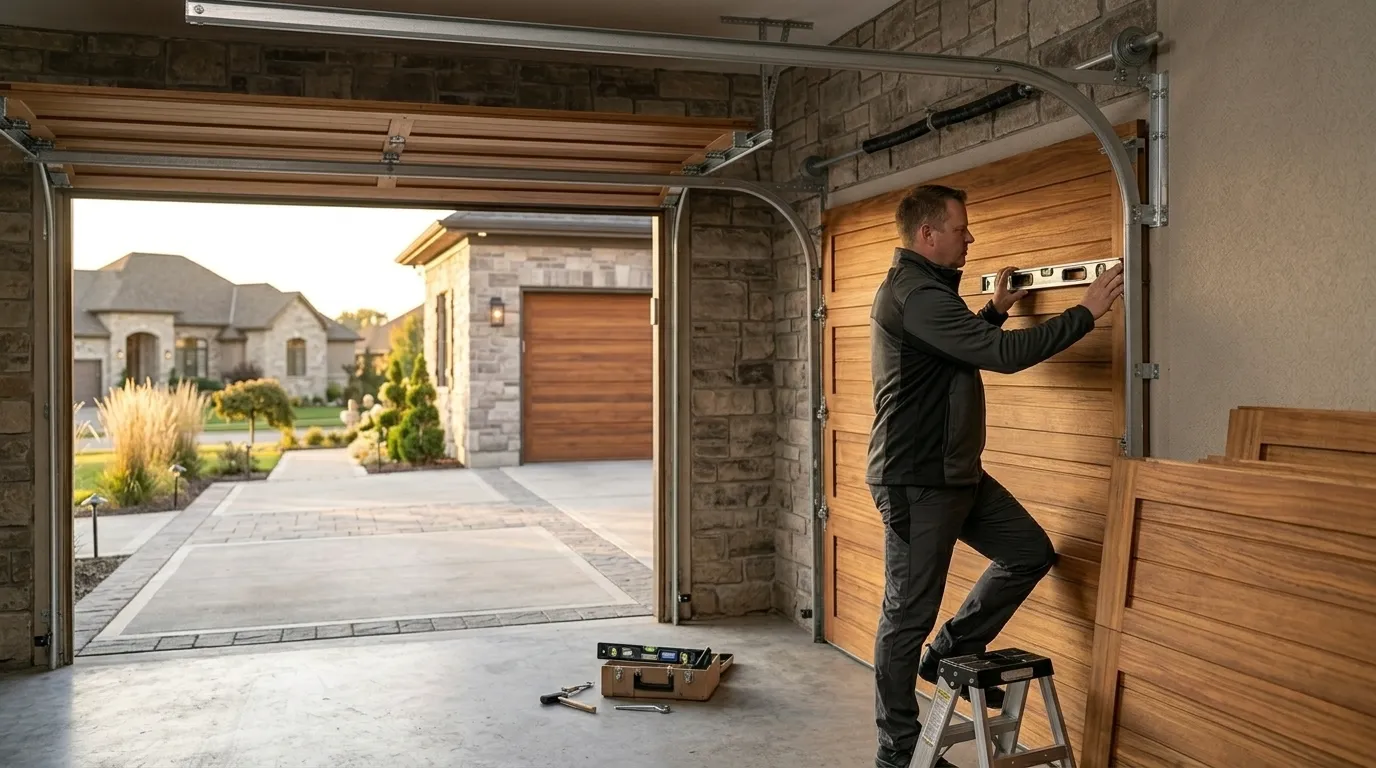
Garage Door Installation
New sectional doors sized and installed for the housing stock actually built in this area.
Learn more →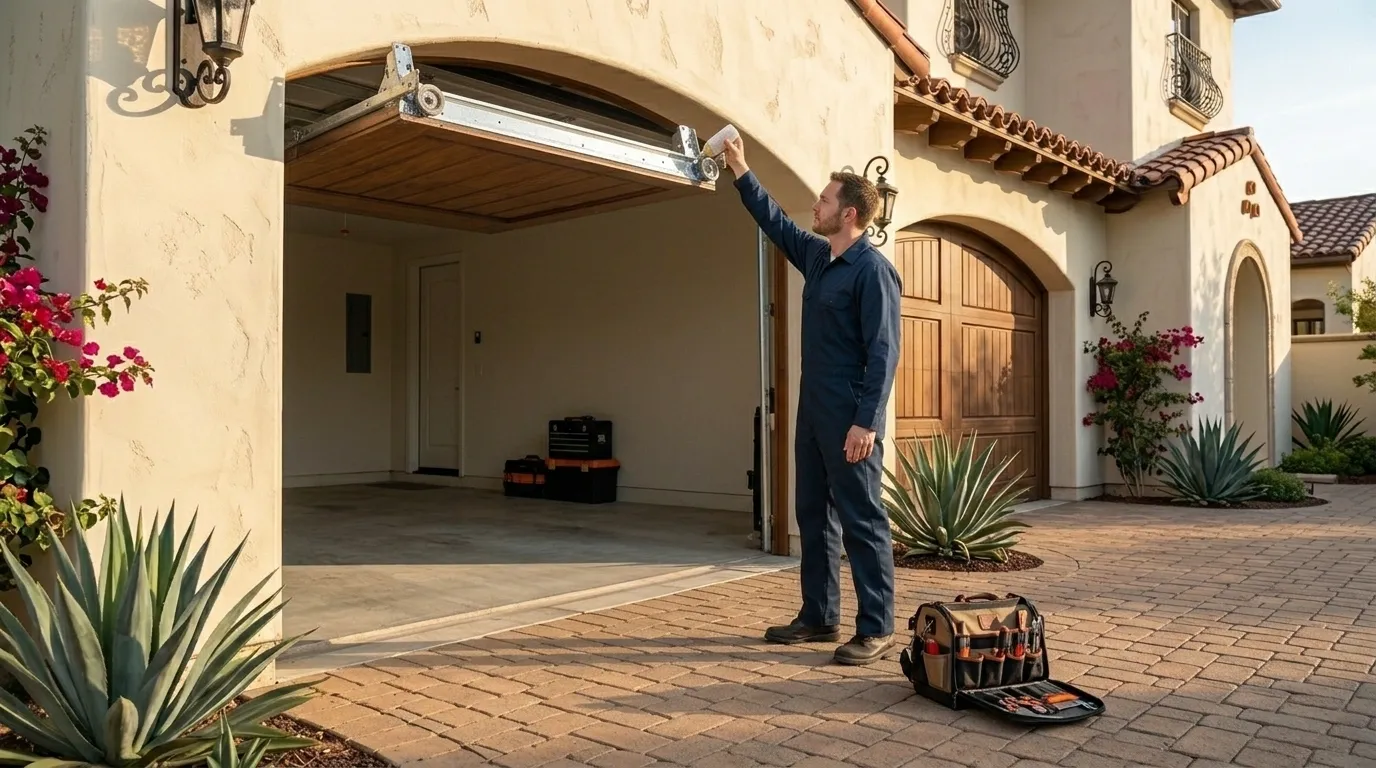
Garage Door Service
Tune-ups, lubrication, and safety checks that catch a small problem before it becomes a service call.
Learn more →Frequently Asked Questions
Why does my garage door get stiff every winter here in Warren?
Warren sits in a climate band classified cold-severe, and on a house from the 1950s-60s era common in this area, the original steel rollers and bottom seal weren't built for decades of hard freeze-thaw. The seal stiffens, the rollers bind, and a door that ran fine in October starts sticking once temperatures drop. It's mechanical, not random, and it's worth a check before the cold sets in fully.
Is my door too old to repair?
It depends on what's original. A lot of the housing near Warren dates to before 1960, and on some of those doors we can't source an exact panel match anymore. Springs, rollers, and track hardware are almost always replaceable regardless of age. When the door itself is the problem, we'll say so instead of chasing parts that don't exist.
Why did my door work fine last month and now it's noisy?
Cold-severe winters put extra strain on hardware that's already decades old in a lot of this area's housing stock. Bearing plates dry out, cable drums tighten, and rollers that were quiet in warm weather start grinding once the metal contracts. It's usually not a new problem, just an old one the cold made obvious.
Get Started
Have a Door That Needs a Second Opinion?
Call and describe what it is doing - we will tell you what it likely is.